


Does Uncertainty Mean We Can’t Predict the Future?
Quantum uncertainty limits some single-event predictions, but it does not make the future unknowable in every sense.
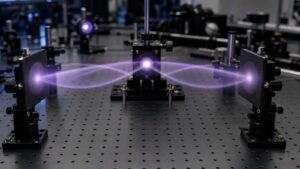
How Uncertainty Helps Explain Superposition and Entanglement
Uncertainty helps explain why superposition and entanglement resist the tidy classical picture of fixed properties carried by tiny objects.

Understanding Probability Densities in Plain English
A probability density tells where outcomes are more concentrated, not where a particle is smeared like ordinary paint.

The Quantum Limits: How Nature Sets Boundaries on Knowledge
Quantum limits are not just technical barriers. They show where nature itself refuses a fully classical account of tiny systems.
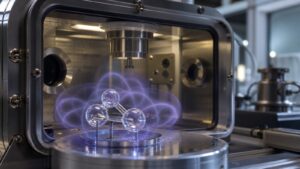
Why Probability Shapes Atoms, Molecules, and Everything Else
Quantum probability is not a side effect of ignorance. It shapes atoms, molecules, bonds, materials, and the world we see.
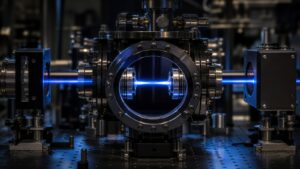
Can We Ever Reduce Quantum Uncertainty?
Quantum uncertainty can be redistributed and controlled, but the core tradeoffs cannot be simply removed.
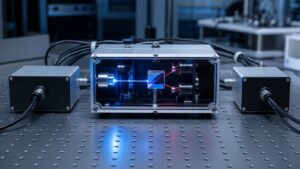
How Quantum Randomness Powers Modern Technology
Quantum randomness is not just a philosophical oddity. It powers secure systems, simulations, sensors, and emerging quantum technologies.
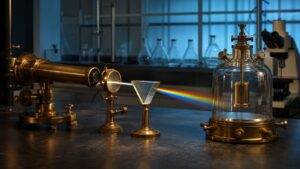
The Origin of the Uncertainty Principle: From Einstein to Heisenberg
The uncertainty principle emerged from the early quantum struggle to replace classical certainty with state-based prediction.

Why Particles Behave Like Clouds of Possibilities
Particles can behave like clouds of possibilities because a quantum state can spread possible outcomes before one record is made.

Quantum Probability Waves: How Likelihood Becomes Reality
Quantum probability waves are not ordinary waves of matter. They describe amplitudes that evolve, interfere, and produce measurement likelihoods.
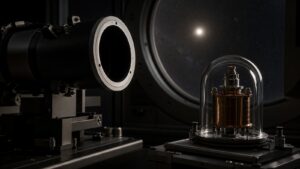
Does Uncertainty Limit What We Can Know About the Universe?
Quantum uncertainty limits some kinds of knowledge, but it also gives physics a more accurate way to describe the universe.
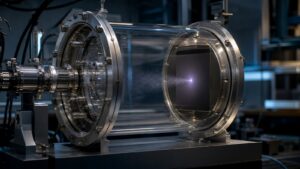
What Happens to Uncertainty When You Observe a Particle?
Observation does not simply reveal a prewritten particle fact. It creates a record, updates the state, and changes which uncertainties matter next.