Yes in Principle, Hard in Practice
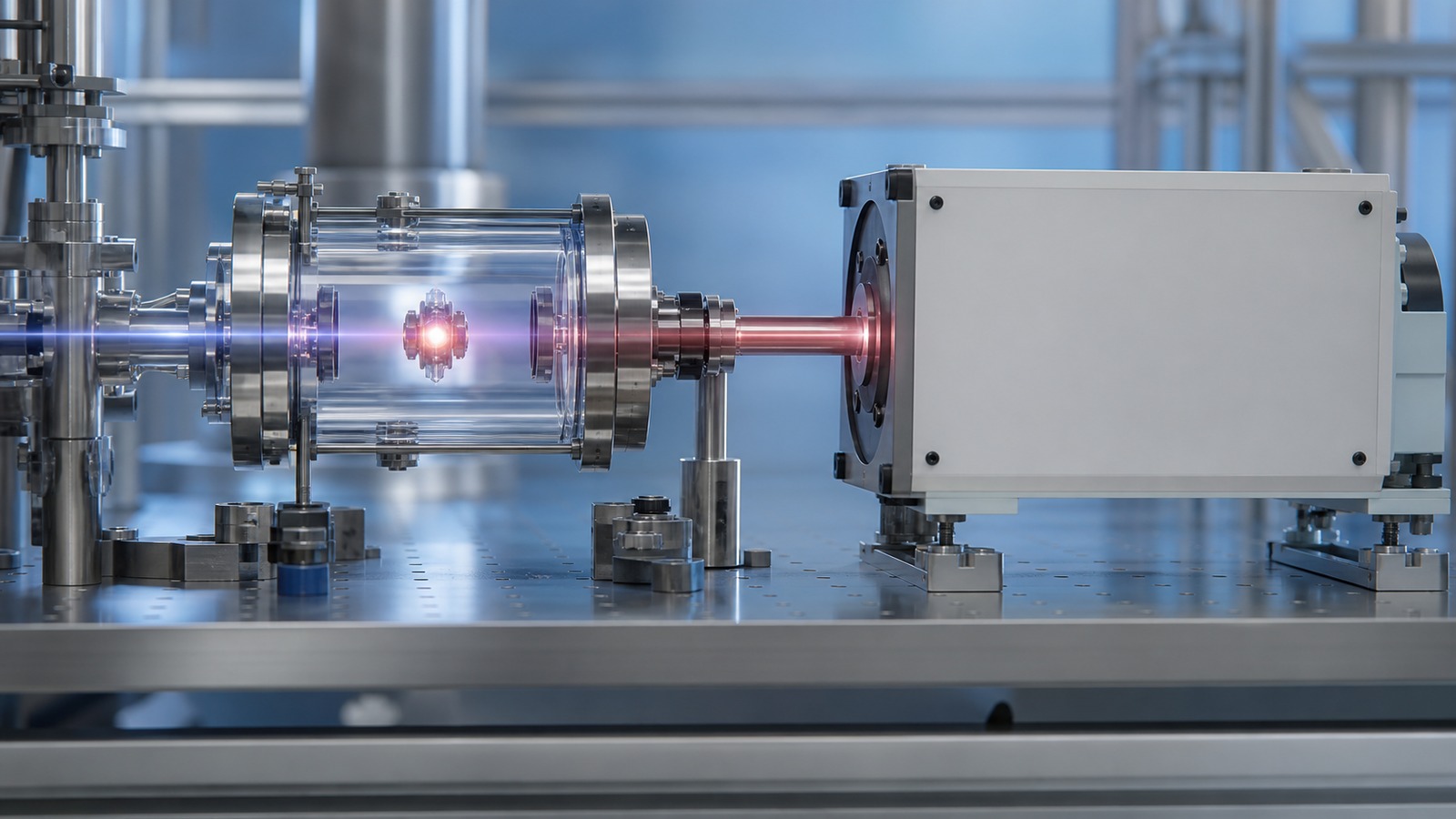
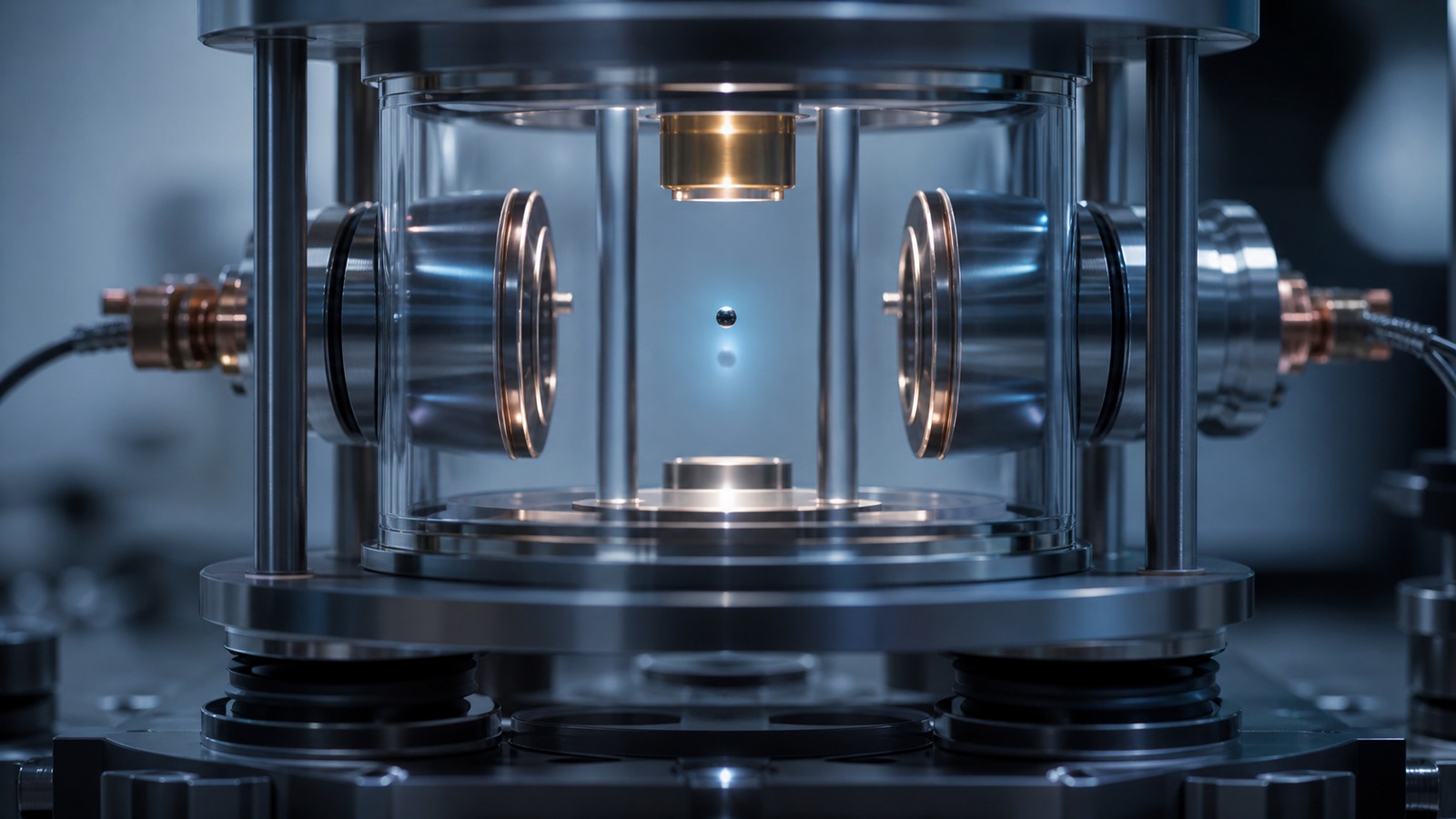
Big objects can be in superposition too in the sense that quantum mechanics does not draw a simple law saying superposition stops at a certain size. The problem is practical and environmental. A superposition requires coherent alternatives to remain available. Large objects have many internal parts and interact constantly with light, air, heat, vibration, and nearby matter. Those interactions leak information into the environment and destroy observable coherence very quickly. This process is called decoherence. It is why electrons, photons, atoms, and small molecules can show superposition effects in controlled experiments, while chairs and cats do not appear visibly spread across alternatives. Scientists are still testing how far superposition can be pushed. Molecule interferometry, superconducting circuits, trapped ions, atom clouds, and mechanical resonators all explore larger or more complex quantum states. These experiments do not make everyday objects ghostly. They show that the boundary between quantum and classical appearance is subtler than intuition suggests. The answer is therefore careful: big objects are not forbidden from quantum superposition by a simple size rule, but preserving and proving such superpositions becomes brutally difficult as size, complexity, and environmental contact increase.
A: In principle yes, but preserving coherence becomes very hard.
A: Decoherence hides macroscopic alternatives extremely quickly.
A: It leaks distinguishing information into the environment and suppresses phase visibility.
A: Yes, molecules and engineered collective systems have shown quantum effects.
A: No. It is a thought experiment about measurement and scale.
A: No simple size cutoff is known.
A: Isolation, cooling, control, and ruling out classical explanations.
A: Yes, observation can leak information and cause decoherence.
A: Larger systems showing measurable coherence under controlled conditions.
A: Big superpositions are allowed in principle but fragile in practice.
What Superposition Requires
Superposition means a quantum state contains amplitudes for multiple possible outcomes or configurations relative to a chosen measurement. To observe its effects, those alternatives must remain coherent. If the alternatives lose their phase relationship, interference disappears.
Small systems can sometimes be isolated well enough for coherence to survive. Photons, electrons, ions, atoms, and molecules can be prepared and measured in ways that reveal superposition. The experiments are delicate, but the effects are real.
For large objects, the requirements become much harder. More particles mean more internal motion and more possible interactions. More interactions mean more opportunities for information to leak out.
A superposition is not just a poetic statement that something has many possibilities. It is a physically controlled state whose alternatives can still affect measurement probabilities. That control is the difficult part.
This is why the question is experimental as much as philosophical.
Why Decoherence Grows With Size
Decoherence happens when information about a system’s alternatives spreads into the environment. A stray photon, air molecule, thermal vibration, or internal excitation can become correlated with one alternative rather than another.
Large objects have many ways to leak information. They scatter more light, contain more internal degrees of freedom, radiate heat, and interact with surrounding matter. Each channel can act like a tiny measurement.
Once the environment carries distinguishing information, the alternatives no longer interfere in any practical way. The object appears to have a definite classical state. The superposition may be hidden in a larger entangled description, but it is not observable as a simple interference pattern.
Decoherence therefore explains why everyday objects look definite without requiring a crude rule that quantum mechanics shuts off above a certain mass.
What Experiments Have Shown
Experiments have demonstrated interference and superposition-like behavior in systems larger than single elementary particles. Molecules have been sent through interferometers. Superconducting circuits can maintain superpositions of electrical states. Mechanical resonators and levitated particles are being explored at quantum limits.
These experiments matter because they push the scale of controlled quantum behavior. They show that complexity alone does not instantly forbid superposition. With enough isolation and control, larger systems can display quantum features.
The word big needs care. A large molecule is big compared with an electron, but not big like a coin or a table. A superconducting circuit may involve many electrons acting collectively, but it is engineered and isolated in special conditions.
So the evidence is impressive without being cartoonish. Scientists are not putting furniture into visible double-location states. They are extending coherence into systems that are larger, more collective, or more complex than traditional textbook particles.
That slow extension is how the quantum-classical boundary is tested responsibly.
Why Schrodinger’s Cat Is Not a Lab Pet
Schrodinger’s cat is the famous image of a large object tied to a quantum event. It was designed to expose discomfort with applying superposition language to everyday objects. It was not meant as a recipe for making ordinary cats visibly half alive and half dead.
The cat story highlights amplification. A microscopic quantum event can be connected to a macroscopic record. But macroscopic systems decohere extremely quickly, so the everyday outcome appears definite long before a person opens a box.
This does not make the thought experiment useless. It asks where and how definite outcomes emerge. It forces us to connect microscopic superpositions, measurement devices, environments, and ordinary experience.
The lesson is not that large objects are magically exempt from quantum theory. The lesson is that macroscopic superpositions are enormously fragile and difficult to interpret.
Can We See a Big Superposition?
Seeing a big superposition directly is difficult because seeing itself requires interaction. Light used to inspect an object can leak information and cause decoherence. The more macroscopic the object, the harder it is to preserve the alternatives while also obtaining evidence.
Experiments usually detect superposition indirectly through interference, state tomography, correlations, or changes in measurement statistics. The evidence is mediated by careful apparatus, not by naked-eye spectacle.
This is normal in quantum physics. Strong evidence often comes from patterns and records rather than direct pictures. A superposition is confirmed by the effects it produces under controlled conditions.
For larger systems, the challenge is to show that the observed behavior cannot be explained by ordinary classical mixtures. That requires careful controls and repeated tests.
The goal is not to make a dramatic ghost image. The goal is to prove coherence between alternatives.
Why Classical Appearance Emerges
Classical appearance emerges because large objects are constantly monitored by their environments. Their positions, shapes, and motions leave countless traces. Those traces make alternatives effectively separate and stable.
This is why a chair looks like it is in one place. Light bounces from it, air moves around it, heat radiates from it, and nearby objects interact with it. The environment carries records of its state.
Quantum mechanics can still be the underlying theory while classical behavior emerges at the surface. Decoherence helps explain that transition without pretending the microscopic and macroscopic worlds obey unrelated laws.
The result is subtle. Big objects may be quantum in principle, but classical-looking in practice because their coherence is constantly destroyed.
What Would Count as Progress
Progress means preparing larger, heavier, warmer, or more complex systems while preserving measurable coherence. It also means ruling out classical explanations. Experiments must show interference, correlations, or state behavior that cannot be explained as ordinary uncertainty.
Researchers also look for possible limits to quantum theory. If superposition failed under conditions where standard quantum mechanics predicts it should survive, that would be important. So far, controlled experiments continue to push the boundary rather than reveal a simple cutoff.
The frontier is therefore open but disciplined. Bigger superpositions are not fantasy; they are hard laboratory achievements.
Why Mixtures Are Not the Same Thing
A major challenge in big-object experiments is separating true superposition from an ordinary mixture. A mixture means the system is in one alternative or another, but we do not know which. A superposition means the alternatives remain coherent and can interfere.
This difference is invisible if we only look for a broad distribution. Both a mixture and a superposition can produce several possible outcomes. The test must show phase-sensitive behavior that a classical mixture cannot explain.
That is why interference is so important. If two alternatives recombine and produce cancellation or reinforcement, the evidence points toward coherence. Without that phase-sensitive test, a claim about superposition is weaker.
Large systems make this harder because decoherence can turn a superposition into something that behaves like a mixture extremely quickly. The experiment must preserve coherence long enough to test it.
Careful researchers therefore look for witnesses, correlations, interference visibility, or reconstructed states. They do not simply point to uncertainty and call it superposition.
This distinction protects the science from overstatement. Big-object superposition is impressive only when it is not just ordinary ignorance.
How Future Tests Might Push the Boundary
Future tests may use levitated nanoparticles, cooled mechanical resonators, larger molecules, or hybrid systems that connect motion with internal quantum states. The goal is to isolate larger systems while retaining enough control to verify coherence.
Better vacuum, lower temperatures, improved shielding, and more sensitive detection can all help. Each improvement reduces ways for the environment to steal information. The harder part is proving that the remaining behavior is genuinely quantum.
Some researchers also wonder whether gravity plays a role in limiting macroscopic superposition. This remains an open and difficult area. Any claim would need careful experiments that separate gravitational effects from ordinary decoherence.
If standard quantum theory continues to work, larger tests will extend the domain of superposition. If deviations appear, they could point toward new physics. Either outcome would be valuable.
The important thing is that the boundary is tested by evidence, not by intuition. Our everyday sense of size is not a law of nature.
Big-object superposition therefore remains one of the most interesting frontiers because it asks how the familiar world emerges from quantum rules.
The answer is still being refined, experiment by experiment.
That slow refinement is more reliable than a dramatic claim that quantum theory simply stops.
Why The Boundary Question Stays Open
The boundary question stays open because experiments keep improving. What looked impossible at one scale may become possible with better isolation, cooling, and control. Quantum history repeatedly warns against trusting intuition too quickly.
At the same time, optimism must stay disciplined. Larger superpositions require stronger evidence, not just stronger language. A broad distribution or noisy signal is not enough. Coherence must be demonstrated.
This is why the field is exciting. It combines philosophical weight with practical difficulty. Researchers are not merely asking whether big things can be weird; they are building tests that can answer carefully.
The answer may continue to be yes in principle and hard in practice for a long time. That is still meaningful. It tells us how the classical world emerges from quantum rules.
Big-object superposition is therefore a frontier, not a slogan.
That frontier also clarifies what counts as evidence. A large object must show more than uncertainty, vibration, or ordinary mixture. The test has to preserve phase relationships between alternatives well enough for interference or another unmistakable quantum signature to appear. That demand separates quantum superposition from ordinary uncertainty in position, motion, or temperature.
This is why macroscopic-superposition claims are treated carefully. The more familiar the object, the easier it is for heat, light, air, and internal motion to carry away information. Good experiments have to close those exits before the result can speak clearly. The experiment must make alternatives meet again or otherwise reveal the coherence that classical mixtures lack in practice.
The Careful Answer
Big objects can be in superposition in principle, but preserving and proving the coherence becomes extremely difficult as systems grow.
Everyday objects look definite because decoherence creates stable classical records long before visible macroscopic alternatives can interfere.