The Wave-Like Side of a Quantum Description
Quantum states are more like waves than particles because they describe patterns of possibility that can spread, overlap, carry phase, and interfere before any measurement produces a localized result. A particle picture is still useful when a detector records one photon, electron, atom, or molecule at a particular place. The quantum state, however, is not just a tiny bead carrying a hidden position. It is a structure used to predict possible outcomes. That structure often behaves mathematically like a wave: it can have wavelength-like features, it can evolve smoothly, and its alternatives can reinforce or cancel. This is why physicists talk about wavefunctions, matter waves, and probability amplitudes. The wave comparison is not perfect. A quantum state is not always a physical ripple in ordinary space, and its full description may live in an abstract state space. Still, wave language captures something essential that the particle image misses. It explains why two paths can produce dark bands, why electrons form orbitals instead of little planetary tracks, and why phase matters in qubits. The safest answer is balanced: quantum systems are detected in particle-like events, but their states often evolve and combine in wave-like ways. The state is the wave-like organizer; the measurement is the particle-like record.
A: Not always. They are wave-like in evolution and combination.
A: A fixed particle picture misses phase, spreading, and interference.
A: Measurement records often appear as localized events.
A: They show wave-like state patterns in atoms.
A: Yes. It can carry amplitudes and phase abstractly.
A: No. It can hide phase information.
A: It explains how alternatives later interfere.
A: Quantum states are not ordinary ripples in a medium.
A: Use wave language for state evolution and particle language for records.
A: The state organizes outcomes in wave-like ways before localized detection.
Why the Particle Picture Feels Natural
The particle picture feels natural because measurements often produce localized events. A detector clicks in one place. A screen shows one spot. A sensor absorbs one photon. These records make it tempting to imagine a tiny object traveling along one ordinary path the whole time.
That picture works well for many everyday situations. Baseballs, dust grains, and planets can be tracked by approximate positions and velocities. Even electrons can look particle-like in some measurements because they carry charge and produce localized marks.
The trouble begins when the state must explain interference, diffraction, and atomic structure. A little bead picture cannot easily explain why two allowed alternatives can cancel a later result. It cannot explain why electrons occupy wave-like orbitals around atoms instead of collapsing into the nucleus.
This is why quantum mechanics does not simply discard particles. It keeps particle-like records but refuses to make the state a tiny classical object. The measurement and the state are doing different jobs.
Understanding that split is the first step toward seeing why wave language is so useful.
What Wave Language Gets Right
Wave language gets several features right at once. A wave can spread. It can overlap with itself. It can carry phase. It can reinforce or cancel when combined with another wave. Quantum states have mathematical features that resemble these behaviors.
This resemblance is not accidental. The wavefunction evolves according to wave-like equations in many situations. Its amplitude can be distributed across regions or alternatives, and its phase affects later probabilities.
That is why interference patterns feel like strong evidence for the wave-like side. If the state were only a hidden particle label, opening two routes should not create dark regions where detections become unlikely. Wave-like amplitude combination explains the pattern.
Wave language also helps with bound states. Electrons in atoms are described by orbitals, standing-wave-like state patterns with allowed energies. The electron is not orbiting like a miniature planet; the state has a wave-like structure constrained by the atom.
Why Quantum Waves Are Not Ordinary Water Waves
The wave comparison has limits. A water wave is a disturbance in water. A sound wave is a disturbance in air or another medium. A quantum state is not usually a material ripple in a familiar substance.
For a single particle in simple cases, the wavefunction can be represented over ordinary space. Even then, what it gives directly is not a visible fluid. Its amplitude and phase are used to compute probabilities for outcomes.
For several particles, the state may live in a much larger configuration space. That makes the wave comparison harder to picture literally. The state can still behave wave-like mathematically, but it is not a simple ripple moving through the room.
This distinction protects the explanation from becoming too literal. Quantum states are wave-like because of how they evolve and combine, not because they are always waves of ordinary stuff.
The comparison is useful only when its limits remain visible.
Why Phase Makes the State Wave-Like
Phase is the strongest reason quantum states feel wave-like. Ordinary particles in a classical picture do not have phase relationships between possible paths. Waves do. Quantum states do too.
When alternatives have a phase relationship, they can interfere. A shift in phase can move bright and dark bands or change qubit readout probabilities. The result depends not only on how large the amplitudes are but on how they are aligned.
This is why quantum states cannot be reduced to probability clouds alone. A probability cloud shows where outcomes may appear, but it can hide phase. Two states can have similar probability distributions and still behave differently when recombined.
Phase gives the state memory of relationships. It is the quiet feature that makes future interference possible.
How Spreading Supports the Comparison
A localized quantum state can spread over time. This is another wave-like feature. If a particle is prepared with a narrow position distribution, the corresponding state may broaden as it evolves, changing later position probabilities.
Spreading should not be pictured as a particle dissolving into a mist. It means the state no longer predicts a narrow range of positions with the same confidence. The detector may still record a localized event, but the possible locations are organized differently.
Wave-packet spreading connects the wave and particle pictures in one experiment. The state evolves like a wave packet; the final record is a spot. Both descriptions are needed to explain the full sequence.
This feature also shows why preparation matters. A sharply prepared state, a momentum-selected beam, and a trapped atomic state will evolve differently. The wave-like state carries the consequences of those choices forward.
Spreading is therefore not a visual flourish. It is part of prediction.
Why Orbitals Are Better Than Orbits
Atomic orbitals are a clear place where wave-like state language beats particle-like imagery. In early atomic models, electrons were sometimes imagined as little planets circling a nucleus. That image breaks down quickly.
Quantum mechanics describes electrons in atoms using states with allowed energies and spatial patterns. These orbitals can have shapes, nodes, and probability distributions. They are not tracks that an electron follows like a train on a rail.
The wave-like description explains stability. Only certain standing-wave-like patterns fit the atom’s conditions. This helps explain discrete energy levels, spectral lines, and chemical behavior.
Particles remain in the story because measurements still find electrons through localized interactions. But the state that explains the atom is much more wave-like than bead-like.
Why Measurement Restores Local Records
The wave-like state does not mean every measurement produces a spread-out smear. A detector can record one localized event. That record is why particle language remains useful and why quantum mechanics feels dual.
The key is to avoid using the localized record to rewrite the whole past as a classical path. The state before measurement may have carried wave-like alternatives. The measurement outcome is one event drawn from the probabilities that state produced.
In this sense, the state is wave-like in evolution and the record is particle-like in appearance. The theory needs both sides. Removing either one makes the experiment harder to explain.
How Qubits Make the Wave Side Abstract
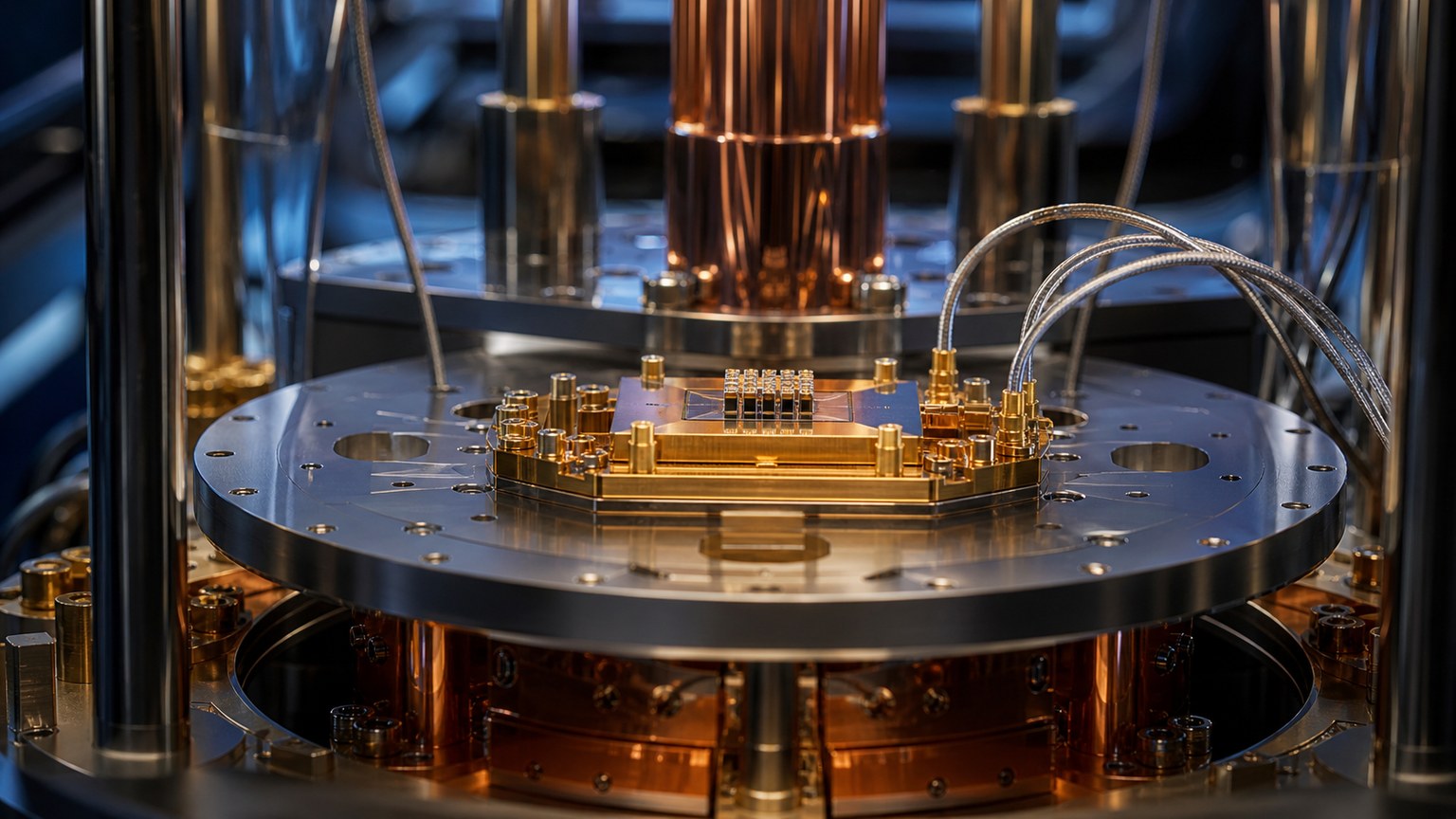
Qubits show that wave-like does not always mean spread across ordinary space. A qubit may be a superconducting circuit, trapped ion, electron spin, or photon polarization. Its state can still have amplitudes and phase even when the alternatives are not two paths in a room.
This makes the wave comparison more abstract but also more powerful. The wave-like part is the state structure, not necessarily a visible shape. Gates rotate amplitudes, preserve or shift phase, and prepare interference before measurement.
The qubit example helps readers generalize. Quantum states are wave-like because they carry coherent amplitude relationships. Those relationships can exist in position, spin, polarization, energy levels, or multi-qubit spaces.
That broader view keeps the wave comparison from becoming too narrow. The state can be wave-like even when there is no water-wave-looking picture to draw.
Modern quantum technology depends on that abstraction.
It controls waves of possibility, not tiny classical marbles.
Where the Wave Comparison Guides Experiments
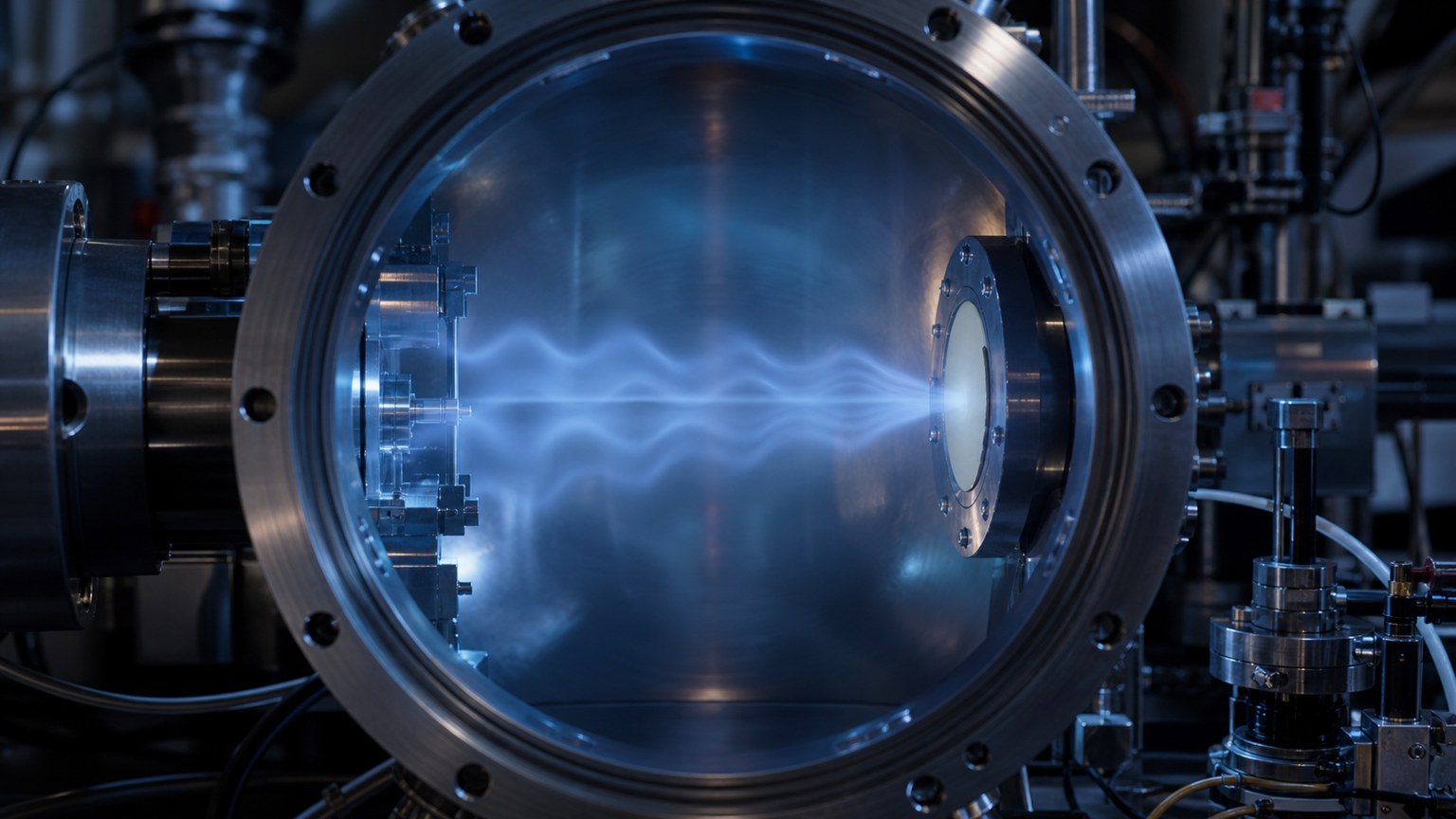
The wave comparison is most useful when it tells scientists what to test. If a state is wave-like, changing phase should change later statistics. If alternatives remain coherent, recombination should reveal interference. If a boundary condition changes, allowed state patterns should change too.
Those expectations connect the picture to laboratory design. Researchers do not simply announce that an electron or atom is wave-like. They prepare a state, alter the setup, and check whether the measured distribution responds in the way amplitude theory predicts.
This is why wave-like language appears in such different settings. It helps explain diffraction in matter, orbital structure in atoms, phase control in interferometers, and rotations in qubits. The common feature is not a visible ripple. It is a state whose relationships can be changed and tested.
The comparison also helps scientists notice when the particle picture is still needed. A detector response, ionization event, or absorbed photon gives one local record. The wave-like state explains the pattern that made that record likely.
In practice, good experiments keep both ideas nearby. The state evolves like a wave-shaped rule; the evidence arrives as countable events.
Why Detection Does Not Cancel the Wave Picture
A localized detection can make the wave comparison feel wrong. If the electron lands in one place, why talk about a wave at all? The answer is that one event does not contain the whole experiment.
The wave-like state explains how the probabilities were arranged before detection. Repeating the same preparation many times can reveal bands, nodes, preferred angles, or other structures that no single spot could show alone.
This distinction is especially important for beginners. The final mark is real, but it should not be used to erase the state that shaped the long-run evidence. Particle-like records and wave-like evolution are partners in the explanation.
That partnership is why quantum mechanics sounds paradoxical only when one image is asked to do all the work.
What Wave-Like Does Not Mean
Wave-like does not mean the system is only a classical wave. Classical waves can be split, spread, and recombined, but they do not usually produce one indivisible detector event in the same way a photon or electron can. Quantum evidence combines both features.
It also does not mean that every quantum state is easy to draw in ordinary space. A multi-particle state may require a space of possibilities that has more dimensions than the room around the apparatus. The wave-like quality belongs to the mathematical state structure.
Nor does wave-like mean vague. The state can be calculated, transformed, and tested with high precision. Its predictions are often sharper than any everyday picture that tries to represent it.
The safest use of the comparison is practical. Ask whether the state spreads, carries phase, interferes, or forms standing patterns under constraints. If it does, wave language is doing useful work.
That careful meaning keeps the comparison powerful without letting it become literal in the wrong place.
The Balanced Answer
Quantum states are more like waves because they carry amplitudes, phase, spreading, and interference. Those features shape future probabilities.
Quantum systems still produce particle-like records when measured. The state is wave-like; the final detection is localized.