


Why Position and Momentum Can’t Be Known Together
Position and momentum resist being known together because a quantum state cannot make both properties perfectly sharp at once.

Understanding Uncertainty: The Most Misunderstood Idea in Physics
Quantum uncertainty is not just measurement clumsiness. It is a precise limit built into how quantum states connect possible outcomes.

How Quantum Probability Differs from Everyday Probability
Quantum probability differs from everyday probability because amplitudes, phase, measurement basis, and interference shape the distribution of outcomes.

Uncertainty Made Simple: Why Particles Don’t Follow Fixed Paths
Quantum uncertainty means particles are not always described by fixed classical paths with exact position and momentum before measurement.

How Understanding Superposition Helps Explain the Universe
Superposition helps explain the universe by changing how we understand particles, atoms, measurement, probability, fields, and the classical world.

The Future of Superposition: What It Means for Technology
The future of superposition technology lies in better control of quantum states for computing, sensing, communication, clocks, and materials research.

Quantum States in Atoms: Why Electrons Live in Probabilities
Electrons in atoms are described by quantum states and probabilities, not tiny planet-like paths around the nucleus.
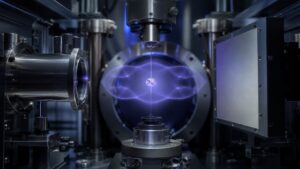
Why the Wavefunction Is the Most Important Idea in Quantum Physics
The wavefunction matters because it organizes amplitudes, phase, probabilities, interference, measurement predictions, and the behavior of quantum systems.
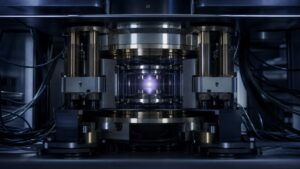
Quantum State Lifetimes: How Long Can Superposition Last?
Superposition can last from extremely brief moments to much longer controlled intervals, depending on isolation, noise, platform, and what state is being preserved.

The Weirdest Examples of Superposition in Real Experiments
Real superposition experiments can look strange, from molecules and atoms to superconducting circuits, but the evidence is disciplined and measurable.

How Superposition Allows Quantum Sensors to Break Limits
Quantum sensors use superposition to turn tiny changes in fields, forces, time, and motion into measurable phase shifts or probability changes.
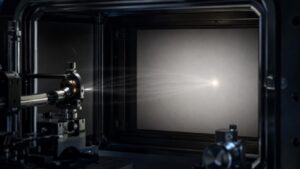
Quantum State Collapse: What Physicists Think Is Really Happening
Quantum state collapse is the practical update from possible outcomes to one record, but physicists disagree about what the update means physically.