Why Superposition Is a Technology Problem Now
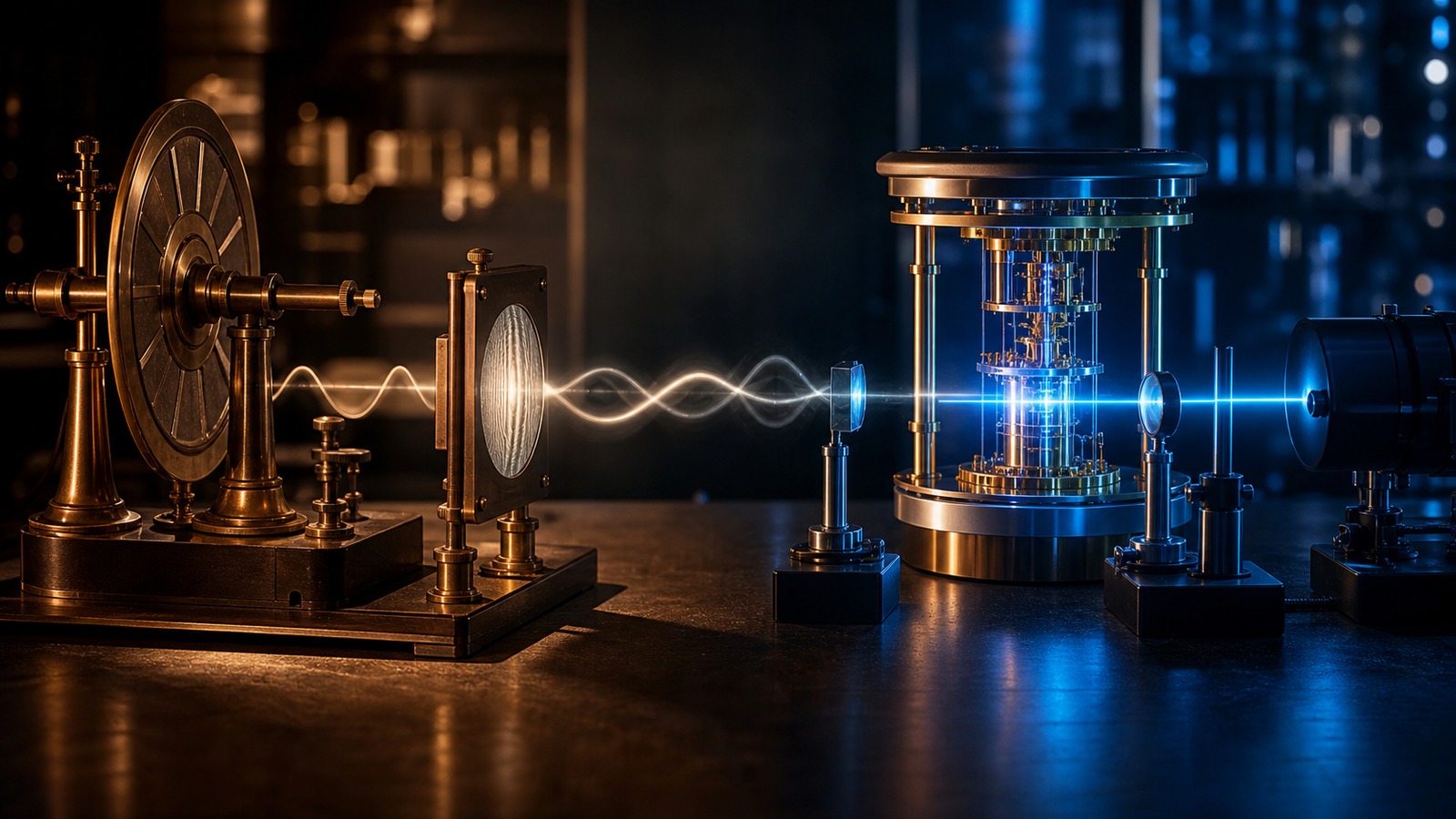
The future of superposition is not only a question for thought experiments. It is increasingly a technology problem: how can engineers prepare, protect, manipulate, and measure coherent quantum states reliably enough to do useful work? Superposition is already central to quantum computing research, precision sensing, atomic clocks, secure communication ideas, materials simulation, and tests of fundamental physics. The future will not be one single device that makes all classical technology obsolete. It will be a collection of specialized tools that use superposition where coherent alternatives provide a real advantage. That advantage might be faster simulation of quantum materials, more sensitive measurement of fields or motion, better clocks, improved methods for communication security, or deeper tests of how quantum mechanics works at larger scales. The hard part is that superposition is fragile. Decoherence, noise, imperfect gates, readout error, temperature, and scaling all limit what can be done. Progress therefore depends less on slogans and more on control. The most important future breakthroughs may look like better materials, longer coherence, cleaner fabrication, smarter error correction, improved calibration, and experiments that turn delicate state relationships into reliable outputs.
A: Yes, in specialized areas where coherence gives advantage.
A: No. They are expected to be specialized tools.
A: Some sensing and timing uses are already comparatively mature.
A: Larger systems add noise, control, and error-correction demands.
A: Quantum states reveal disturbance and support special protocols.
A: Molecules are naturally quantum systems.
A: A specific advantage over strong alternatives.
A: Often it requires better engineering of known quantum rules.
A: They show whether fragile states perform reliably.
A: Superposition will matter where control turns coherence into dependable output.
Quantum Computing
Quantum computing is the most famous future-facing use of superposition. Qubits can carry amplitudes for many basis states, and algorithms can use gates to reshape those amplitudes before measurement. The goal is not to read every possibility, but to make useful outcomes more likely.
Future progress depends on scaling high-quality qubits, reducing error rates, and developing practical error correction. More qubits alone are not enough. The superposition must remain coherent through the operations that matter.
The strongest applications may be specialized, especially for quantum simulation, chemistry, materials, and certain structured mathematical tasks.
Quantum Sensors
Quantum sensors use superposition to make tiny influences measurable. Phase shifts, spin rotations, frequency changes, or interference patterns can reveal fields, forces, acceleration, gravity, and time differences.
The future of sensing may include more portable devices, better stability, and improved operation outside ideal laboratory environments. The challenge is keeping the quantum advantage alive when real-world noise is present.
Some sensors may become practical long before large fault-tolerant quantum computers arrive, because their useful state control can be narrower and more targeted.
That makes sensing one of the most grounded superposition technologies.
Atomic Clocks and Timing
Atomic clocks already rely on quantum state transitions. Future clocks may become even more precise through better control of coherent states, improved lasers, quieter environments, and new atomic or ionic systems.
Better clocks can support navigation, communication networks, geodesy, and fundamental physics tests. They show that superposition-based technology does not always need to look dramatic to be transformative.
Quantum Communication
Quantum communication uses quantum states to transmit or protect information in ways that reveal eavesdropping or support new protocols. Superposition and measurement play central roles, while entanglement can add further capabilities.
The future may involve better networks, repeaters, satellite links, and integration with classical infrastructure. The practical challenge is loss. Quantum states cannot be freely copied, so preserving them over distance requires careful engineering.
Communication technologies show a different side of superposition. The value is not faster calculation, but security, verification, and new information protocols.
Materials and Chemistry
Materials and molecules are quantum systems. Their electrons occupy states, superpose orbital contributions, and become entangled in ways that are difficult to simulate classically. Future quantum technologies may help model these systems more naturally.
Better simulation could support catalysts, batteries, superconductors, drugs, and advanced materials. The path is challenging because useful chemical problems require accuracy, error control, and good mapping from real molecules to device states.
Even before full-scale quantum computers mature, quantum-inspired methods and smaller experiments may improve understanding.
The opportunity is large because nature itself is already quantum.
Better Control Hardware
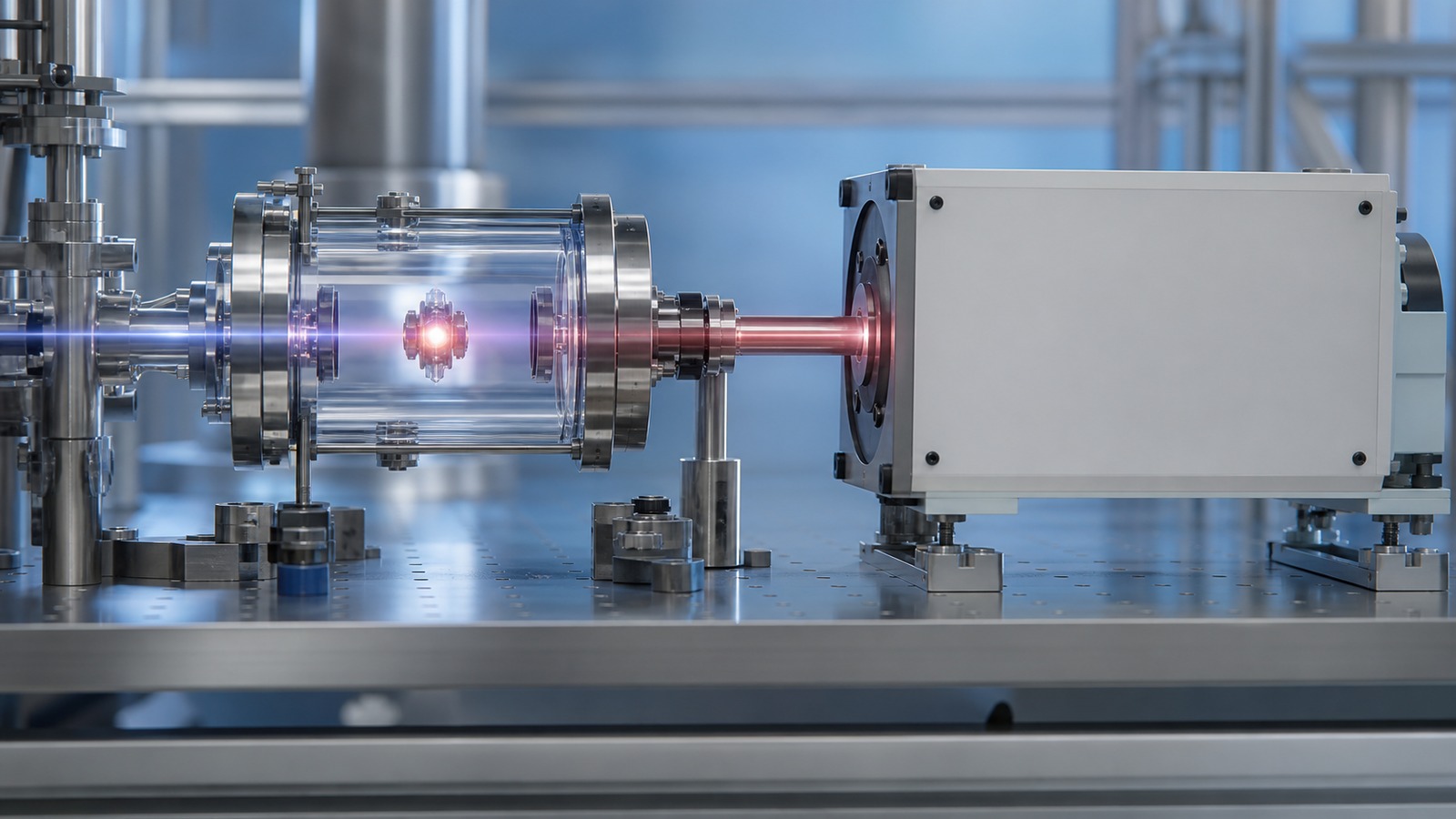
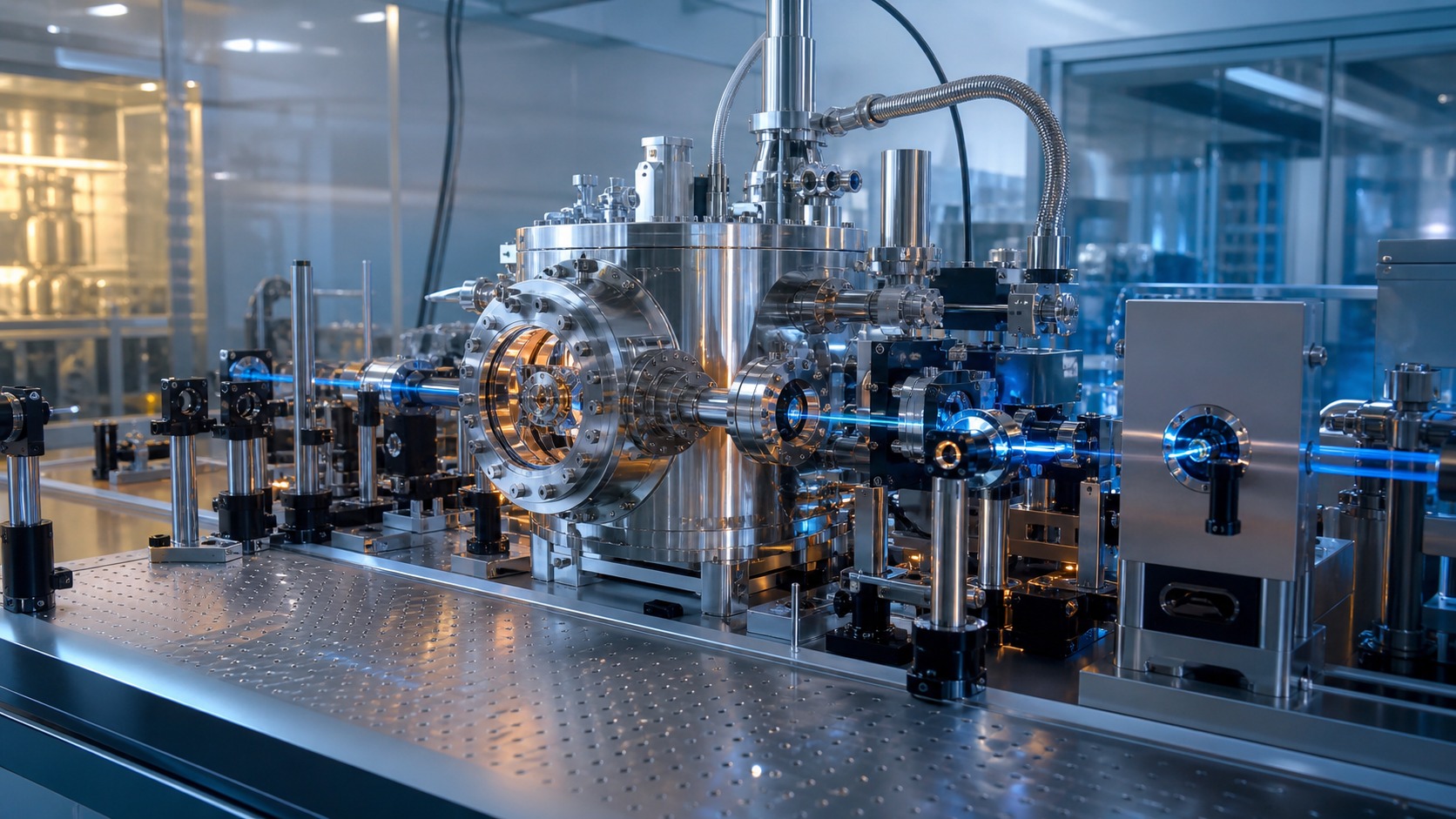
The future of superposition technology may depend on hardware details that sound less glamorous than the concept itself. Materials, fabrication, vacuum systems, cryogenics, lasers, microwave electronics, packaging, and calibration all decide whether a state survives.
This is why progress can look incremental. A longer coherence time, lower readout error, or more stable control pulse may be a major step. The technology advances when the invisible state becomes more dependable.
Error Correction and Reliability
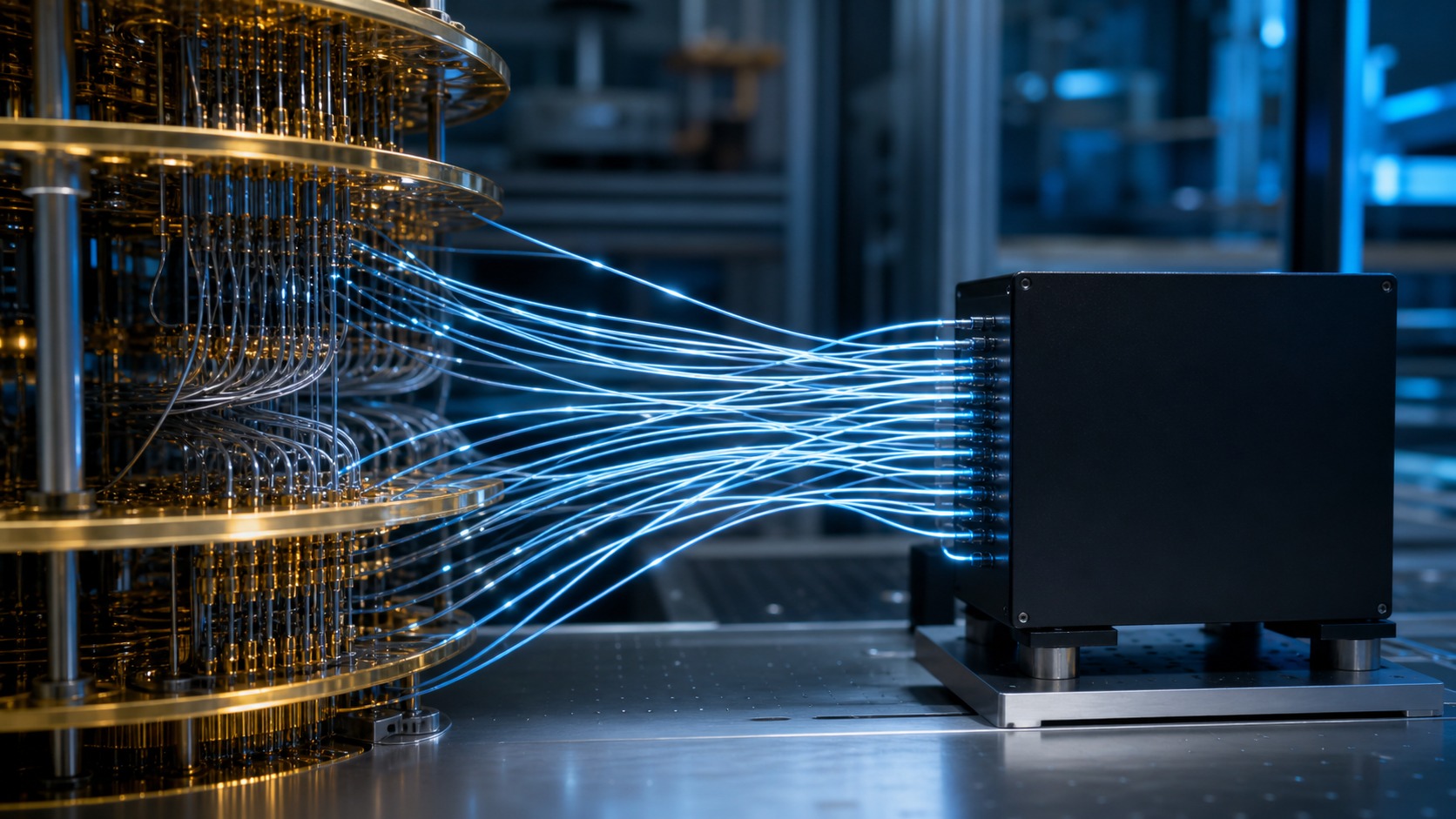
Error correction is essential for large-scale quantum computing and useful for thinking about other quantum systems too. It protects logical information from physical noise without directly copying unknown states.
Future devices will need not just more qubits, but enough reliable qubits to encode, detect, and correct errors. That overhead is large, but it is the route toward computations that last longer than fragile physical states.
Reliability is the difference between a beautiful demonstration and a technology people can use repeatedly.
What Hype Gets Wrong
Hype often presents superposition as unlimited parallel reality. Real technology is narrower and more interesting. It depends on state preparation, coherence, algorithms, measurement, and error budgets.
Not every problem will benefit. Not every device labeled quantum will beat classical tools. The future will be shaped by specific advantages in specific tasks, not by a blanket replacement of existing technology.
What Progress Will Look Like
Progress will look like better benchmarks, clearer demonstrations, longer coherence, more reproducible devices, and applications where quantum performance solves a real problem. It may also look like hybrid systems where quantum components serve specialized roles inside broader classical workflows.
The most important question will be practical: does controlled superposition produce information, precision, security, or simulation ability that is hard to get otherwise?
That question keeps the future grounded.
Why Standards Will Matter
As quantum technologies mature, standards will become more important. Researchers and customers will need shared ways to compare coherence, error rates, sensitivity, uptime, calibration burden, and real task performance.
This is especially important because superposition is invisible in the final product. A device may claim quantum behavior, but the useful question is whether controlled state relationships improve the result. Standards help turn that claim into something measurable.
Good benchmarks also protect the field from disappointment. They make progress visible without pretending every prototype is a revolution.
Reliable comparison is part of reliable technology.
How Classical Tools Will Stay Involved
The future will not be purely quantum. Classical computers, control systems, cryogenic engineering, optics, data analysis, and networking will remain essential. Quantum components will often sit inside larger classical systems.
This hybrid reality is not a weakness. It is how most advanced technology works. The quantum part does the job it is uniquely suited for, while classical systems prepare, stabilize, interpret, and distribute the results.
Why Education Is a Technology Issue
Superposition technology also needs a workforce that understands the concept accurately. Engineers, software developers, technicians, managers, and policy makers all need better mental models than the phrase two things at once.
Education can reduce hype and improve design choices. A person who understands coherence, measurement, and error can ask better questions about a device. Clear public explanations also help society judge claims without swinging between fantasy and dismissal.
The future depends on human understanding as well as hardware.
What Success Might Feel Like
Successful superposition technology may not feel strange to its users. A navigation tool may be more stable. A clock may be more precise. A materials simulation may shorten a research cycle. A sensor may find a signal that older tools missed.
The quantum behavior will be buried inside the device, translated into ordinary outputs. That is what mature technology often does: it hides difficult physics behind reliable function.
If superposition becomes truly useful, it may become less sensational in daily use.
That would be a sign of success, not failure.
Why Progress Will Be Uneven
Superposition will not transform every technology at the same pace. Some uses already have a clear path from laboratory control to practical value, while others need better hardware, cheaper cooling, or stronger error management. The future will arrive in patches.
Quantum sensing may show practical gains sooner in certain niches. Clocks, magnetometers, gravimeters, and navigation tools can benefit from carefully preserved phase without needing a full universal quantum computer. Their requirements are demanding but narrower.
Quantum computing faces a different climb. Useful machines must protect large numbers of qubits, run many operations, and correct errors without destroying the computation. Superposition is essential, but it is only one part of the stack.
Communication and security will develop along their own track. Quantum states can help distribute keys and test for disturbance, yet deployment depends on networks, standards, and cost. The physics has to fit existing infrastructure.
That unevenness should not be read as disappointment. Most powerful technologies mature through specialized wins before broad adoption. Superposition is likely to follow that pattern.
The most realistic future is not a single dramatic breakthrough. It is a sequence of tools that exploit quantum states where the advantage is specific and measurable.
That still changes technology in a deep way. It gives engineers access to phase, coherence, and probability as working resources.
Uneven progress will also reflect talent and infrastructure. Some advances need new fabrication methods, some need better algorithms, and some need supply chains for lasers, cryogenics, or control electronics. Superposition is the physics resource, but ecosystems decide how quickly it spreads.
The uneven path may be exactly what makes the field durable. Each specialized success creates tools, skills, and confidence for the next one.
Useful progress is still progress.
Why The Near Future May Look Specialized
The first widely useful superposition technologies may not look like science fiction. They may appear as better timing systems, improved sensors, specialized processors, secure links, or laboratory instruments. Their value will come from narrow advantages used repeatedly.
Specialization is not a compromise in the weak sense. It is how difficult physics becomes practical. A tool that solves one hard measurement problem can matter enormously even if it does not transform every industry at once.
Quantum computers may follow the same pattern. Before general-purpose breakthroughs, there may be targeted simulations, chemistry tools, optimization aids, or hybrid workflows. Each success will depend on whether superposition and entanglement can be protected at useful scale.
The public story will probably alternate between excitement and frustration. That is normal for emerging technology. The physics is real, but turning it into dependable systems takes time.
The best expectation is steady specialization, then broader connection between the pieces.
Specialized tools can still reshape expectations. Once a quantum sensor, clock, or processor proves value in a narrow setting, engineers gain a concrete target for reliability, cost, and integration. The next step becomes less abstract.
That concrete target is important for investment and education. It tells companies what to build, students what to learn, and researchers which bottlenecks are worth attacking first. The future of superposition will depend on those practical feedback loops as much as on theory.
In that sense, specialization is not a delay in progress; it is the route progress usually takes.
The Future Takeaway
Superposition matters for technology when coherent alternatives can be controlled better than noise can destroy them.
The future belongs to devices that turn fragile quantum relationships into reliable computing, sensing, timing, communication, or simulation advantages.