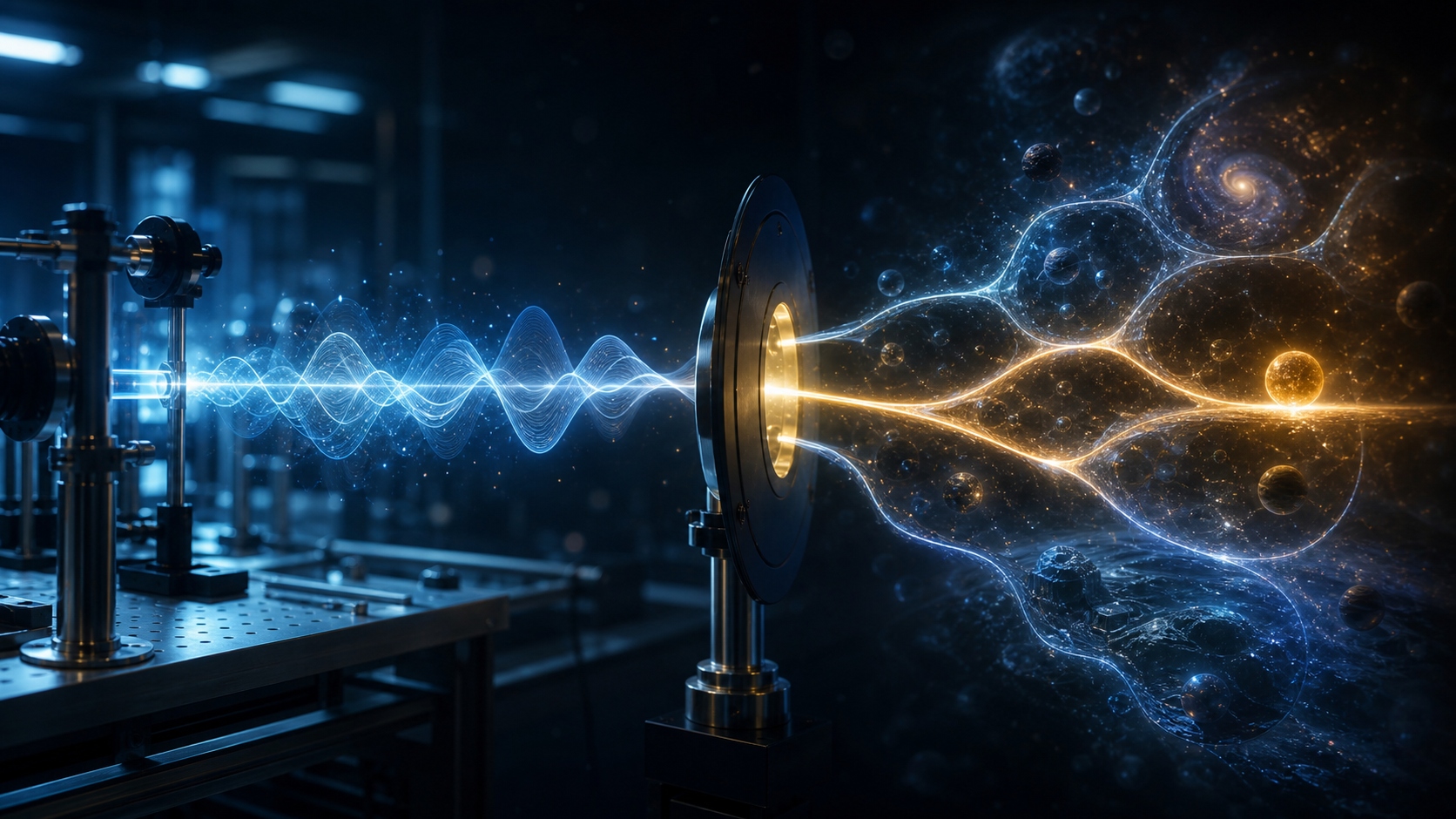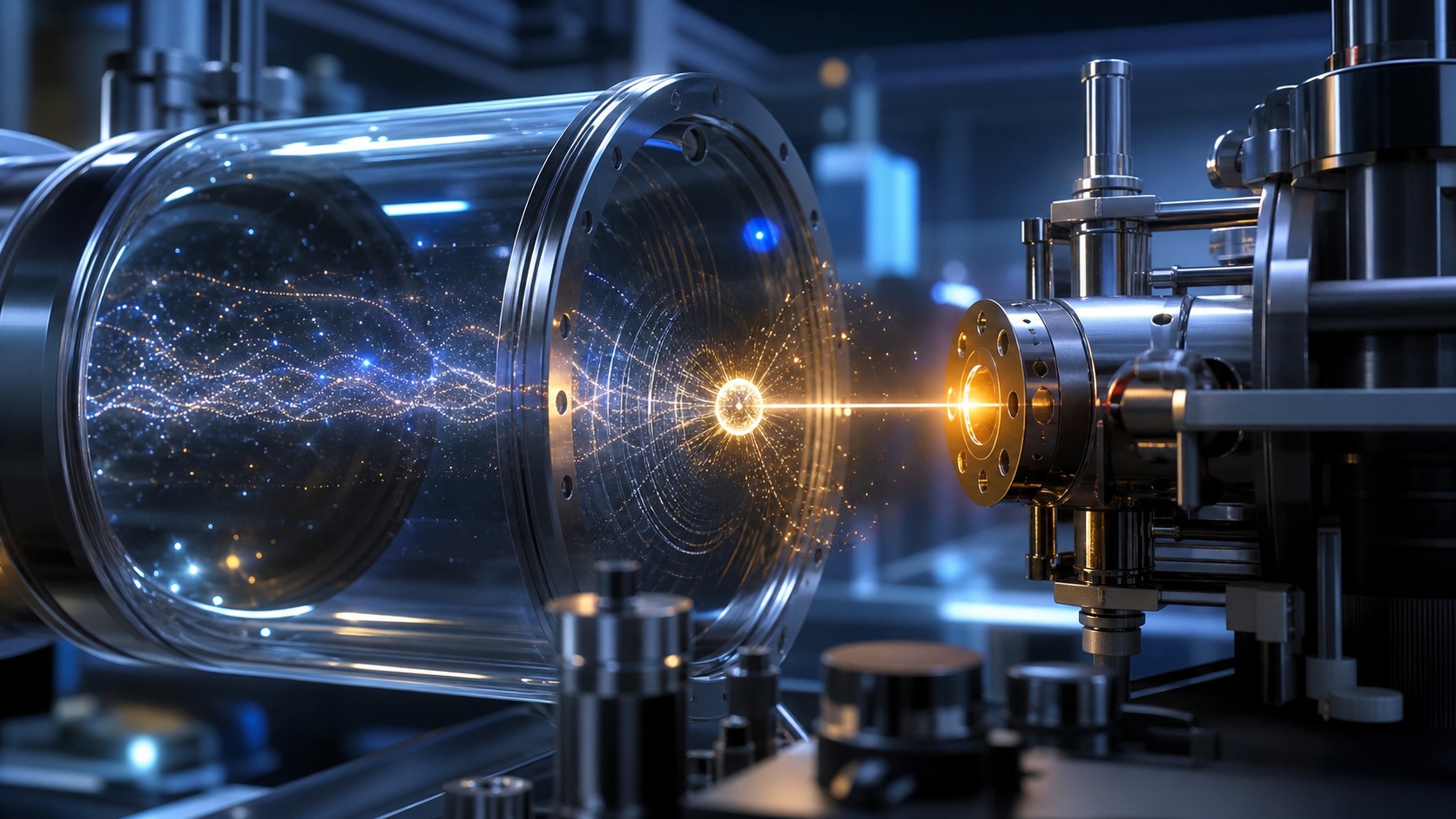
Measuring a quantum particle changes it because measurement is an event inside the quantum system, not a harmless look from outside. A detector must exchange energy, momentum, timing, or information with the particle. For something as small as an electron, photon, atom, or qubit, that exchange can be enough to change the particle's future behavior. This is why quantum measurement is often described as active rather than passive.
A: Many measurements do, though special methods can preserve selected properties.
A: The effect a measuring device has on the system it measures.
A: No. The detector interaction is enough.
A: It prevents alternatives from interfering as before.
A: Yes, but gentler measurements usually reveal less per trial.
A: No. It is built into quantum measurement.
A: To prevent accidental measurement by the environment.
A: Yes. Sensors and security systems can use it.
A: The state used for future predictions is updated.
A: Finding out is itself a physical quantum event.
A Detector Has to Touch Reality Somehow
Every measurement needs a messenger. A lab might use a photon to locate an electron, a magnetic field to separate spin states, or a microwave pulse to read a qubit. In ordinary life those messengers are usually too tiny to matter. In quantum physics they can be the whole story. The particle is not being politely inspected; it is being brought into contact with an apparatus that can leave a record.
Back-Action Is the Cost of Asking
Back-action is the disturbance caused by the measurement itself. If a detector learns a particle's position, the interaction may change its momentum. If a device learns which slit a photon passed through, the interference pattern can vanish. Back-action is not a flaw in the equipment. It is the physical price of extracting information from a system whose state is small, delicate, and easily reshaped.
The Double-Slit Experiment Shows the Tradeoff
The famous double-slit experiment is not about particles feeling watched. It is about information. When no path record exists, the alternatives can combine and create interference. When a detector stores which-path information, the final pattern changes. The measurement has altered the conditions of the experiment. The particle's behavior changes because the world now contains evidence of the route it took.
Gentle Measurements Are Possible but Limited
Scientists can sometimes measure gently. Weak measurements collect only a little information in each trial, reducing the immediate disturbance. Quantum nondemolition techniques are designed to preserve a chosen property long enough to measure it again. These methods do not remove the measurement problem; they manage it. The more information a lab demands from one event, the harder it becomes to avoid changing the system.
Why This Matters for Quantum Technology
Quantum computers must protect qubits from accidental measurement until the final readout. Quantum sensors use tiny disturbances as signals. Quantum communication can reveal eavesdropping because unauthorized measurement leaves traces. The same effect that makes quantum measurement strange also makes quantum devices powerful. Engineers do not ignore back-action; they design around it.
The Simple Takeaway
Quantum measurement changes particles because information is physical. A detector does not simply receive a fact; it participates in making a recorded fact possible. At small scales, finding out where something is, what path it took, or which state it occupies can become part of the thing's next chapter.