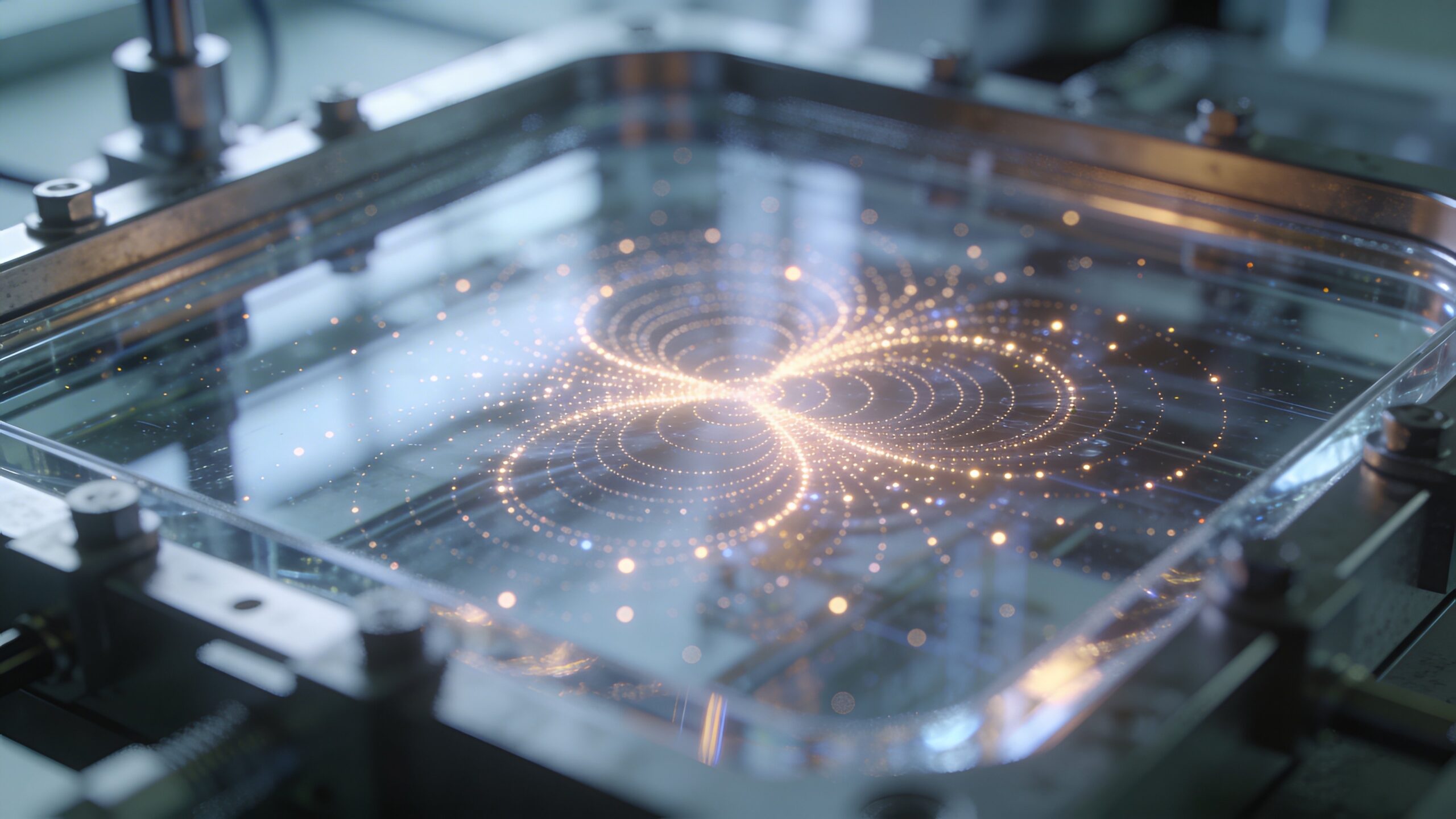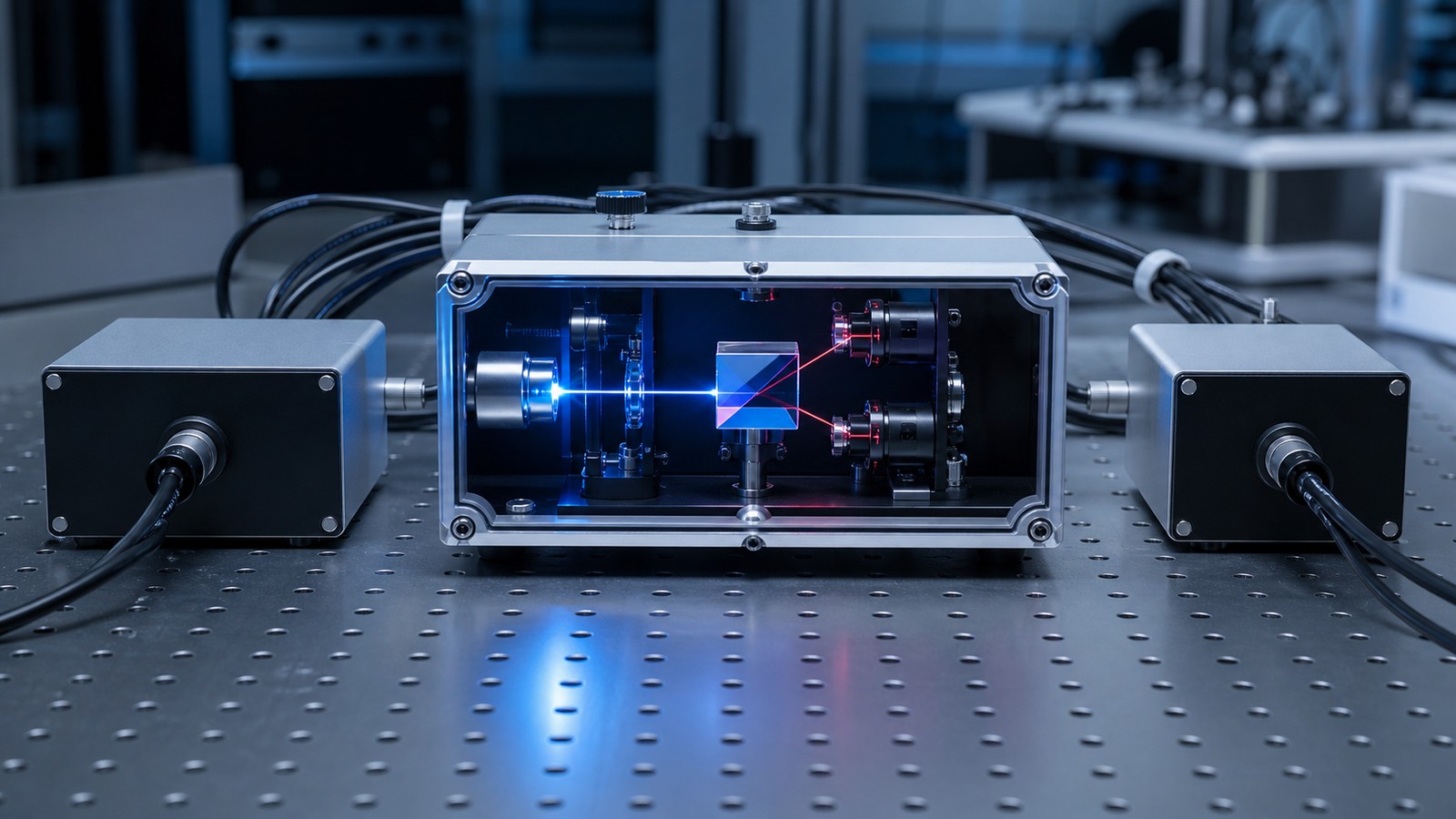
Quantum physics tells us something startling about reality: the future is not perfectly written in advance. In the everyday world, it often feels as if events follow a neat chain of cause and effect. A ball rolls because someone pushed it. A clock ticks because gears or circuits keep time. But when scientists look closely at atoms, electrons, photons, and other quantum objects, nature stops behaving like a predictable machine and starts behaving like a living cloud of possibilities.
A: It shows some microscopic outcomes are not fixed in the classical sense.
A: No reliable evidence shows that human thoughts control measurement results.
A: No. The probabilities follow precise rules.
A: Their many particles interact with the environment and settle into stable patterns.
A: A mathematical description of possible quantum outcomes.
A: It creates a definite recorded result from possible outcomes.
A: Not the fundamental uncertainty described by quantum theory.
A: Yes. It can support secure random numbers and advanced technologies.
A: In quantum physics, probability appears to be part of reality itself.
A: It means nature is more subtle and creative than a simple machine.
The Classical Dream of a Perfectly Predictable Universe
For centuries, science was shaped by a powerful idea: if you knew the exact position, speed, and forces acting on every object, you could predict the future with perfect accuracy. This picture worked beautifully for planets, falling apples, bridges, engines, and many everyday systems. It made the universe feel like an enormous clock. Wind it up, know the parts, and the next tick should follow with certainty. Quantum physics did not destroy cause and effect, but it showed that this clockwork picture is incomplete. At the smallest scales, nature does not always hand us one definite future waiting to unfold. It gives us probabilities.
Particles Do Not Carry Finished Answers
An electron is not simply a tiny marble hiding a fixed set of facts from us. Before measurement, quantum theory describes it with a wavefunction, a mathematical way of listing what could happen and how likely each outcome is. The electron may have several possible positions, energies, or paths available at once. This does not mean it is confused. It means our familiar categories are too stiff for the quantum world. The wavefunction is not a sloppy guess caused by bad instruments. It is the best description physics has found for a reality that keeps some outcomes genuinely open until interaction forces a result.
Probability Is Built Into the Rules
In ordinary life, probability usually means ignorance. If you say a coin has a fifty-fifty chance of landing heads, you assume the coin will really do one thing, and you simply do not know enough about the flip to predict it. Quantum probability runs deeper. Even with the best possible preparation, the theory may still only tell you the odds of each outcome. Experiments confirm this again and again. Quantum physics can predict the pattern of many results with astonishing precision, but it cannot always predict the exact result of one event. The future is structured, but not nailed down.
The Uncertainty Principle Is Not About Clumsy Measuring
Werner Heisenberg?s uncertainty principle is often explained as if measurement simply bumps tiny particles around. That can happen, but the real idea is more profound. Some pairs of properties, such as position and momentum, cannot both be perfectly sharp at the same time. The more definite one becomes, the less definite the other can be. This is not a failure of technology. It is a limit woven into quantum reality. A particle with an exact position does not also have an exact motion waiting quietly in the background. The world itself refuses to fit that picture.
Measurement Turns Possibility Into an Event
Measurement is where quantum possibility becomes an actual recorded fact. A detector clicks. A screen shows a bright dot. A sensor records a spin direction. Before that moment, quantum theory may describe a spread of possible results. Afterward, one result is real for that experiment. This is why measurement feels so dramatic in quantum physics. It is not just passive looking. It is an interaction that makes a definite history out of a field of possible histories. Scientists can calculate the odds, prepare the system carefully, and repeat the experiment thousands of times, but the single result still carries an element of surprise.
The Double-Slit Experiment Shows the Open Future in Action
The double-slit experiment is one of the clearest windows into this strange openness. Send particles such as electrons or photons toward two narrow slits, and if no one measures which slit each particle uses, the results build an interference pattern, like waves overlapping. Try to determine the path, and the pattern changes. Each particle arrives at the screen as a single mark, but the total pattern reveals that the unmeasured path was not a simple either-or story. The particle?s future included more than one possible route until the experimental setup demanded a particular kind of answer.
This Does Not Mean Anything Can Happen
A future that is not fixed is not the same as a future with no rules. Quantum mechanics is not a permission slip for chaos, magic, or wishful thinking. The probabilities are precise. The allowed outcomes are constrained by the system, the forces involved, and the way it is measured. You cannot use quantum uncertainty to make a brick levitate by wanting it to, because large everyday objects are made of countless particles whose quantum possibilities average into stable classical behavior. The quantum world is open, but it is not lawless.
How Possibility Becomes the World We Know
One reason the everyday world looks solid and predictable is decoherence. Quantum systems constantly interact with their surroundings: light, heat, air molecules, vibrations, and measuring devices. These interactions quickly scramble delicate superpositions and leave behind results that behave classically. A chair does not appear in several places at once because it is enormously entangled with its environment. Decoherence helps explain why the open quantum future usually narrows into the familiar world of definite objects, definite records, and dependable patterns.
Technology Uses the Unfixed Future
Quantum uncertainty is not just a philosophical puzzle. It powers real technology. Quantum random number generators use unpredictable quantum events to create secure randomness. Quantum computers use superposition and probability amplitudes to process information in new ways. Atomic clocks rely on quantum transitions for extraordinary precision. Medical imaging, lasers, semiconductors, and advanced sensors all depend on quantum rules. The fact that the future is probabilistic at small scales is not a weakness in nature. It is a feature engineers are learning to use.
A More Humble View of Reality
Quantum physics invites humility. It tells us that perfect prediction is not always available, even in principle. It asks us to replace the idea of a rigid script with something more subtle: a world of lawful possibilities, shaped by preparation, interaction, and measurement. The future is not empty randomness, and it is not fully settled fate. It is a landscape of chances that becomes history one event at a time. That may be unsettling, but it is also beautiful. At the deepest level we have measured, reality is not merely a finished answer. It is an unfolding question.