Why a Small Magnet Can Defeat an Entire Planet
Gravity and electromagnetism both act across unlimited distance and often follow inverse-square behavior, yet they shape daily life in radically different ways. Gravity responds to mass-energy, is effectively always attractive in ordinary settings, and accumulates across neutral matter. Electromagnetism responds to electric charge, can attract or repel, is vastly stronger between elementary particles, and usually cancels across objects containing nearly equal positive and negative charge. Earth’s gravity keeps you on the ground, but a hand-sized magnet can lift steel against that planetary pull. Understanding the contrast explains orbits, contact forces, chemistry, light, electricity, and why gravity dominates the cosmos while electromagnetism dominates matter.
A: Electromagnetism is enormously stronger between microscopic constituents.
A: Positive and negative charge cancel in nearly neutral bulk matter.
A: Point-source limits are, although their full theories differ.
A: Electromagnetic interactions and exclusion create the upward support force.
A: Weight is the support force opposing free fall.
A: No known material screens it as charges can screen electric fields.
A: No. Magnetism is the relativistic partner of electricity.
A: They and their spacecraft share continuous orbital free fall.
A: No carrier is confirmed; a graviton remains hypothetical.
A: Electromagnetism acting through quantum electron states.
Two Long-Range Interactions With Different Sources
Newtonian gravity between two objects depends on their masses, separation, and the gravitational constant. Electrostatic force between two point charges depends on their charges, separation, and the electric constant. Both equations include an inverse square: double the separation and the force falls to one quarter.
The resemblance does not make the interactions identical. Electric charge comes in positive and negative forms. Mass-energy in ordinary matter produces attractive gravity, with no observed negative gravitational mass available to cancel it. Electromagnetic force can point toward or away from another charge; gravity pulls ordinary bodies together.
General relativity also changes the conceptual picture. Gravity is not fundamentally a force field on fixed space in Einstein’s theory; mass-energy shapes spacetime geometry, and free objects follow that geometry. Electromagnetism remains a gauge field propagating through spacetime.
The Microscopic Strength Gap Is Enormous
Between a proton and electron, electromagnetic attraction overwhelms their gravitational attraction by an extraordinary factor. This is why gravity can be ignored when calculating atomic orbitals, chemical bonds, and electrical circuits.
A magnet lifting a paper clip demonstrates the disparity. The magnet involves aligned electron magnetic moments and currents in a small piece of material, yet its upward electromagnetic influence exceeds the downward gravitational effect of Earth’s vast mass on the clip.
Strength comparisons require a specified pair of particles and energy scale, but the qualitative conclusion is stable: gravity is extremely weak microscopically. Its dominance at large scale comes from accumulation and the cancellation behavior of charge.
The comparison also depends on material response. A permanent magnet does not use every electron independently; ordered domains align many microscopic moments so their fields reinforce. In an unmagnetized sample, those contributions point in different directions and mostly cancel. Organization turns microscopic electromagnetic strength into a visible macroscopic lift.
Why Gravity Wins Across Astronomical Distances
A macroscopic object typically contains almost equal positive and negative charge. Any substantial imbalance attracts opposite charges from the environment or repels like charge, driving the object toward neutrality. Distant electric fields therefore cancel strongly.
Mass-energy does not cancel. Every atom contributes to the gravitational field in the same attractive direction. Gather enough matter and weak individual contributions create planets, stars, galaxies, and clusters.
Electromagnetism still matters astronomically wherever plasma, magnetic fields, or radiation is present. It shapes stellar atmospheres, jets, solar flares, and interstellar gas. It simply does not replace gravity as the primary organizer of neutral bulk mass across the largest scales.
What You Feel as “Solid” Is Mostly Electromagnetic
When you stand on a floor, gravity pulls you downward. You do not pass through the floor because atoms in your shoes and floor resist overlap. Electromagnetic interactions among electron clouds and the Pauli exclusion principle create the upward normal force.
The same explanation applies to a chair supporting weight, a hand pushing a wall, and friction between surfaces. Contact force is not a fifth fundamental interaction. It is an emergent description of huge numbers of electromagnetic and quantum exchanges among atoms.
Your sense of touch also comes from these interactions. Nerve receptors deform under material forces, and biochemical signals then travel through electromagnetically governed molecular processes. Gravity sets the load; electromagnetism supplies the material response.
Pressure in a gas has the same layered explanation. Molecules move and exchange momentum with a container through electromagnetic collisions. Gravity creates a vertical pressure gradient in an atmosphere by pulling the gas downward, while electromagnetic impacts supply the local pressure that balances the weight above.
Electromagnetism Creates Chemistry and Light
Negative electrons bind to positive nuclei through electromagnetic attraction, with quantum mechanics defining the allowed states. Electron sharing and transfer create covalent and ionic bonds. Molecular shapes, reaction energies, color, conductivity, and material phases all depend heavily on electron-field interactions.
Light is an electromagnetic wave and, quantum mechanically, a stream of photons. Radio, microwaves, infrared, visible light, ultraviolet, X-rays, and gamma rays are one spectrum distinguished by frequency and photon energy.
Changing electric fields generate magnetic fields, and changing magnetic fields generate electric fields. This unity makes generators, motors, transformers, antennas, wireless communication, and power grids possible.
Gravity Controls Weight, Falling, and Orbits
Near Earth’s surface, freely falling objects share nearly the same gravitational acceleration when air resistance is negligible. Their inertial mass and gravitational response match, a fact elevated by Einstein into the equivalence principle.
Weight is the support force needed to prevent free fall, not simply the existence of gravity. An orbiting astronaut appears weightless because astronaut and spacecraft fall together around Earth. Gravity remains strong at typical orbital altitudes.
An orbit is continuous free fall with enough sideways velocity to keep missing the surface. The Moon falls around Earth, Earth falls around the Sun, and satellites follow paths predicted by gravity. Electromagnetic forces inside engines and materials launch and control spacecraft, but gravity determines the coast trajectory.
Near Earth, gravitational acceleration changes only slightly across a person’s height, so it appears uniform. Across the Earth-Moon system, the difference matters and produces tides. General relativity adds small corrections essential for precise navigation, planetary ephemerides, and clocks in satellite systems.
Attraction, Repulsion, and Shielding
Electromagnetic repulsion prevents like charges from piling together freely. Conductors rearrange charge to reduce internal electric fields, and plasmas screen static charges over characteristic distances. Materials can also redirect magnetic fields, though perfect universal shielding is not available for every electromagnetic situation.
No known material blocks gravity. A mass placed between you and Earth does not shield Earth’s pull; it adds its own tiny gravitational influence. This difference follows from the absence of ordinary negative gravitational charge and from gravity’s geometric description.
Electric neutrality is why static shocks require charge separation. Rubbing materials transfers electrons, creating an imbalance. A spark rapidly restores a lower-energy distribution. Gravity has no analogous positive-negative discharge.
Energy and Radiation
Accelerating electric charges emit electromagnetic radiation. Antennas deliberately drive charges to send radio waves, while atoms emit photons during transitions. Electromagnetic radiation interacts strongly enough with matter to be generated, detected, absorbed, and reflected conveniently.
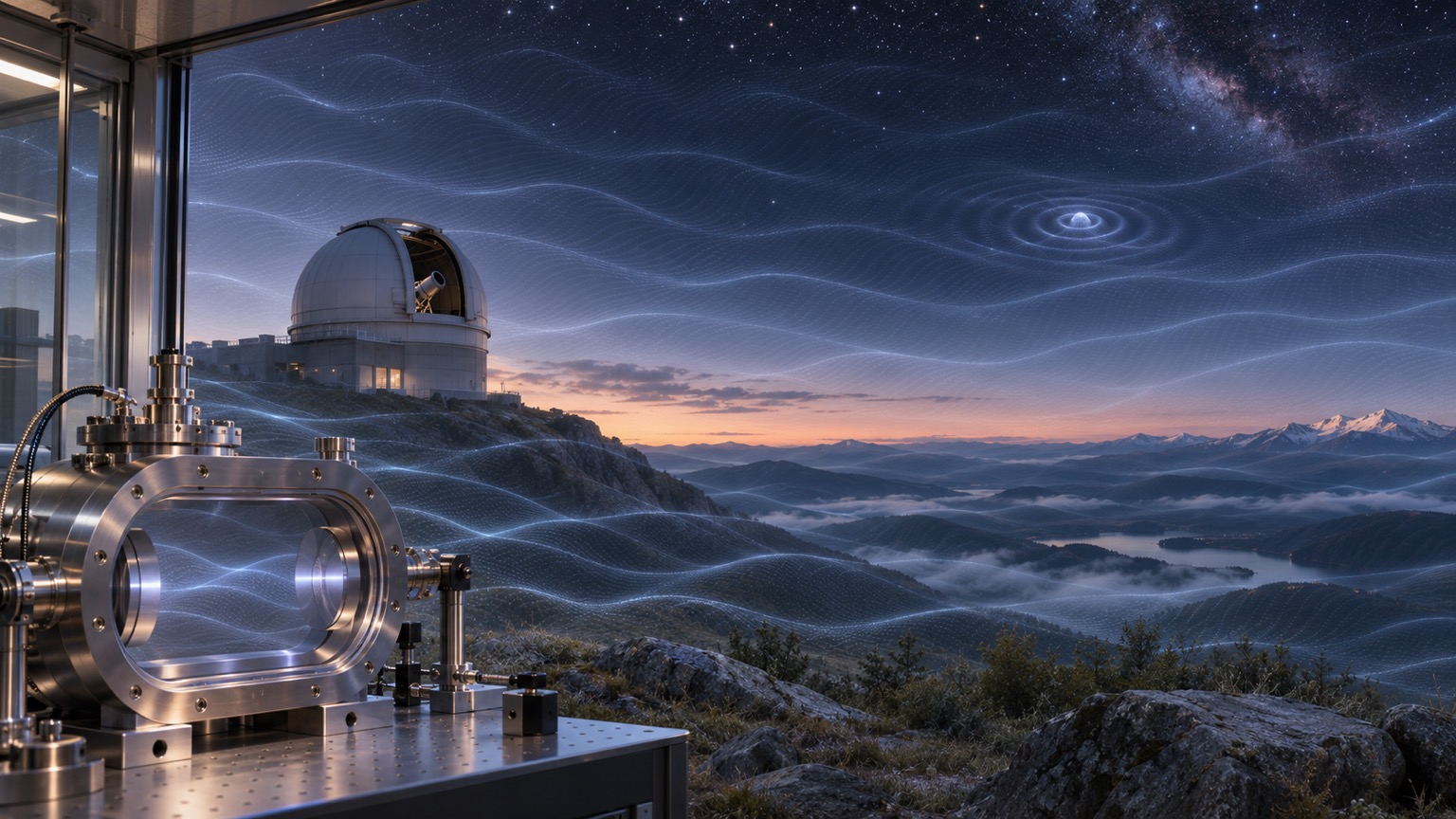
Accelerating asymmetric masses can emit gravitational waves, but gravity’s weakness makes laboratory generation negligible. Detectable waves come from enormous compact systems such as merging black holes and neutron stars. Interferometers measure distortions far smaller than an atomic nucleus across kilometer-scale arms.
Both forms of radiation travel at light speed in vacuum according to modern theory and observation. They carry different information: electromagnetic waves often trace charged matter, while gravitational waves reveal bulk motion of compact mass-energy.
The source requirements explain the detection gap. A laboratory antenna can move enormous numbers of electrons coherently and radiate measurable power. Moving ordinary laboratory masses produces gravitational radiation far too weak to observe. Astrophysical mergers compensate with stellar masses, relativistic speeds, and extreme compactness.
Quantum Descriptions Are Unequal
Quantum electrodynamics describes electromagnetic interactions with exceptional precision. The photon is its massless spin-one gauge boson. Calculations of scattering, atomic shifts, and magnetic moments agree spectacularly with experiments.
Gravity has no comparable complete tested quantum theory. A hypothetical massless spin-two graviton appears in many approaches, but none has been detected. General relativity works extremely well at large scales, while quantum theory governs microscopic systems. Their high-energy reconciliation remains open.
Common Everyday Comparisons
A dropped object accelerates because of gravity, but air drag and impact are electromagnetic effects. A compass aligns through magnetism, while its weight is gravitational. A lamp converts electromagnetic energy in a circuit into photons, all while gravity holds the fixture and shapes convection in the surrounding air.
Tides arise mainly from differences in gravitational pull across Earth, not from magnetism. Static cling arises from electric charge separation, not gravity. A refrigerator magnet sticks because magnetic domains create an electromagnetic attraction strong enough to exceed its weight.
Separating the interactions does not mean real events use only one. Everyday motion combines gravitational loading, electromagnetic contact, friction, air pressure, and material deformation. The useful question is which fundamental interaction produces each effective force.
Why Neither Interaction Can Replace the Other
Attempts to explain gravity as magnetism fail because neutral objects fall, gravitational acceleration is composition-independent to extraordinary precision, and gravity affects light and clocks through spacetime geometry. Electric and magnetic forces depend on charge, current, velocity, and field orientation.
Likewise, electromagnetism cannot be reduced to ordinary gravity. It permits repulsion, charge screening, polarization, and photon interactions far stronger than gravitational counterparts. The mathematical symmetries and observed carriers are different.
One Comparison Explains Two Scales of Reality
Electromagnetism dominates atoms, materials, biology, and technology because charge interactions are strong and versatile. Gravity dominates planets, stars, and galaxies because mass-energy adds while charge usually cancels. Daily life sits at their intersection: gravity supplies weight and large-scale orientation, while electromagnetism supplies the surfaces, muscles, machines, and light through which we respond.
The magnet defeating Earth is therefore not a paradox. It is a compact demonstration of microscopic strength versus macroscopic accumulation. The same contrast explains why gravity can be ignored inside an atom yet cannot be ignored when building a bridge, launching a satellite, or describing the universe.
The two interactions also cooperate in every engineered object. Gravity supplies loads, required supports, and potential energy; electromagnetism determines material strength, motor action, sensing, and communication. Engineering succeeds by using the stronger interaction locally while respecting the weaker interaction’s accumulated consequences.
Precision Tests Compare Their Deepest Principles
Equivalence-principle experiments compare how objects of different composition fall. Any reproducible difference beyond known disturbances could indicate a new interaction or a failure of general relativity. Atomic interferometers, torsion balances, lunar ranging, and satellite experiments push these comparisons to extreme precision.
Electromagnetic theory faces equally demanding tests through atomic clocks, magnetic moments, spectroscopy, and force measurements. Comparing these sectors can search for drifting constants or hidden couplings between fields. So far, gravity and electromagnetism remain distinct theories whose predictions agree impressively with their own domains, even though a complete quantum union is still missing. Researchers also test whether antimatter falls normally, whether electric neutrality is exact, and whether the inverse-square laws change at very short distances. Each null result restricts proposed fifth forces and unification models. The familiar magnet-and-weight comparison therefore leads directly to frontier experiments asking whether the two interactions share deeper physics beyond their current descriptions. Any successful unification would still need to reproduce the stark everyday differences in attraction, repulsion, shielding, composition dependence, and microscopic strength that these simple demonstrations reveal with remarkable clarity, from a falling key to a magnet holding that same key securely above the floor.