Superposition Is Still Being Tested, Not Just Taught
The latest experiments reveal that superposition is not a dusty textbook idea. Researchers are still pushing it into larger objects, colder atoms, better clocks, cleaner interferometers, and more complex engineered systems. Recent work has demonstrated matter-wave interference with much larger nanoparticles than earlier experiments, tested Bell-type correlations in the motion of ultracold atoms, and proposed or developed clock experiments where quantum motion and relativistic time effects meet. These results do not mean scientists have made cats vanish into two rooms at once, and they do not settle every interpretation of quantum mechanics. They do show something more disciplined and more important: coherent alternatives can be prepared, protected, and tested in regimes that keep expanding. The modern story of superposition is therefore about scale, control, and evidence. How massive can the object be while still showing interference? How long can coherence survive? How sharply can a clock, atom, or qubit reveal phase? How much environmental information is enough to wash out the effect? Each new experiment adds detail to those questions. The result is not one grand proof that reality is weird. It is a growing map of when quantum possibilities can still be made to act together before measurement.
A: They push coherence into larger, cleaner, or more precise systems.
A: Usually no. They constrain models more than they settle meanings.
A: They test interference with more massive and complex objects.
A: They allow precise control of motion and correlations.
A: They can probe tiny quantum and relativistic effects together.
A: No. Verification and coherence quality are just as important.
A: It can reveal decoherence or leaked distinguishing information.
A: Some directly support sensing, clocks, computing, and materials research.
A: The state-level evidence appears in the distribution.
A: Superposition survives under controlled conditions and fails through measurable channels.
Why Recent Experiments Matter
Superposition has been confirmed for many decades, but modern experiments matter because they test how far the principle can be pushed. The old question was whether microscopic particles could behave this way. The newer question is how large, complex, precise, or controlled the system can become.
That shift changes the meaning of progress. A recent experiment may not discover superposition from scratch. Instead, it may widen the range of systems where coherent alternatives can be prepared and verified.
This is valuable because the boundary between quantum and classical behavior is not a single painted line. It depends on isolation, mass, temperature, coupling to the environment, measurement design, and experimental time.
Modern experiments turn those factors into measurable limits.
They ask where the old classroom examples still work and where new physics might eventually appear.
Larger Matter Waves Test Scale
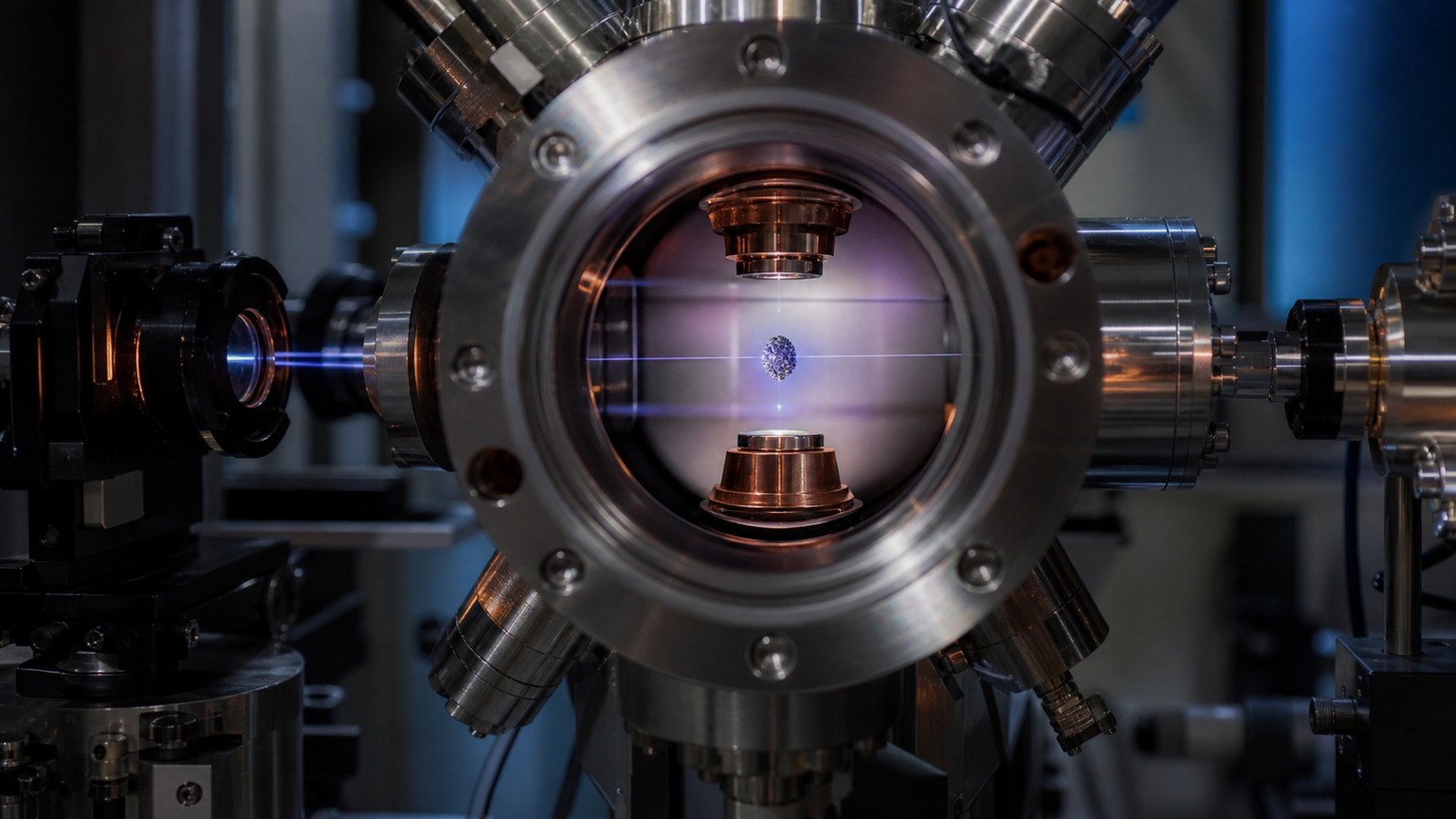
One major direction is matter-wave interference with larger particles. When a molecule or nanoparticle shows interference, its center-of-mass motion cannot be treated as a simple classical path during the coherent part of the experiment.
Recent nanoparticle interferometry has pushed this scale upward by using metal clusters containing thousands of atoms. The important claim is not that the cluster looks like a macroscopic pet. The claim is that a larger material object can still propagate in a state whose alternatives interfere.
That matters because some proposed modifications of quantum mechanics predict that superposition should fail for sufficiently massive or complex systems. Larger interference experiments place tighter pressure on those ideas.
Cold Atoms Reveal Moving Correlations
Another direction uses ultracold atoms. Cold atoms can be controlled with exceptional precision because their motion, collisions, and internal states can be prepared carefully. That makes them good platforms for testing superposition and entanglement in motion.
Recent experiments with momentum-entangled helium atoms show that quantum correlations can be studied in the motion of massive particles, not only in light. Bell-style tests in such systems help separate quantum structure from ordinary hidden-variable explanations.
This does not make superposition and entanglement identical. It shows that coherent alternatives and shared states can be engineered in motional degrees of freedom. The result expands the range of systems available for foundational tests.
Cold-atom work is especially interesting because it can connect quantum mechanics with gravity, inertial sensing, and precision measurement. The same control that makes a beautiful foundations test can become a sensitive instrument.
The lesson is that superposition is not tied to one particle type. It is a principle that appears whenever a state can preserve coherent alternatives.
Each new platform reveals a different vulnerability and a different strength.
Quantum Clocks Sharpen the Question
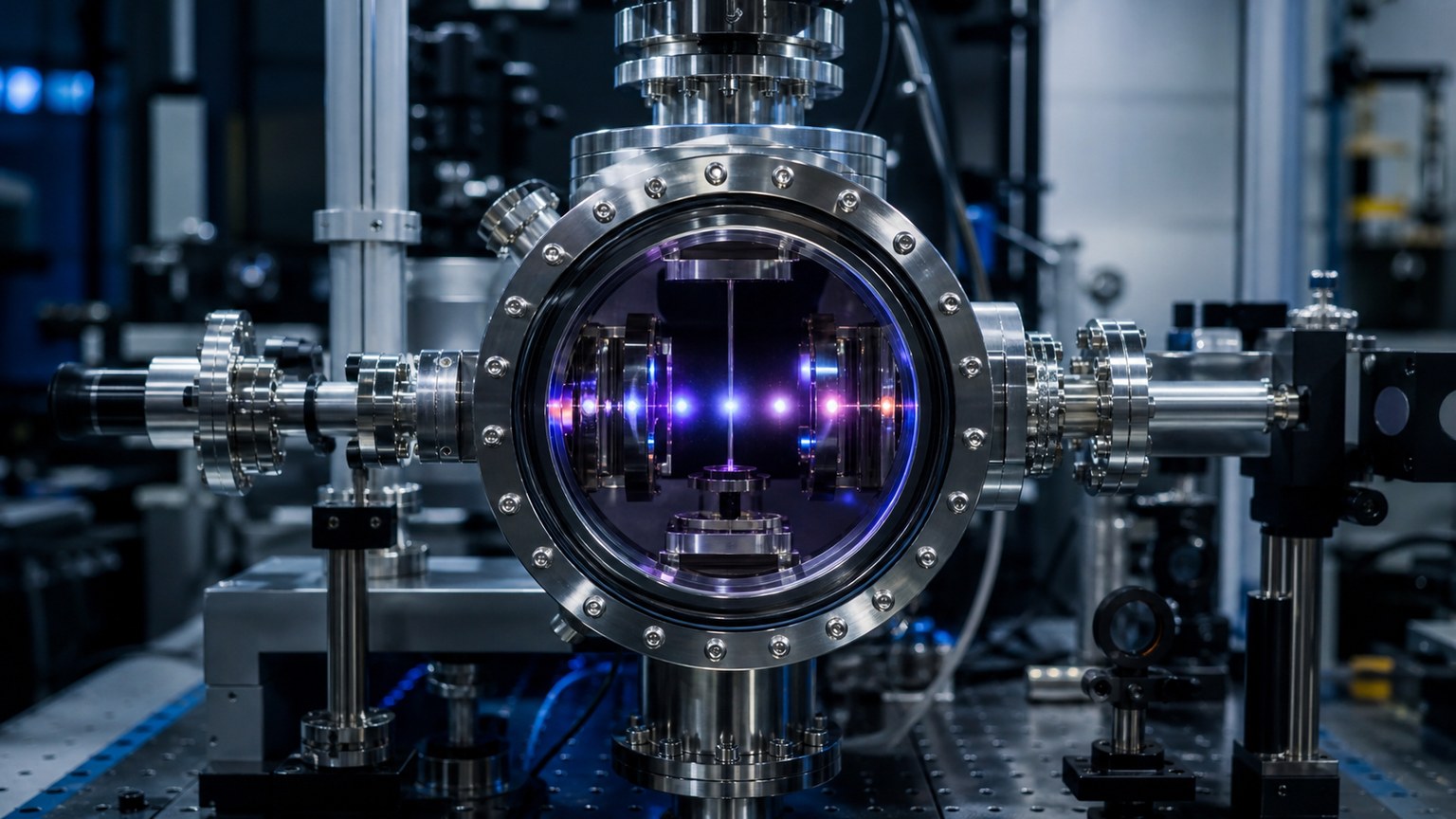
Optical clocks and trapped ions offer another frontier. These systems can compare tiny differences in energy and time with extraordinary precision. When the clock’s motion must be treated quantum mechanically, familiar ideas about time dilation can gain a new layer.
Recent theoretical and experimental clock work points toward tests where quantum motion, squeezing, and clock evolution interact. The key idea is not that everyday time becomes a cartoon superposition. It is that the clock system may require a quantum description of motion and timing together.
Clock platforms are powerful because small effects become measurable. They can bring superposition into contact with relativity, which is one reason researchers watch them closely.
The careful wording matters. Some proposals are not yet the same as completed demonstrations. The field is moving from possibility toward tests, and that distinction should stay visible.
Decoherence Is Measured More Precisely
Modern experiments also reveal how superposition fails. That may sound negative, but it is crucial. When interference fades, researchers can often identify whether the cause is scattering, thermal radiation, vibration, magnetic noise, imperfect readout, or some other environmental channel.
Decoherence studies show that the classical appearance of the world is not simply a philosophical preference. It emerges from physical interactions that mark alternatives and prevent them from recombining cleanly.
The better the experiment, the more precisely those channels can be measured. A faded interference pattern can become a map of unwanted information leakage.
This helps both foundations and technology. It tests how robust quantum mechanics remains and tells engineers what must be improved in clocks, sensors, and computers.
Failure modes are therefore part of the discovery.
Control Matters as Much as Size
Popular coverage often focuses on size: the biggest molecule, the largest cluster, or the most dramatic separation. Size is important, but control is just as important. A smaller system with excellent phase control may reveal more physics than a larger system with weak verification.
Scientists care about visibility, coherence time, state fidelity, temperature, isolation, and how convincingly classical alternatives have been ruled out. These details are what turn a bold claim into a strong experiment.
The best recent work combines ambition with caution. It expands the scale or precision while still asking whether the observed pattern follows quantum predictions.
What These Experiments Do Not Prove
Recent experiments do not prove that every interpretation of quantum mechanics is wrong except one. Many interpretations make the same laboratory predictions for these setups. The experiments constrain certain collapse models, macrorealist ideas, or classical explanations, but they do not automatically settle the full meaning of the wavefunction.
They also do not show that everyday macroscopic objects can maintain useful superpositions under normal conditions. Larger-than-before is not the same as unlimited. Isolation remains difficult, and decoherence becomes severe as systems grow and interact with their surroundings.
This caution makes the results more trustworthy. The value is in what was actually measured, not in turning every result into science fiction.
A good reading asks what system was prepared, how coherence was verified, what alternatives were recombined, and which models were constrained.
That is how exciting experiments stay scientific.
The restraint does not reduce their importance. It makes their importance clear.
Why the Frontier Keeps Moving
The frontier keeps moving because experimental tools keep improving. Better vacuum systems, colder sources, quieter lasers, more stable clocks, cleaner materials, and stronger error correction all extend what can be tested.
Each improvement gives superposition a little more room to survive. It may allow heavier particles, longer paths, more qubits, sharper phase measurements, or subtler tests of gravity and time.
The future is not one single experiment that answers everything. It is a sequence of careful tests that map the conditions under which quantum coherence persists.
That map is useful for technology and for foundations. It tells us where quantum effects can be engineered and where the classical world emerges from lost coherence.
How the Experiments Pressure Theories
Some experiments matter because they put pressure on alternative theories, not because they surprise standard quantum mechanics. Collapse-style models, macrorealist assumptions, or simple hidden-variable stories may predict limits that can be tested as masses, separations, and coherence times increase.
A strong experiment identifies which parameter range it constrains. It does not have to overthrow a theory in one move. It can narrow the available space for models that predict departures from ordinary quantum behavior.
This is why careful numbers matter. Mass, separation, temperature, time, visibility, and environmental coupling tell readers what kind of test was performed. The headline “larger superposition” is only the beginning.
Theory pressure also helps explain why failures are informative. If a pattern disappears exactly where known decoherence predicts, that supports the environmental account. If a clean experiment eventually departed from quantum predictions, that would be extraordinary.
For now, the main story is refinement. The tests are becoming sharper, and the familiar quantum rules keep surviving in harder places.
Why Everyday Objects Still Look Classical
Recent experiments do not imply that ordinary objects around us maintain delicate superpositions in everyday conditions. A warm object in air is constantly scattering light, exchanging heat, vibrating internally, and interacting with countless surroundings.
Those interactions create records that distinguish alternatives. Even if the combined universe is described quantum mechanically, the accessible state of the object quickly loses the coherence needed for visible interference.
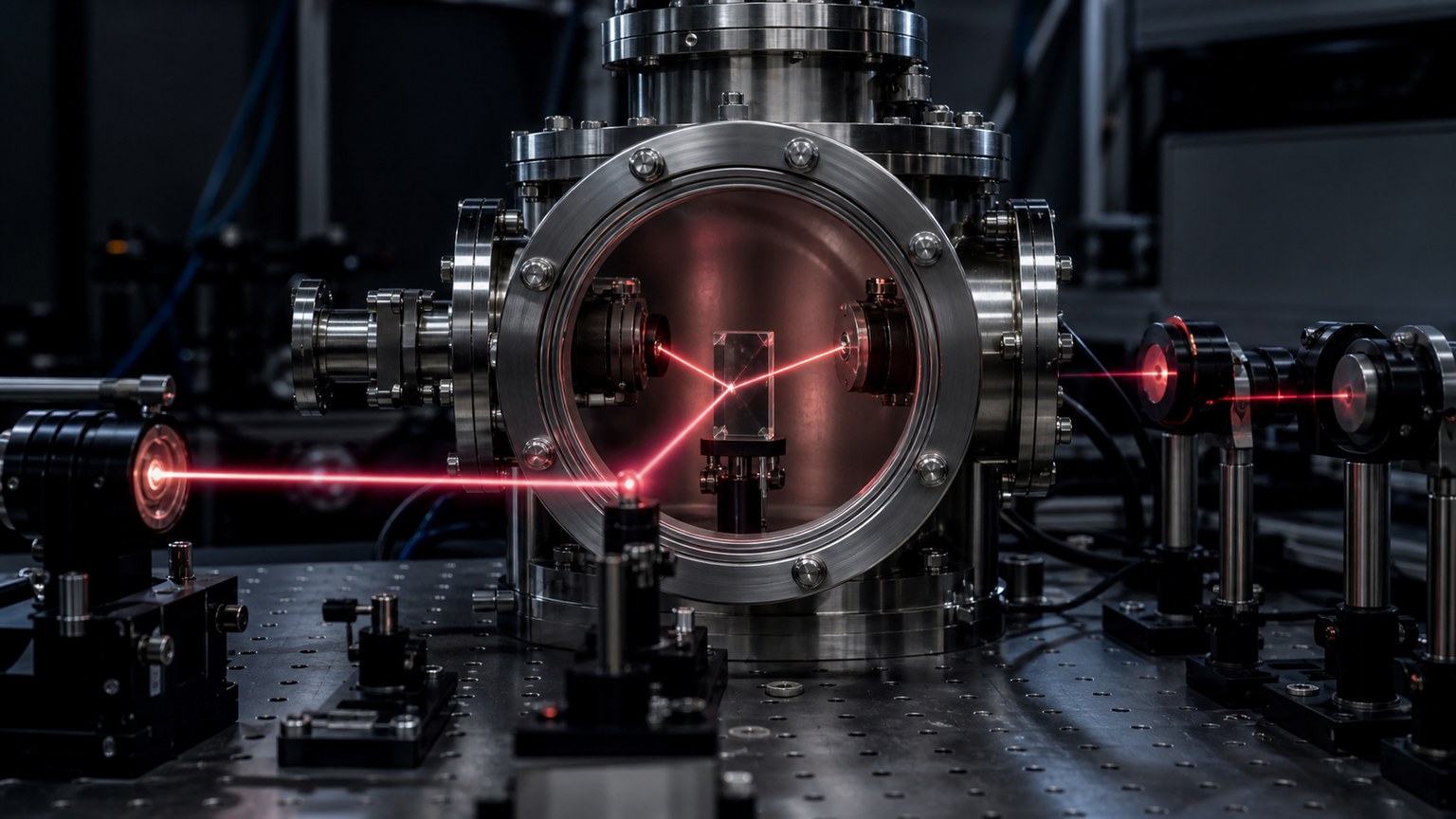
This is why laboratory isolation is so extreme. Vacuum chambers, cold temperatures, and careful shielding are not theatrical props. They remove ordinary channels that would make the system look classical.
The latest experiments reveal how special the controlled conditions are. They do not make the classroom world less real; they show why the classroom world hides its quantum roots so effectively.
That contrast is one of the most useful lessons from the frontier. Quantum behavior survives where coherence is protected.
Classical behavior dominates where records spread everywhere.
How to Read a New Result
A new result is easiest to read by separating the platform from the claim. The platform may be a nanoparticle, atom cloud, ion, molecule, circuit, or clock. The claim is what the experiment showed about coherence, scale, phase, or measurement.
Next, ask what changed compared with earlier work. Did the system become heavier, colder, more isolated, longer-lived, more entangled, or more precisely measured? Progress usually lives in one of those careful comparisons.
Then look for controls. A strong paper explains why the pattern is not detector bias, heating, drift, vibration, or an ordinary classical distribution. The controls make the conclusion believable.
Finally, keep interpretation separate from result. A test can be exciting even if it does not settle the meaning of the wavefunction. The measured advance is the part that should do the work.
That habit also protects readers from hype fatigue. The measured advance may be narrow, but a narrow verified advance can be more valuable than a broad claim without controls. Precision is part of the news in frontier physics, especially when experiments are hard.
The Recent-Experiment Takeaway
Recent experiments show that superposition can be pushed into larger, cleaner, and more precise regimes than older examples suggested.
They also show that the real frontier is controlled coherence, not dramatic language about impossible-looking states.