The Weird Idea That Refused to Stay on Paper
If you’ve ever heard someone describe quantum physics as “spooky” or “science fiction,” superposition is usually the culprit. It’s the idea that a tiny object—like an electron, a photon (a particle of light), or even an atom—can exist in multiple possible states at once until a measurement forces a single outcome. Not “switching quickly,” not “hidden behind a curtain,” but genuinely described by a blend of possibilities. For decades, this sounded like a math trick that only worked inside equations. Then, bit by bit, experiments dragged superposition into the real world, where it started behaving less like a thought experiment and more like a measurable feature of nature. The catch is that science rarely “proves” things the way math does. In science, the word “prove” usually means something like this: the evidence becomes so strong, so repeatable, and so useful for predicting results that the explanation is treated as real. Superposition has reached that level. Researchers don’t just infer it from philosophical arguments—they build devices that only function because superposition is happening. When your GPS corrects its timing, when secure communication schemes rely on quantum behavior, when labs run interference experiments with single particles, they aren’t relying on vibes. They’re relying on superposition showing up the same way every time under the right conditions.
A: It means its state includes multiple location possibilities that can interfere—until measured.
A: No. Interference patterns show it behaves differently than simple ignorance.
A: Interaction that leaks usable information—detectors, collisions, heat, or stray light can do it.
A: No. The environment can “observe” through interaction—no consciousness required.
A: Decoherence: everyday objects constantly interact with air, light, and heat, which destroys the overlap.
A: Science “proves” through repeated tests and accurate predictions; superposition has overwhelming support.
A: Yes—qubits, quantum sensors, and atomic clocks rely on quantum states described with superposition.
A: Not necessarily; experiments confirm the predictions, while interpretations differ on the deeper story.
A: Single-particle interference: one particle at a time still builds a wave-like pattern over many trials.
A: Superposition is real enough to measure, control, and use—when the system is protected from noise.
Superposition in Plain English
Imagine flipping a coin. In everyday life, the coin is either heads or tails, even if you haven’t looked yet. Superposition is different. It’s not “unknown heads or tails.” It’s more like the coin is described by a recipe that includes both possibilities at once—until the moment you check. That description isn’t just a story we tell ourselves; it predicts the patterns we actually see when we repeat experiments thousands or millions of times. Here’s the simplest way to picture it without breaking your brain: a quantum object has a “menu” of possible outcomes. Superposition means the object can carry more than one menu item at once in a single combined description. Measurement is the act of forcing the universe to choose one item and serve it. And crucially, before measurement, those menu items can interact like overlapping waves—reinforcing in some places, canceling in others. That wave-like interference is the fingerprint of superposition, and it’s the reason scientists treat it as a real physical feature rather than a poetic metaphor.
The Smoking Gun: Interference Patterns
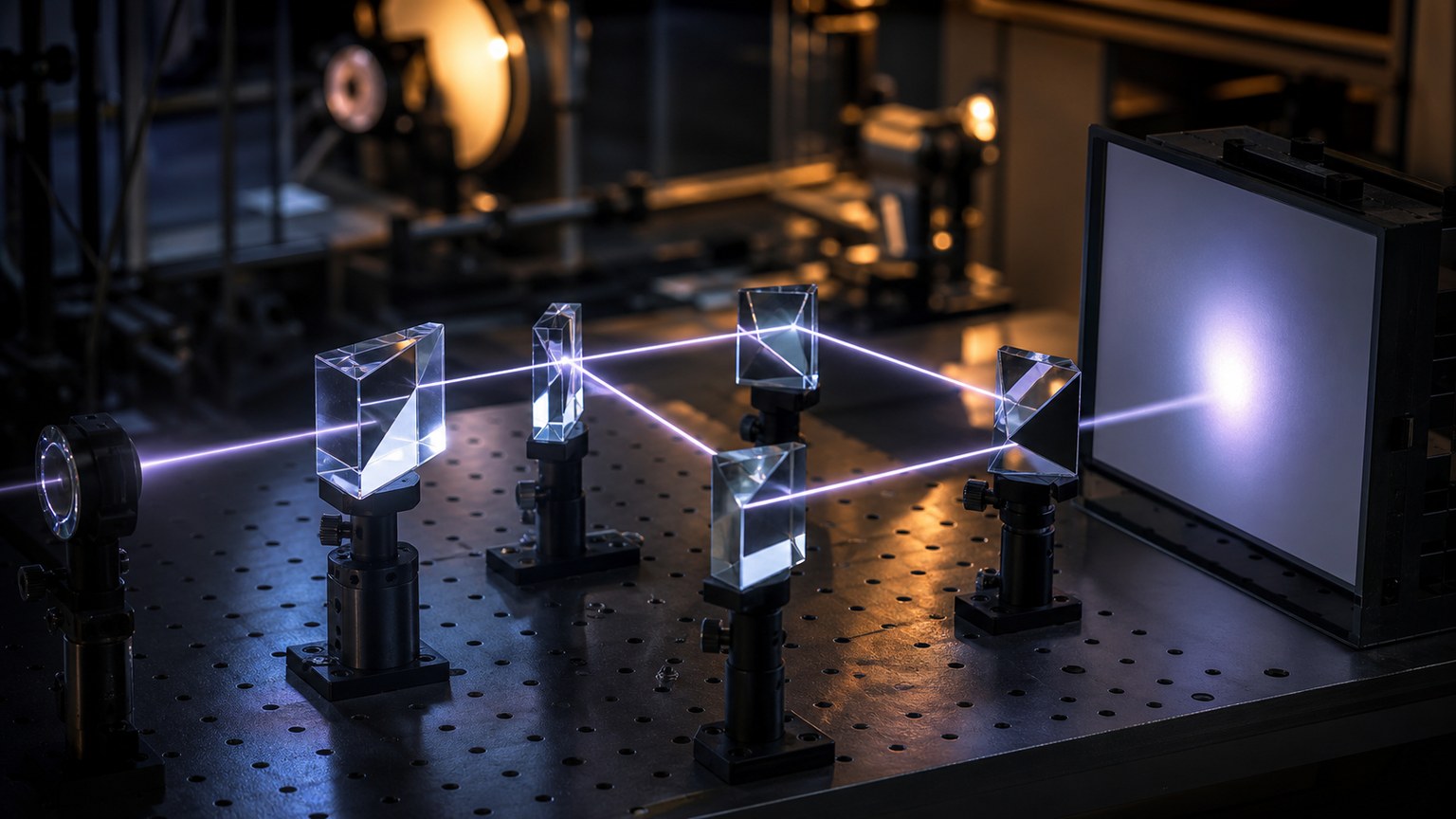
The most famous demonstration is the double-slit experiment, because it’s so simple in setup and so outrageous in meaning. Shine light through two narrow slits and you get an interference pattern—bright and dark bands—like ripples overlapping on a pond. That part is normal for waves. The jaw-dropper happens when you fire photons one at a time. You might expect each photon to behave like a tiny pellet: it should go through slit A or slit B, building two piles on a screen. Instead, even with single photons, the final pattern still forms interference bands.
That tells you something profound. Each photon isn’t merely choosing a slit like a marble rolling down a track. The results match a description where the photon’s path includes both possibilities in a combined way, and those possibilities interfere with each other. When scientists try to detect “which slit” the photon takes, the interference disappears—because the measurement destroys the delicate conditions needed for superposition to behave like overlapping waves. The pattern flips from “quantum weird” to “classical boring” the moment you force the system to commit.
Not Just Light: Electrons, Atoms, and Molecules Join In
If superposition only worked for light, we could still argue it’s some special quirk of electromagnetic waves. But it doesn’t stop there. Electrons produce the same interference behavior. So do neutrons. So do atoms. And over time, researchers have pushed the effect to larger and larger objects—molecules with many atoms—still producing interference patterns when isolated carefully enough.
This matters because it closes an escape hatch people often cling to: “Maybe tiny stuff is weird, but real objects aren’t.” The experiments show that “real objects” are subject to the same rules; they just usually don’t get the chance to show it. Everyday life is noisy. Objects constantly collide with air molecules, absorb and emit heat, vibrate, and interact with light. Those interactions act like nonstop measurements, which kill large-scale superpositions almost instantly. The lesson isn’t that superposition doesn’t exist in the real world—it’s that the real world is usually too messy to let it stay visible for long.
Why We Don’t See Superposition at the Dinner Table
If superposition is real, why isn’t your coffee simultaneously hot and iced? The short answer is that big objects are constantly “talking” to the environment. Every stray photon that bounces off your mug, every molecule of air that bumps into it, every tiny thermal vibration is an interaction that leaks information into the surroundings. That leaking is called decoherence, and it’s the practical reason quantum behavior fades into classical behavior for everyday objects. Think of superposition as a whisper. In a silent room, you can hear it. In a stadium during a playoff game, the whisper is still technically happening, but it’s instantly drowned out by noise. Decoherence doesn’t require a human observer. It doesn’t require consciousness. It just requires interaction—any process that makes the different possibilities “leave tracks” in the world. Once those tracks exist, the interference effects vanish, and the system behaves like it picked one outcome all along.
Measurement Isn’t Magic—It’s Interaction
A lot of confusion comes from the word “measurement,” which sounds like a person holding a clipboard. In quantum physics, measurement is broader: it’s any interaction that extracts usable information about the system. A detector clicking is measurement. A stray atom scattering off a particle can be measurement. Even heat flowing into the environment can count, because it carries away information.
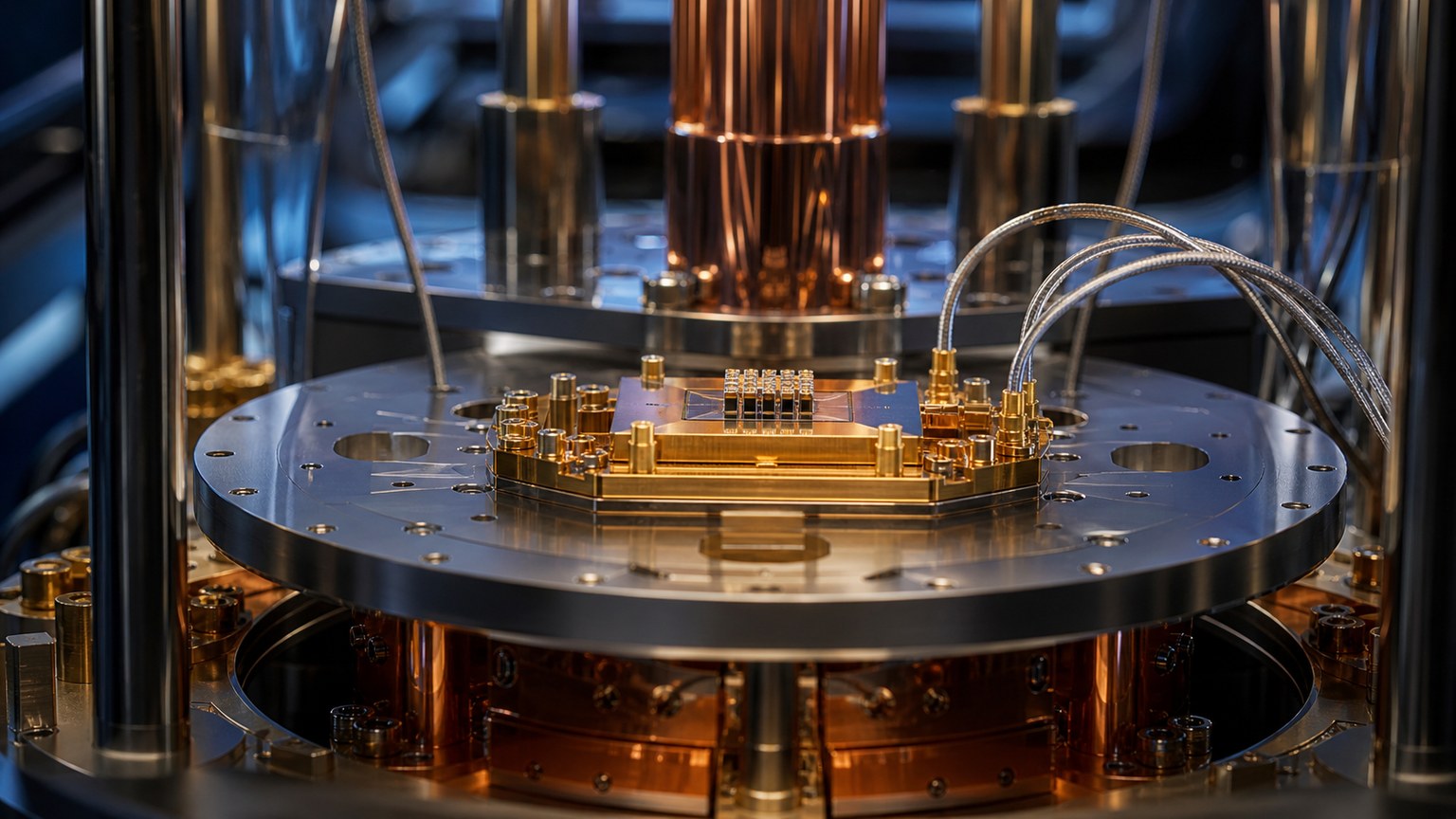
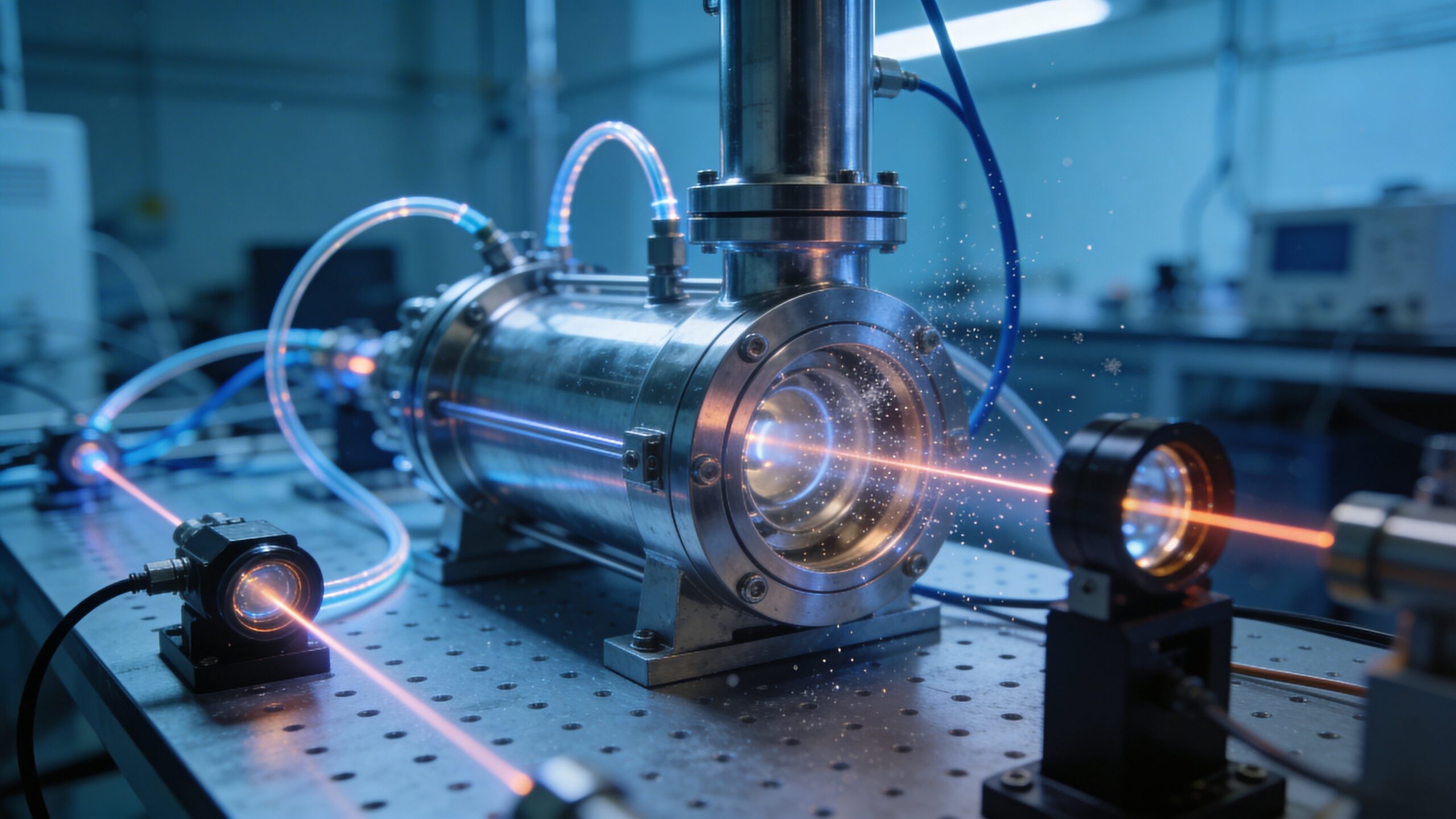
That’s why quantum labs look the way they do: vacuum chambers, ultra-cold temperatures, electromagnetic shielding, vibration isolation. They’re not trying to be dramatic. They’re trying to stop the universe from snooping. When the environment stops snooping, superposition can hang around long enough for scientists to test it. And when it hangs around, interference appears, predictions match, and the math stops being a ghost story and starts being a user manual for reality.
The Lab Proof: Devices That Only Work Because Superposition Is Real
Here’s where “prove” starts to feel earned. Scientists don’t just watch superposition—they harness it. Quantum computers (the real experimental ones in labs, not the hype posters) rely on qubits that can exist in superpositions of 0 and 1. Quantum sensors use superposition to detect tiny changes in fields, time, or motion. Atomic clocks—some of the most precise devices humanity has ever built—depend on quantum behavior in atoms, which is described using superposition states. These technologies aren’t built on philosophical vibes; they’re built on reproducible outcomes.
Even when labs aren’t building gadgets, they run tests designed to rule out simpler explanations. They set up experiments where classical “hidden variable” ideas fail to predict the statistics. They confirm that interference vanishes when which-path information becomes available. They show that the same system can behave wave-like or particle-like depending on what information is allowed to exist. Over and over, superposition isn’t just compatible with the results—it’s the explanation that keeps winning because it keeps predicting what happens next.
Superposition Doesn’t Mean “Everything Happens”
It’s tempting to hear “multiple states at once” and jump straight to multiverses and parallel lives. Sometimes those ideas appear in interpretations of quantum theory, but you don’t need them to understand what experiments show. What experiments show, very directly, is this: the mathematics that treats quantum states as superpositions makes stunningly accurate predictions about interference and measurement outcomes. That’s the ground truth.
So when someone says, “Scientists proved superposition exists,” a good translation is: “Scientists repeatedly tested predictions that require superposition in the model, and the world kept agreeing.” The experiments don’t necessarily settle every philosophical question about what superposition ‘really is’ behind the scenes. But they do settle whether superposition is just a bookkeeping trick. If it were only bookkeeping, it wouldn’t generate interference patterns, power working devices, and collapse into classical behavior exactly when environmental information leaks.
The Big Picture: Reality Has Layers
Superposition is one of the clearest examples that nature doesn’t have to match human intuition. Our brains evolved to track falling rocks, social cues, and the best berry patch—not probability waves. Yet the universe, at its foundation, seems comfortable describing things as blended possibilities that only become definite when interactions force a decision.
The exciting part is that this isn’t merely a cosmic curiosity. Superposition is the engine behind a growing set of tools: better sensors, more precise clocks, new methods of secure communication, and computing approaches that may reshape specific tasks. Whether or not quantum computers become household gadgets, the broader quantum revolution is already here in the form of measurement science, materials research, and lab techniques that make the invisible visible. Superposition isn’t just “real”—it’s increasingly practical.
What Superposition Teaches Us About “Proof”
If you want a clean takeaway as a non-scientist, it’s this: scientific “proof” is about converging evidence and predictive power. Superposition has both. You can set up experiments that show interference. You can change the setup to reveal which-path information and watch interference vanish. You can isolate larger objects and still see wave-like behavior. You can build devices that fail if superposition isn’t part of the physics. That’s a mountain of reality checks. So yes—superposition exists in the real world. Not as a mystical slogan, but as a tested ingredient of how nature behaves when it isn’t being constantly jostled by the environment. And the moment you learn to see it as “overlapping possibilities that can interfere,” the whole topic shifts from confusing to strangely beautiful—like discovering a hidden set of rules that the universe has been using the entire time.