The Condition That Keeps Possibilities Connected
Quantum coherence is what allows superposition to be more than a loose list of possible outcomes. A system in superposition has alternatives that remain connected through definite amplitude and phase relationships. Coherence is the preservation of those relationships. If coherence is strong, the alternatives can later interfere, be controlled by gates, or reveal phase-sensitive patterns. If coherence is lost, the system may still have uncertain outcomes, but it behaves more like a mixture of ordinary possibilities. That distinction is central to quantum mechanics and to quantum technology. A qubit is useful only while the relevant state relationships stay coherent. An interferometer shows clear fringes only while the paths remain coherent enough to compare. An atom clock depends on coherent evolution between selected states. Coherence is also fragile because the environment can become entangled with the system and record which alternative occurred. A stray interaction can turn a clean superposition into something that no longer acts like one for the experiment being performed. For beginners, the simplest way to say it is this: superposition needs coherence the way a conversation needs a shared connection. Without it, the alternatives stop speaking to each other.
A: It means useful quantum relationships remain preserved.
A: Coherence lets alternatives interact through phase-sensitive behavior.
A: No. A coherent state can still produce probabilistic outcomes.
A: Uncontrolled interactions that mark or disturb alternatives.
A: No. Physical records are the relevant issue.
A: The time over which useful state relationships survive.
A: Sometimes partially, if the damage is controlled and not too complex.
A: Their information lives in amplitudes and phase.
A: Through interference, tomography, fidelity, and decay tests.
A: Coherence keeps superposed alternatives connected enough to act together.
What Coherence Preserves
Coherence preserves the relationship among parts of a quantum state. Those relationships include relative phase and the ability of alternatives to be recombined. A coherent superposition is not merely uncertain; it has structure that can affect future measurements.
This is why coherence is often discussed alongside interference. If alternatives remain coherent, they can combine in a phase-sensitive way. If they lose coherence, the same alternatives may produce only ordinary-looking averages.
The word preserve is important. Coherence is not a substance inside a particle. It is a condition of the state description and its physical isolation.
Why Superposition Needs Coherence
A superposition without coherence would not do the work people usually associate with superposition. It might still describe uncertain outcomes, but it would not produce clean interference or reliable qubit operations.
Coherence keeps alternatives connected before measurement. That connection lets later operations compare them. Without that connection, the alternatives behave as though the experiment has already separated them into ordinary cases.
The difference explains why a quantum mixture is not the same as a coherent superposition. Both can involve uncertain results, but only one keeps phase relationships available.
A state can survive in one crude sense while losing the relationship that made it useful. Coherence asks whether alternatives still retain the phase link needed for later interference. That makes it a more specific idea than simply keeping a particle from disappearing.
The Role of Phase Stability
Phase is the relationship coherence must protect. If the relative phase between alternatives drifts randomly, repeated trials no longer line up in a useful way. The interference pattern becomes blurred or disappears.
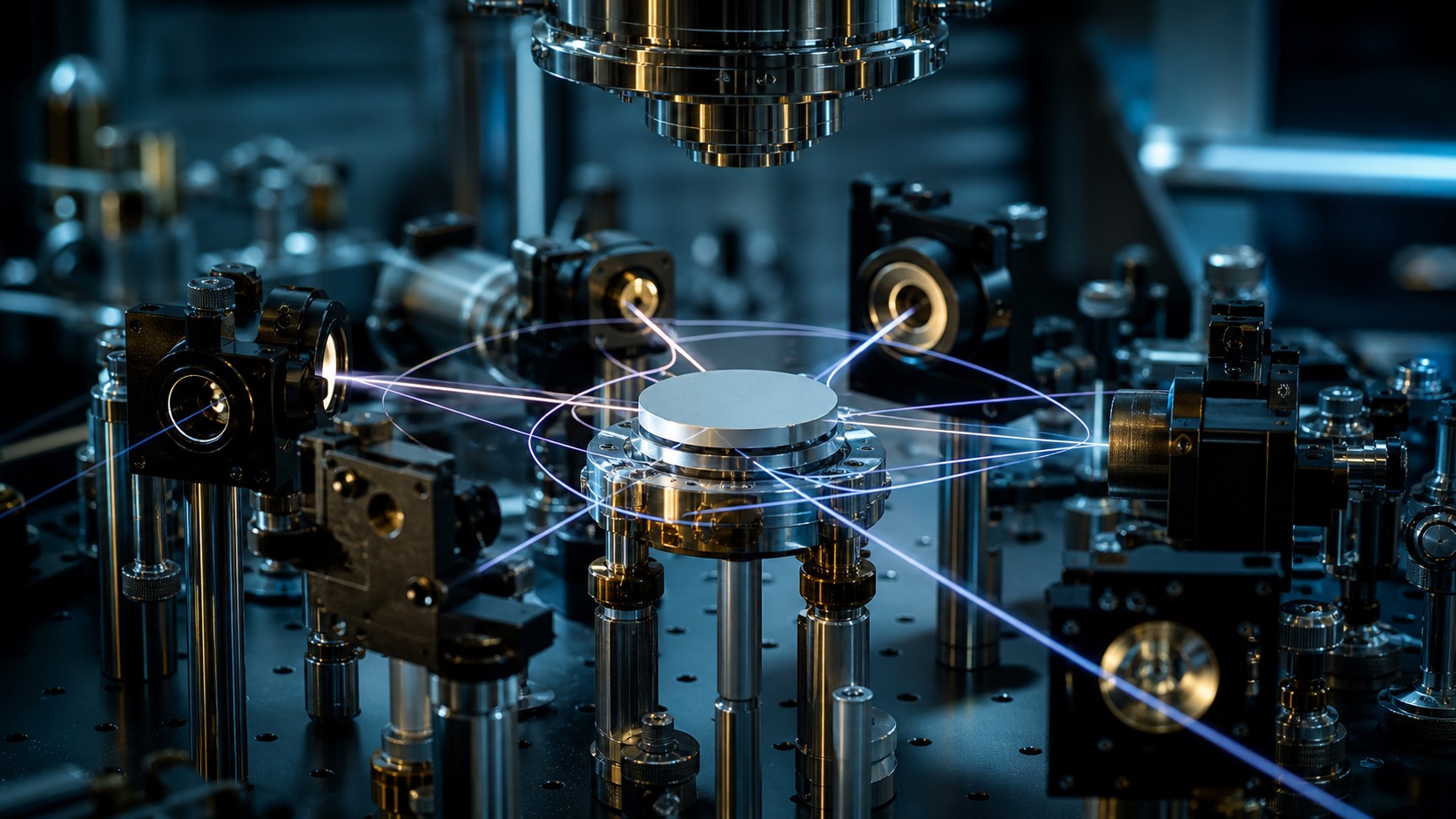
Laboratories therefore care about phase stability. A laser must stay stable, a microwave drive must keep its timing, and an interferometer arm must avoid unwanted vibration. These practical details protect the abstract-looking state relationship.
How Decoherence Breaks the Connection
Decoherence occurs when a system becomes correlated with its environment in a way that marks the alternatives. The environment might include air molecules, thermal radiation, stray fields, nearby surfaces, or extra degrees of freedom inside the apparatus.
Once the surroundings carry distinguishing information, the alternatives are no longer cleanly comparable for the system alone. Interference fades because the phase relationship has effectively spread beyond the small system researchers intended to control.
This does not require anyone to look. Decoherence is a physical process, not a psychological event. The environment can keep records without consciousness entering the explanation.
That is why isolation is not optional in quantum experiments. It is the condition that lets coherence survive long enough to be useful.
Coherence Time
Coherence time is a practical measure of how long useful state relationships survive. In a qubit, it might describe how long phase information remains available before noise damages it. In an interferometer, it might describe how long paths can stay comparable.
Longer coherence time gives scientists more room to operate. A gate sequence can be longer, a sensor can accumulate a signal, or a clock can compare frequencies more precisely. Short coherence time forces faster operations and stricter error control.
How Laboratories Protect Coherence
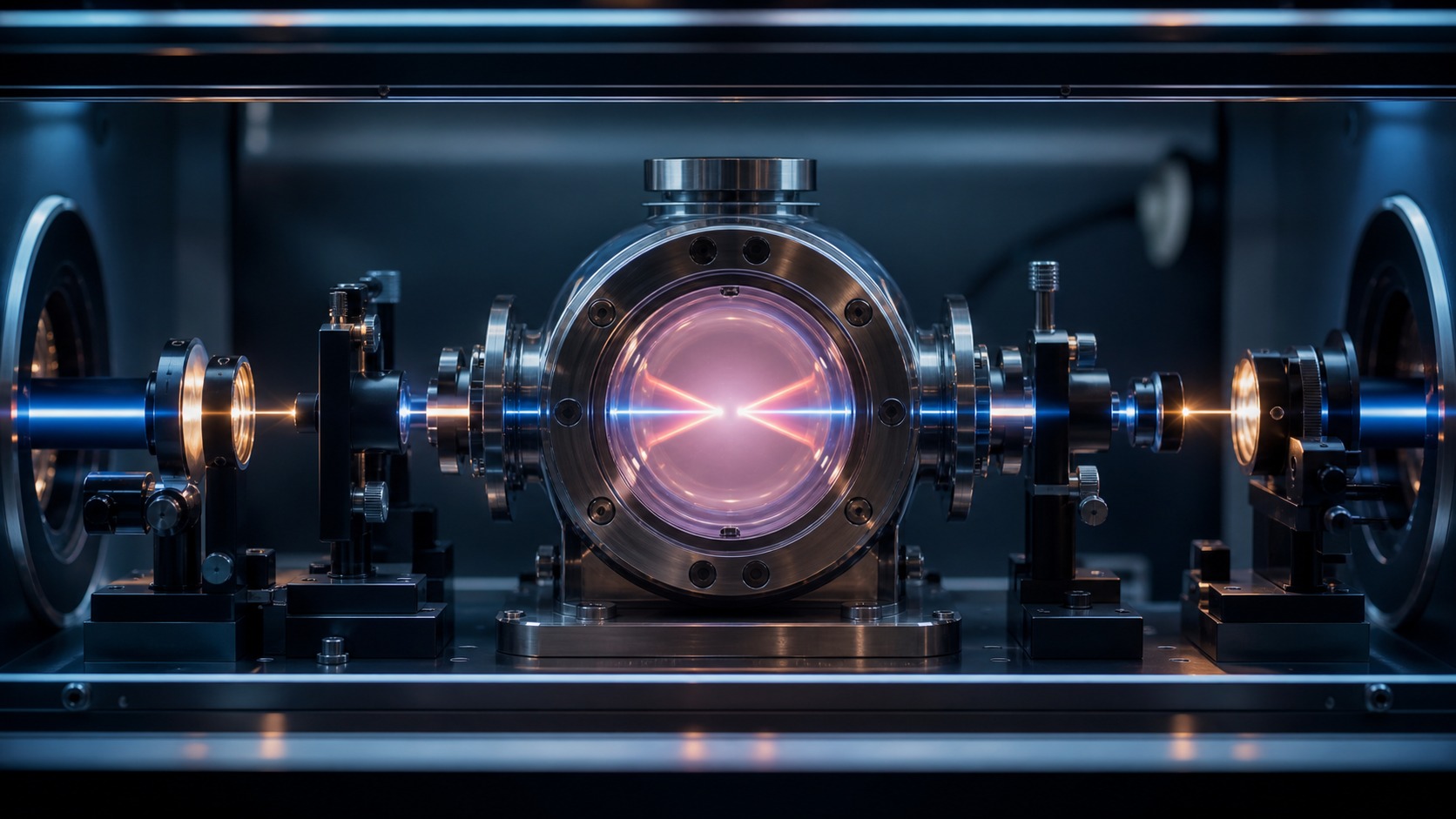
Different platforms protect coherence in different ways. Photons may travel through carefully stabilized optical paths. Atoms and ions may be cooled and trapped in vacuum. Superconducting qubits may be placed in cryogenic hardware shielded from heat and electromagnetic noise.
The shared goal is to reduce uncontrolled records. Researchers want the system to interact with chosen controls, not with every accidental detail of the room. The cleaner the environment, the longer the relevant coherence can survive.
Protection also includes good design. Materials, geometry, pulse shaping, filtering, and calibration all matter. Coherence is not saved by one magic shield; it is maintained by many small engineering choices working together.
Experimental coherence is often inferred from contrast. When interference fringes fade, oscillations wash out, or correlations weaken, the state is revealing that its alternatives no longer work together as cleanly. The exact signature depends on the platform, but the logic is shared.
Why Coherence Is Not Perfection
No real experiment has perfect coherence forever. The useful question is how much coherence remains for the task being attempted. A short experiment may succeed with a modest coherence time, while a long computation demands far more protection.
This is why scientists report visibility, fidelity, error rates, and coherence times rather than simply announcing that a system is quantum. Those numbers describe how well the relationships inside the state survived.
A device can be impressive even if it is imperfect. The key is whether its remaining coherence is enough to perform a specific operation or reveal a specific physical effect.
Coherence Beyond the Laboratory
Coherence also helps explain why the everyday world looks classical. Large warm objects interact constantly with their surroundings. Light, air, heat, and internal vibrations spread information so quickly that macroscopic alternatives do not stay coherent in any obvious way.
This does not mean quantum mechanics stops applying. It means coherent relationships become unavailable for the large object considered alone. Decoherence helps bridge the gap between quantum rules and ordinary experience.
How to Recognize a Coherence Claim
When a researcher claims coherence, look for what relationship was preserved and how it was tested. Did the experiment show interference? Did a qubit maintain phase through a sequence? Did an atom clock keep a narrow transition? The evidence should match the claim.
It also helps to ask what would have destroyed the signal. A strong experiment usually identifies the main noise channels and shows that the observed result is not just ordinary uncertainty. Coherence is meaningful because it can be lost in identifiable ways.
Careful language protects the concept. Coherence is not a glow, mood, or vague harmony. It is the measurable survival of relationships inside a quantum state.
Decoherence is especially subtle because the lost relationship has usually spread into the environment. The information has not simply vanished like a misplaced note. It has become distributed in a way that makes the original alternatives unavailable for clean recombination.
Why Coherence Is Usually Partial
Real systems rarely move from perfect coherence to total failure in one clean step. More often, coherence degrades gradually. An interference pattern loses contrast, a qubit state loses phase information, or a sensor signal becomes harder to distinguish from noise.
This partial character is why scientists use numbers. They report coherence time, fidelity, visibility, and decay curves. Those measurements describe how much useful relationship remains, not simply whether a system is quantum or not.
Partial coherence also explains why experiments can be useful while imperfect. The key question is whether enough coherence survives for the task.
A practical device lives in that middle ground.
Partial coherence is also what makes progress possible. Experiments rarely need a perfectly untouched state; they need the right relationships preserved long enough for the intended comparison. The useful question is which relationships survive, not whether every trace of disturbance has vanished.
How Mixed States Enter the Story
When coherence is lost for the system being studied, the system may be described by a mixed state. A mixed state can represent statistical uncertainty, environmental entanglement, or incomplete information about preparation.
The difference between a coherent superposition and a mixture matters because they can give similar results for one measurement and different results for another. Phase-sensitive tests are often needed to tell them apart.
This is why coherence cannot be judged from one simple probability split. A deeper comparison is needed.
Coherence in Everyday Matter
Everyday matter is still quantum, but most visible objects do not preserve accessible superpositions of ordinary positions. They interact with light, air, heat, and internal vibrations constantly. Those interactions spread information into the environment.
That process makes classical descriptions extremely reliable for daily life. A table appears to have a stable position because any large-scale alternatives become decohered almost immediately under normal conditions.
The lesson is subtle. Quantum mechanics has not stopped applying. Instead, coherence has become inaccessible for the macroscopic alternatives we would need to observe.
This is why controlled laboratories are special environments rather than magical exceptions.
Why Coherence Is a Resource
In modern quantum technology, coherence is treated as a resource. It can be spent, protected, extended, benchmarked, and lost. A computation, sensor, or communication protocol has only as much useful quantum behavior as its coherence allows.
That resource language is helpful because it sounds practical. Superposition may be conceptually strange, but a device builder asks a grounded question: can this state remain coherent long enough to do the job?
The answer determines whether the idea becomes an experiment, and whether the experiment can become a technology.
Why Coherence Connects Foundations and Engineering
Coherence sits at the meeting point between philosophical questions and practical engineering. It helps explain why superposition can have measurable consequences, and it also tells device builders what must be protected for a quantum machine to work.
A foundations experiment may use coherence to test whether alternatives can still interfere. A quantum computer may use coherence to keep gates meaningful. A sensor may use coherence to let a tiny signal accumulate as phase. The language changes, but the requirement remains similar.
This connection is useful because it keeps the concept from floating away into abstraction. Coherence is a condition with practical symptoms: patterns appear, gates work, signals survive, or they do not.
When coherence fails, the failure can often be traced to a physical channel. That makes the idea testable.
Coherence is therefore both a clue about reality and a specification for technology.
Why Coherence Has To Be Earned
Coherence is not a default condition that nature kindly preserves for us. Most ordinary surroundings are busy with collisions, vibrations, thermal radiation, and uncontrolled fields. A delicate superposition has to be protected from all of those channels at once.
That is why experimental descriptions often sound repetitive: isolation, cooling, shielding, timing, and calibration. Each word points to a different way phase relationships can be disturbed. The repetition reflects how many doors decoherence can use.
The reward for that care is real control. When coherence is preserved, the alternatives in a state can still be made to interfere, compute, sense, or reveal a deeper physical rule.
The Coherence Takeaway
Coherence is the preserved connection that lets superposed alternatives interfere, evolve, and be controlled as one quantum state.
When that connection leaks into the environment, superposition loses the behavior that made it distinctly quantum.