Quantum Computers Need Both Sides of the Quantum Story
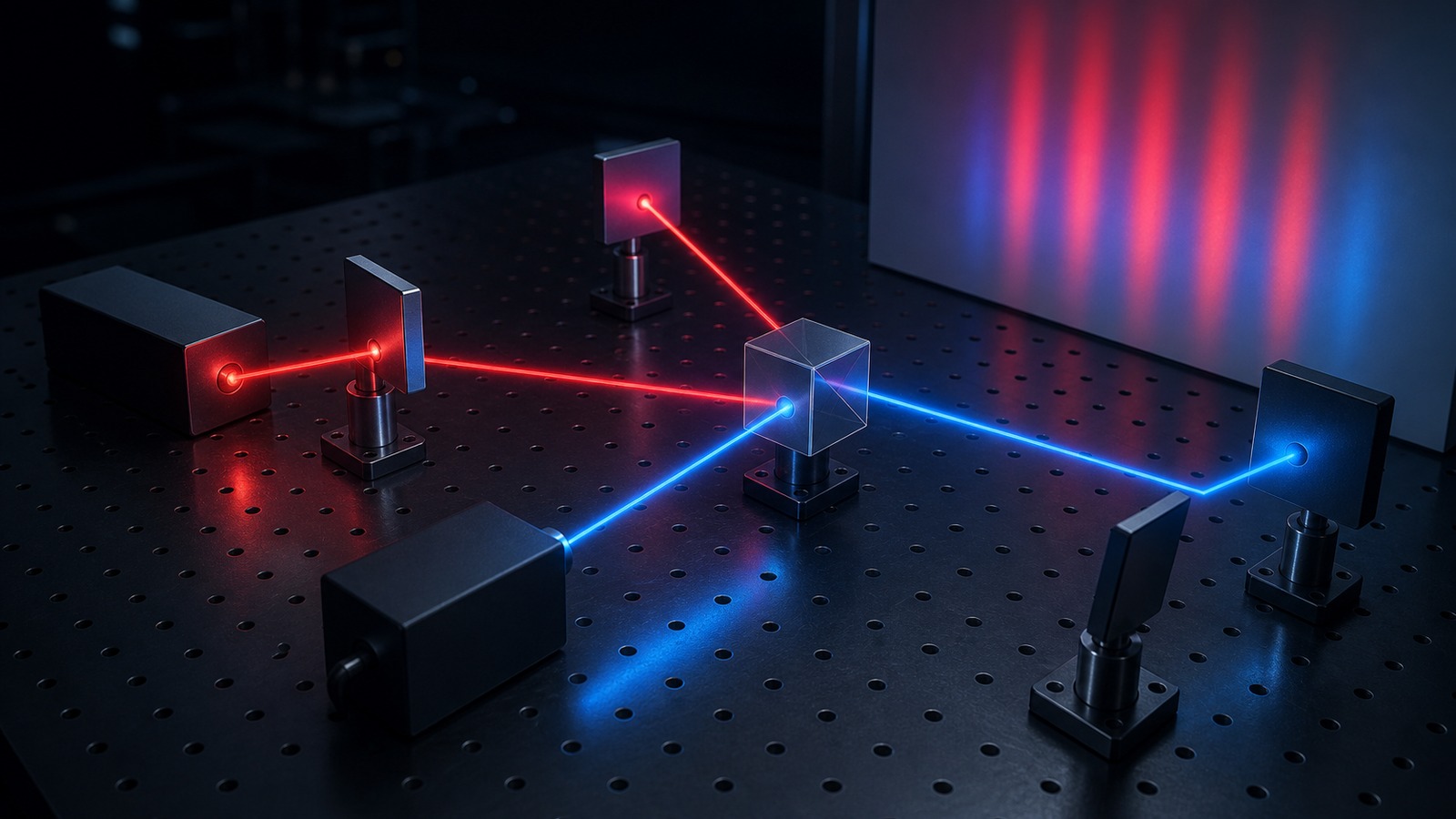
Wave-particle duality makes quantum computing possible because quantum computers use systems that can be controlled as coherent states and read out as definite events. A classical bit is either 0 or 1 in the ordinary operating picture. A qubit can be prepared in a superposition whose amplitudes behave more like waves: they carry phase, can interfere, and can be rotated by carefully designed operations. At the end, measurement produces a definite result, more like a particle-like detection event. The power of quantum computing is not that a qubit magically tries every answer in a simple parallel crowd. It is that amplitudes can be arranged so wrong possibilities cancel and useful possibilities become more likely. This requires coherence, which is the same fragile resource behind interference experiments. It also requires measurement, because the result must eventually become a classical record. Wave-particle duality is therefore not just a philosophical background idea. It is built into the workflow of quantum information: prepare quantum states, manipulate amplitudes, preserve phase relationships, entangle systems, and finally measure outcomes. Without wave-like superposition and interference, qubits would not have their distinctive behavior. Without particle-like readout, the answer could not be recorded. The computer’s promise lives in that disciplined sequence, not in a vague claim that quantum things are simply weird. Each useful operation must protect the state before measurement turns it into data.
A: It supplies wave-like amplitudes and particle-like readout.
A: It can be in a superposition of basis states with amplitudes.
A: No. Algorithms must use interference to shape probabilities.
A: They need preserved phase relationships before interference can be useful.
A: It makes the quantum state produce a definite classical record.
A: No. Advantages depend on the problem and algorithm.
A: It creates joint states across qubits that classical bits cannot mimic.
A: Repeated measurements estimate the output probability distribution.
A: Noise, decoherence, and control errors can damage the state.
A: Quantum computers compute with amplitudes and report through measurements.
Why Qubits Are Not Ordinary Bits
A classical bit is normally described as one of two values. It may be stored magnetically, electrically, or optically, but the logic treats it as a definite 0 or 1. A qubit is different because its state can include amplitudes for the two basis outcomes.
Those amplitudes are not just ordinary uncertainty. They have phase, and phase can affect later probabilities. That is why a qubit cannot be reduced to a coin secretly waiting to reveal heads or tails. Its state can be transformed in ways that let alternatives interfere.
This is where the wave side enters. The qubit state behaves mathematically like something that can be rotated, combined, and made to interfere. Operations do not simply flip a hidden value. They reshape the amplitude structure.
The particle-like side appears at measurement. When the qubit is read, the apparatus produces a definite classical outcome. A detector clicks, a current changes, a photon is registered, or a device records a state-dependent signal.
Quantum computing lives in the tension between those two modes. It uses wave-like evolution while computation is running and particle-like records when information is extracted.
How Interference Becomes Computation
Interference is not merely a visual pattern on a screen. In quantum computing, it becomes a way to guide probabilities. Operations are designed so amplitudes associated with unwanted outcomes can cancel while amplitudes associated with useful outcomes reinforce.
This is a more careful idea than saying a quantum computer tries all answers at once. Superposition alone is not enough. A pile of possibilities is useless unless the algorithm controls phase relationships so the final measurement is biased toward the desired answer.
Quantum algorithms are therefore interference machines. They arrange state evolution so the probability distribution at the end contains useful structure. The computer’s advantage, when it exists, comes from shaping amplitudes in ways classical bits cannot directly imitate.
That is why wave-particle duality is relevant. The wave-like part supplies amplitudes and phase. The particle-like part supplies measured outcomes. Computation depends on moving between those descriptions without destroying coherence too early.
Why Coherence Is the Fragile Resource
Coherence means the phase relationships inside a quantum state remain controlled. A quantum computer needs coherence because interference is only useful when phases are preserved. If the environment leaks information about the qubit state, the computation loses its quantum advantage.
This leakage is called decoherence. It can come from heat, stray fields, imperfect control pulses, material defects, vibration, or unwanted coupling to nearby systems. Each leak acts like an accidental measurement, blurring the phase information the algorithm needs.
Building quantum computers is therefore partly the art of protecting coherence. Hardware teams use cooling, isolation, error correction, shielding, calibration, and carefully timed operations. These engineering details are not separate from the physics. They keep the wave-like part of the qubit alive long enough to compute.
Coherence also explains why quantum computers are difficult to scale. Adding more qubits increases the number of ways information can leak. The challenge is not only to make qubits, but to make many of them behave coherently together.
The same fragility appears in simpler duality experiments. Interference disappears when path information leaks. Quantum computing turns that laboratory lesson into an engineering requirement.
Where Entanglement Fits
Entanglement lets qubits share a joint state that cannot be reduced to separate independent descriptions. It is not identical to wave-particle duality, but it depends on the same quantum state logic. Amplitudes belong to the combined system, not just to each qubit alone.
Entangled states allow correlations that classical bits cannot reproduce in the same way. Quantum algorithms and protocols use those correlations to structure information. The wave-like amplitude picture becomes richer because it spans multiple systems.
Measurement then turns the joint quantum state into classical outcomes. Those outcomes may be correlated in ways that reveal the prior entanglement. Again, the computing process requires both coherent state evolution and definite readout.
This is why quantum computing is not simply faster classical computing. It uses a different physical resource. Entanglement, superposition, and interference are features of quantum states, not features of ordinary lists.
Why Measurement Must Wait
A quantum computer cannot measure everything at the beginning and still remain quantum. Measurement extracts information, but it also changes the state. If the amplitudes are collapsed too early, the interference pattern the algorithm needs cannot develop.
This is similar to the double-slit experiment. If path information is recorded too soon, the interference disappears. In a quantum circuit, measuring a qubit too soon can remove the very phase relationships that later gates were supposed to use.
That does not make measurement bad. It makes timing essential. Measurements are placed where the algorithm needs them, sometimes at the end and sometimes in the middle for specific protocols. The key is that measurement must serve the computation rather than accidentally interrupt it.
When the final readout happens, the answer is still probabilistic. Quantum algorithms are often run many times to estimate the result distribution. Useful computation comes from making the right outcomes appear with higher probability.
This measured ending is the particle-like side of the story. The computer does not hand over a glowing superposition. It hands over classical data created by quantum measurement.
Why Different Hardware Still Shares the Same Logic
Quantum computers can be built from superconducting circuits, trapped ions, photons, neutral atoms, spins, or other platforms. The devices look different, but the logic is similar. Each platform needs controllable quantum states, coherent operations, and reliable measurement.
In superconducting circuits, microwave pulses manipulate artificial atoms. In trapped ions, lasers control internal states and motion. In photonic systems, optical paths and detectors manage quantum light. Different hardware expresses the same deeper rule: amplitudes must be controlled before outcomes are read.
This is another reason wave-particle duality matters. It is not tied to one material. It describes a broad quantum pattern across systems. The usable qubit may be built from many physical ingredients, but it still relies on coherent state behavior.
Hardware differences mainly change the engineering tradeoffs. Some platforms measure quickly; others preserve coherence longer. Some connect qubits easily; others scale differently. The underlying duality between state evolution and detection remains.
What Duality Does Not Promise
Wave-particle duality does not mean quantum computers automatically solve every problem quickly. It does not mean they replace all classical computers. It does not mean every superposition is useful. Algorithms must be designed to turn amplitude behavior into an advantage.
It also does not remove noise, error, or probability. Quantum computers are physical machines, and physical machines have limits. Error correction and verification are central because fragile quantum states are easy to disturb.
The realistic promise is narrower and stronger. For certain problems, quantum systems can represent and transform amplitudes in ways that may outperform classical methods. Duality supplies the physics, but algorithms and engineering determine the usefulness.
Where the Quantum Advantage Has to Be Earned
Quantum advantage is not automatic because superposition can be wasted. A poorly designed circuit may create complicated amplitudes without making the useful answer easier to find. The algorithm has to turn wave-like evolution into a measurable statistical edge.
This is why interference is more important than the popular phrase many states at once. Many possibilities do not help unless the computation arranges them. The useful structure comes from phase, gate order, and measurement design.
Error control is part of earning the advantage. Noise can scramble phases before the algorithm finishes. Decoherence turns a quantum calculation into something closer to an unreliable classical random process.
Verification matters too. A quantum computer may produce samples from a distribution rather than one obvious answer. Researchers must check whether those samples reflect the intended quantum process and whether the result is useful.
Hardware and software therefore meet at the same duality lesson. The hardware protects coherent states. The software uses operations that make amplitudes interfere productively. Measurement converts the result into data.
This also explains why quantum computing is exciting without being magical. It is powerful because it uses real quantum resources, not because it escapes physical limits. The machine must obey measurement, noise, and probability rules.
The duality connection gives the field its foundation. Coherent quantum states supply something classical bits cannot directly copy. Definite readout keeps the result connected to ordinary information.
Every useful quantum algorithm has to respect both requirements. It must preserve the wave-like part long enough to matter, then make the particle-like readout reveal the work.
Why This Link Matters for Beginners
The link to duality helps beginners avoid two common mistakes. The first mistake is thinking quantum computers are powerful because they are mysterious. The second is thinking they are just fast classical machines with smaller parts.
Duality shows the more useful middle ground. Qubits are physical systems whose amplitudes can interfere and whose measurements produce definite records. Computation depends on controlling that transition.
This view also explains why quantum computing is hard. The same coherence that enables amplitude control is easy to lose. A quantum computer has to protect the wave-like resource while still allowing accurate readout.
That makes the field less magical and more impressive. The advantage has to be engineered from fragile quantum behavior.
This is also why error correction is more than housekeeping. It protects the delicate wave relationships long enough for the particle-like readout to mean something dependable at the end of the calculation.
The Useful Summary
Quantum computing depends on wave-like superposition and interference during state evolution, then particle-like measurement when results are recorded.
Duality matters because qubits must be both controllable quantum states and readable physical systems. The whole machine lives between those two requirements.