Quantum measurement is the moment a tiny physical system gives the world a definite answer. An electron is found here instead of there. A photon triggers this detector instead of that one. A qubit reads 0 instead of 1. That sounds simple, but in quantum physics measurement is not just checking a hidden label. It is an interaction that helps turn a cloud of possibilities into a recorded event.
A: No. A detector or environment can create the record.
A: It requires interaction, and quantum systems are delicate.
A: A single result may be random, but the probabilities are precise.
A: A practical way to describe one outcome replacing many possibilities.
A: Some methods reduce disturbance, but quantum limits remain.
A: Any physical system that couples to the quantum object and keeps a record.
A: Path information prevents the alternatives from interfering.
A: The spreading of quantum information into the environment.
A: The calculations work extremely well, while interpretation is still discussed.
A: Measurement is the bridge between quantum possibility and the world we observe.
Measurement Is More Than Looking
In everyday life, measurement feels passive. You look at a thermometer and learn the temperature. You step on a scale and read your weight. The object seems to have the answer before you check. Quantum measurement is different. At very small scales, a system may not possess one sharp value for every property before the measuring interaction. The measuring device becomes part of the physical story. It couples to the quantum system, amplifies one outcome, and leaves a mark the larger world can record.
Superposition Sets the Stage
To understand measurement, start with superposition. A quantum object can be prepared in a state that contains several possible outcomes at once. A qubit, for example, can be in a blend of 0 and 1 before it is read. This does not mean the qubit is secretly one value and scientists are ignorant. The quantum state behaves as if the possibilities are real ingredients in the experiment. Measurement selects one result according to probabilities determined by the state and by the kind of measurement being made.
The Detector Becomes Part of the Experiment
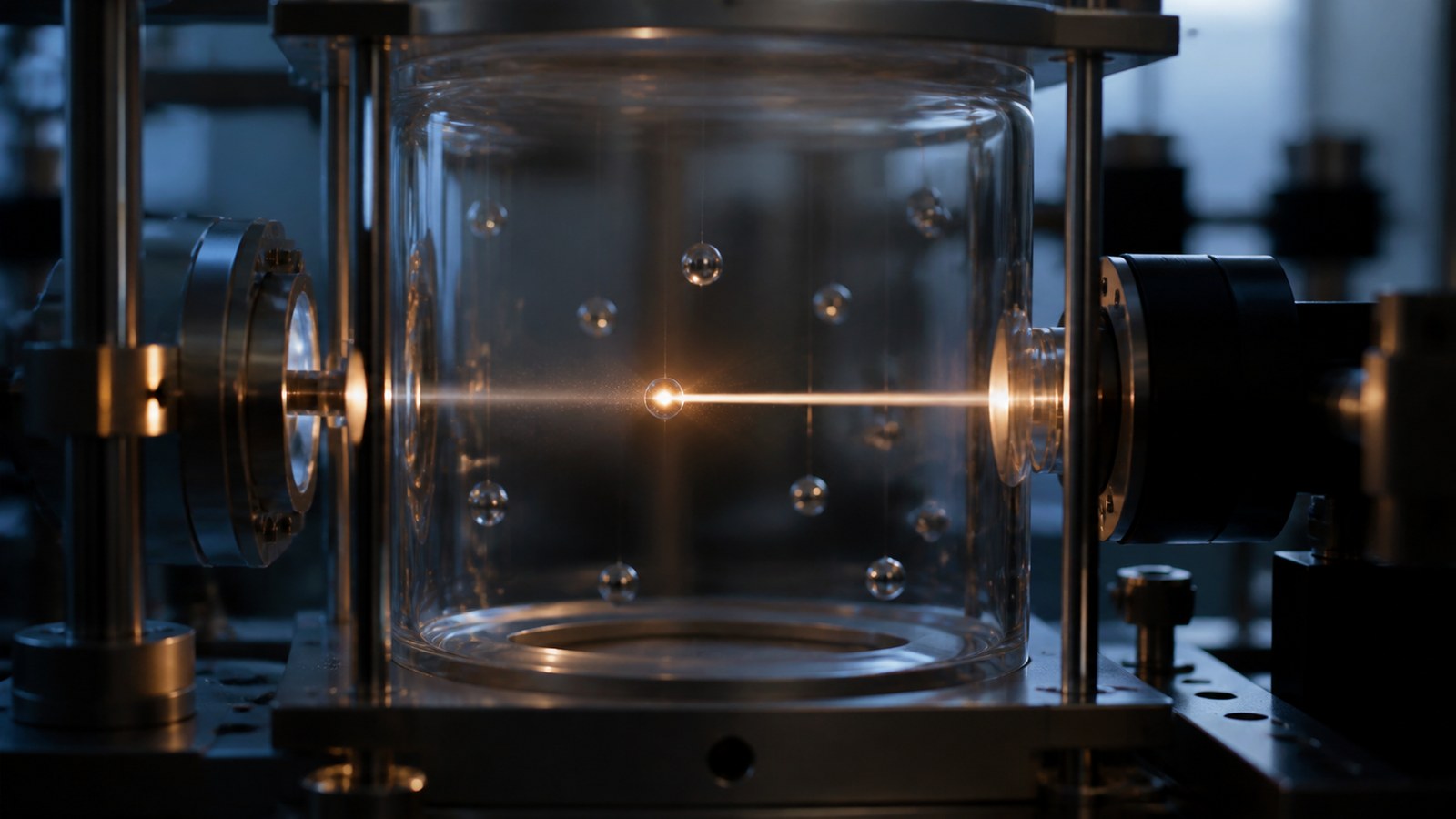
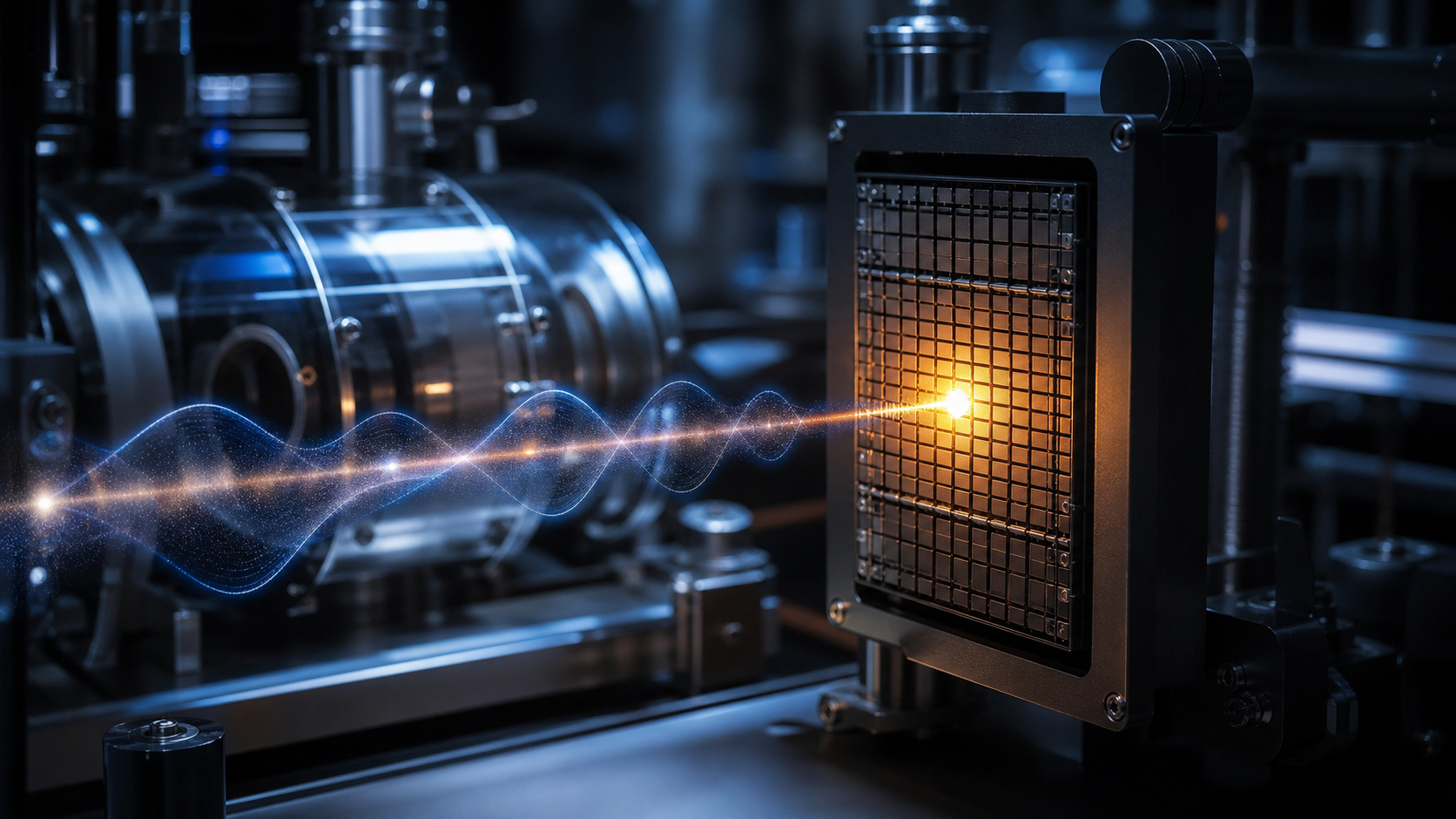
A detector is not a magical observer. It is a physical system designed to interact strongly enough with a quantum object to create a stable record. A photon may free an electron in a sensor. An atom may scatter light that reveals its state. A superconducting qubit may shift a microwave signal. In each case, the measuring device converts a delicate microscopic possibility into a macroscopic signal. The click, flash, voltage, or digital readout is what lets scientists say a measurement happened.
Why Measurement Changes the System
Many quantum measurements disturb what they measure because they require interaction. If you want to learn where an electron is, you need some physical process that responds to its position. That process can change the electron?s future behavior. More deeply, some quantum properties are incompatible, meaning a sharp measurement of one property can erase information about another. Measuring position can make momentum less definite. Measuring which path a particle took can destroy the interference pattern that would appear if the path remained unmeasured.
The Double-Slit Lesson
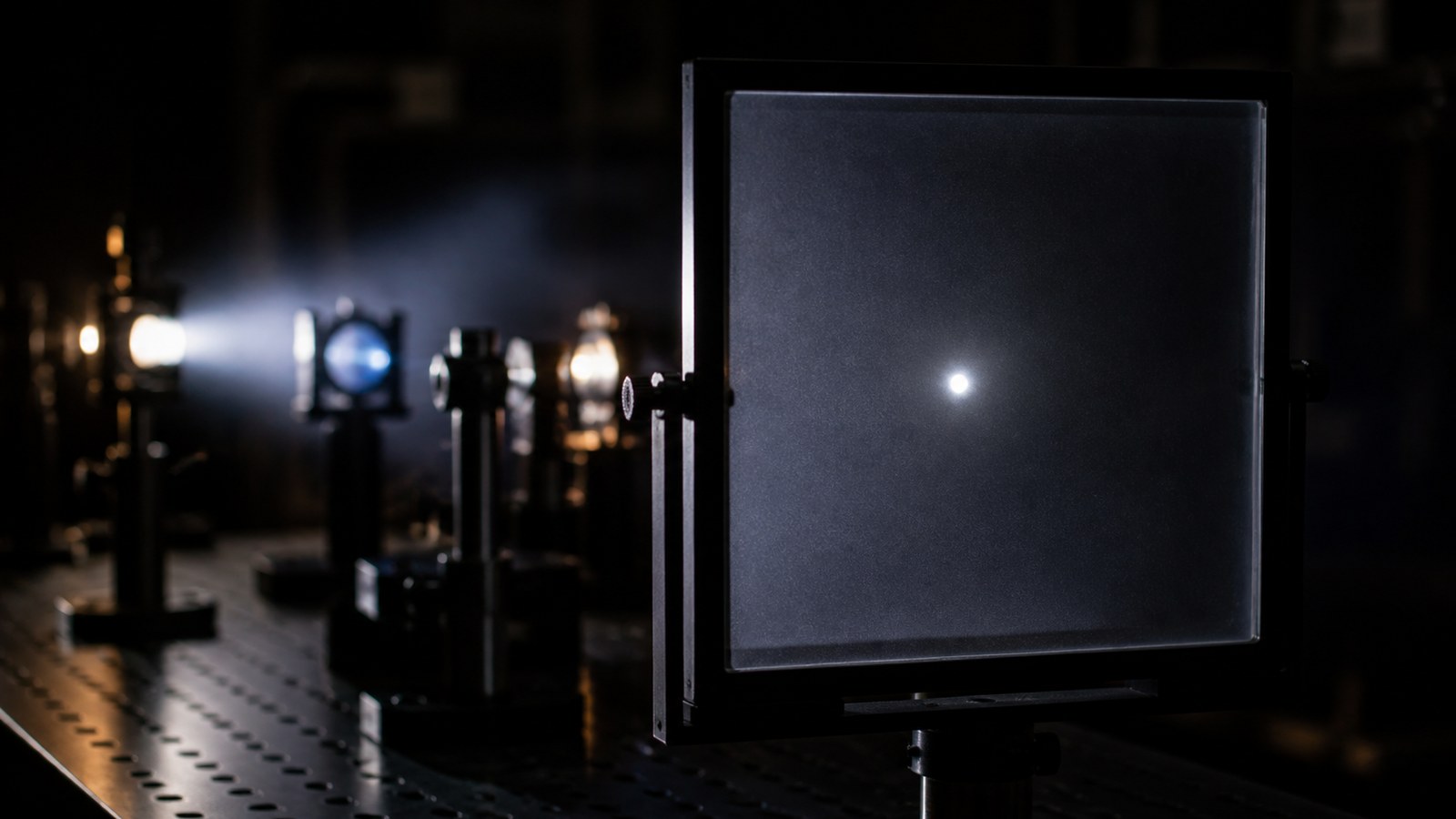
The double-slit experiment is the classic measurement lesson. When particles pass through two slits without path detection, they build an interference pattern. The pattern shows that the possible paths combine like waves. Add detectors that reveal which slit each particle used, and the interference disappears. The point is not that human curiosity scares the particle. The point is that the physical availability of path information changes the experiment. Measurement is interaction plus record, and records matter.
Collapse Is a Name for the Sudden Answer
Textbooks often say the wavefunction collapses during measurement. Before measurement, the wavefunction contains several possible outcomes. After measurement, the system is described as having the outcome that was recorded. Collapse is a practical rule that helps scientists calculate what to expect next. What collapse means physically is still debated. Some interpretations treat it as a real process. Others say the bigger system, including detector and environment, evolves smoothly while observers find themselves in one branch of the result.
Decoherence Explains Why Records Stick
Decoherence is a key idea for making measurement less mysterious. Quantum systems are fragile because interactions with the environment spread information into countless surrounding degrees of freedom. Once that happens, the alternatives no longer interfere in an ordinary way. A record becomes stable because it is copied into the detector, the air, the light, and the lab environment. Decoherence does not answer every philosophical question, but it explains why measured outcomes become so hard to reverse and why the everyday world looks definite.
Scientists Choose What Question to Ask
A measurement is shaped by the apparatus. One setup may measure position. Another may measure momentum. Another may measure spin along a chosen direction. Quantum physics does not simply reveal a full list of prewritten properties. It gives answers to specific experimental questions. This is one reason measurement is so central. The question asked by the apparatus helps define the kind of answer nature can provide. Careful experimental design is therefore not just technical housekeeping. It is part of the meaning of the result.
Quantum Measurement Powers Modern Technology
Measurement is at the heart of quantum technology. Quantum computers must read qubits without destroying the whole calculation too early. Quantum sensors use delicate states to detect tiny magnetic fields, accelerations, or time differences. Photon counters measure individual particles of light for communications and experiments. Medical imaging, lasers, semiconductor devices, and atomic clocks all rely on controlled quantum interactions. The mystery of measurement is not locked in philosophy books. It lives inside real instruments.
A Simple Way to Remember It
Quantum measurement is the process that turns possible answers into a usable fact. It does not require a human mind, but it does require a physical interaction that leaves a record. It can disturb the system because the quantum world is delicate and because not all properties can be definite together. Most importantly, measurement shows that reality at small scales is not just a smaller version of everyday life. It has its own rules, and those rules are strange, precise, and remarkably successful.