Unobserved Does Not Mean Nothing Happens
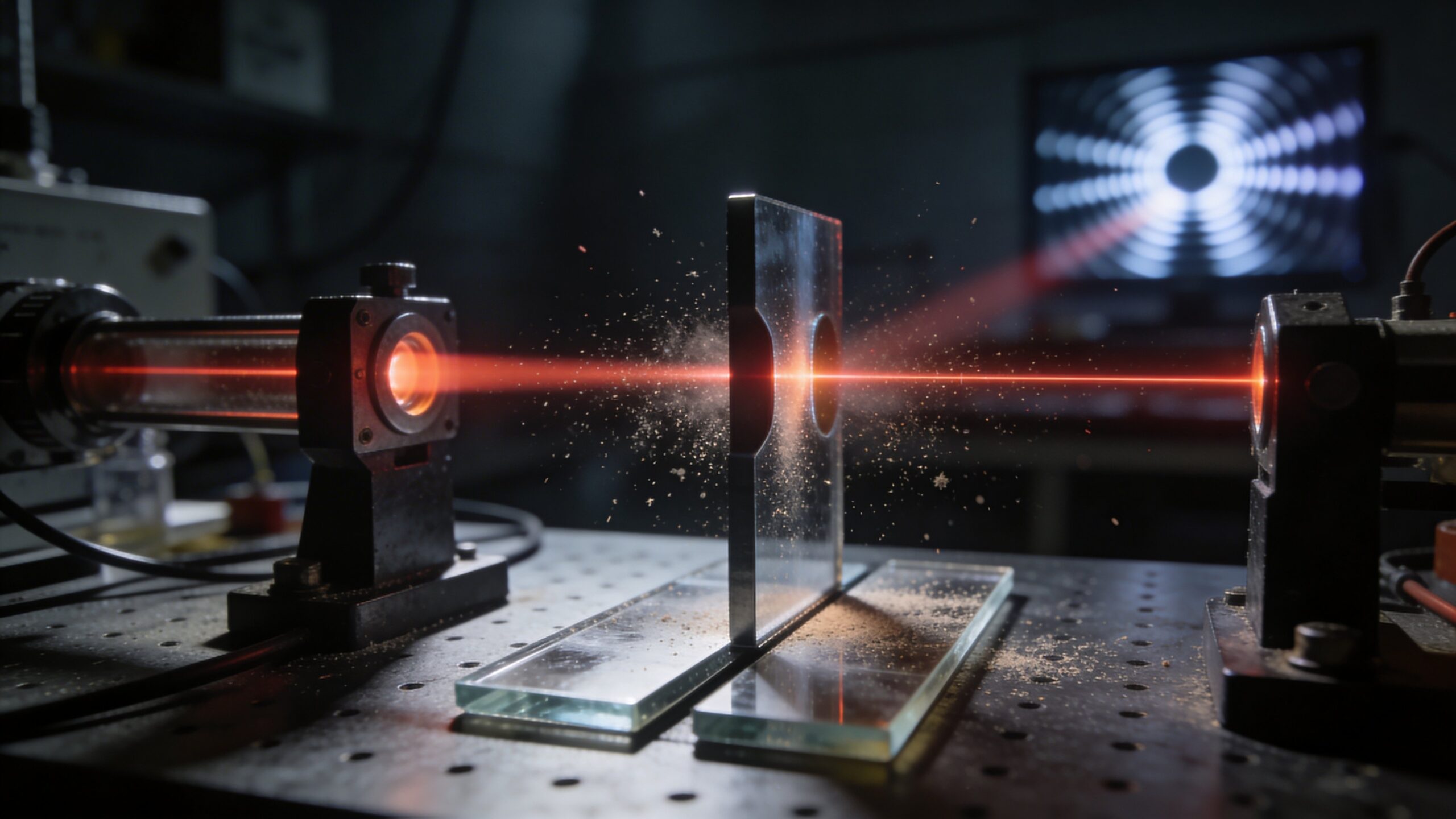
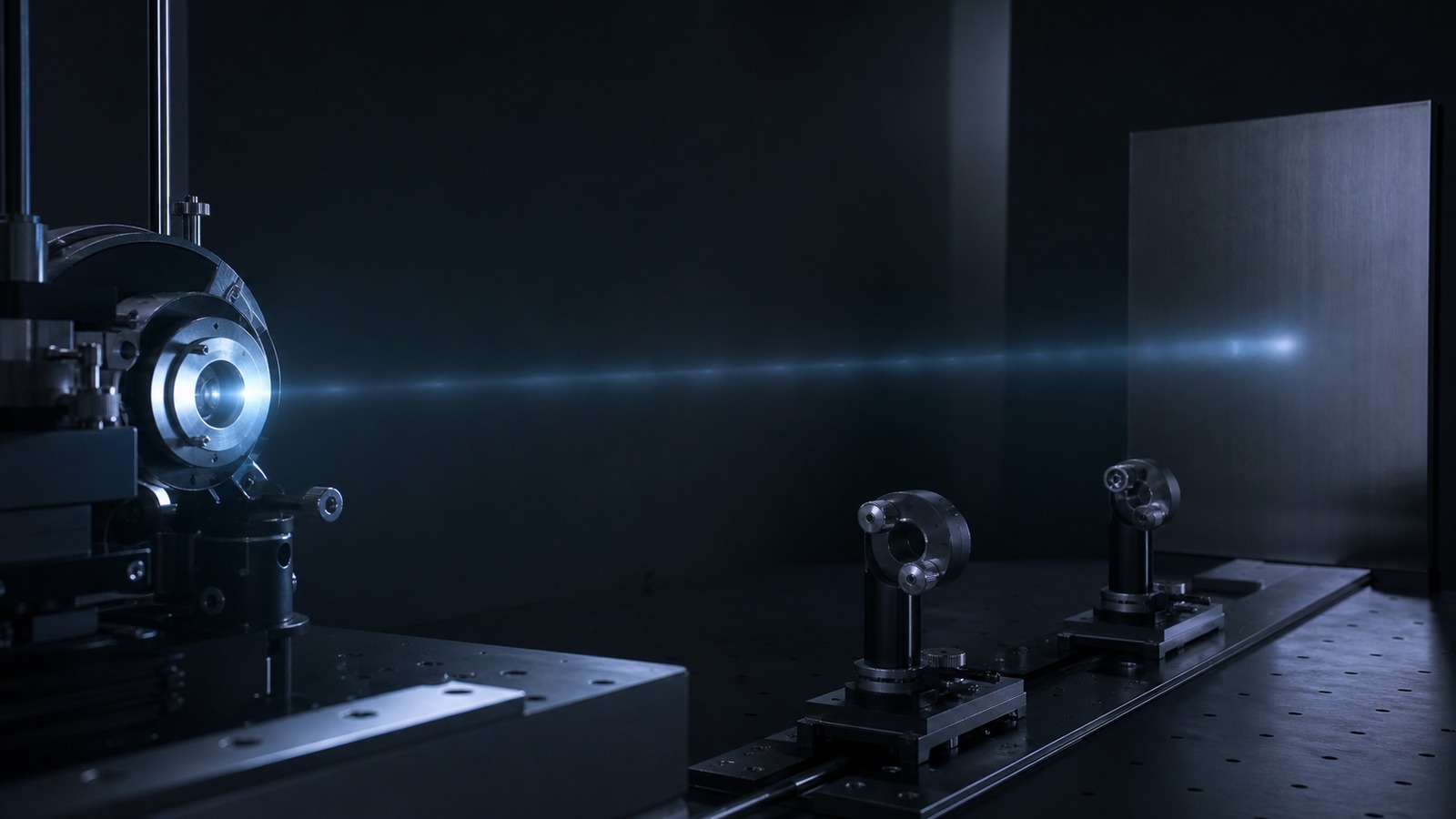
When a particle is not being observed, quantum mechanics does not say that nothing happens or that the particle vanishes from reality. It says the particle is described by a quantum state that evolves according to the rules of the theory until an interaction creates a measurement record. That state may spread, accumulate phase, contain alternatives, or become entangled with other systems. What it does not usually provide is a simple hidden movie of a tiny object following one ordinary path. In an interference experiment, the unobserved state can preserve coherent alternatives that later combine and shape the detection pattern. If a detector or environment records which alternative occurred, that coherence is reduced or lost. The word observed is therefore tricky. It should mean physically measured, not looked at by a person. An unobserved particle is not waiting in a magical blur for human attention. It is evolving as a quantum system under the conditions of the experiment. The final measurement samples that state and produces a definite record. The gap between state evolution and observed outcome is where much of quantum mechanics feels strange, but it is not empty. The later pattern can carry evidence of what the unobserved state did while no direct path record existed.
A: No. It is described by an evolving quantum state.
A: Not always; path language depends on the experiment.
A: A physical interaction that creates information or a record.
A: No. Detectors and environments can measure in the relevant sense.
A: A state with amplitudes for multiple possible outcomes in a chosen basis.
A: It spreads information into the environment and hides interference.
A: Yes, it can evolve coherently according to quantum rules.
A: It creates a definite record from the quantum possibilities.
A: No. It follows structured probability rules.
A: The state evolves until interactions create records.
The State Keeps Evolving
In standard quantum mechanics, an unobserved particle is represented by a state. That state evolves according to equations such as the Schrodinger equation when the system is isolated enough. The evolution is smooth and rule-governed, not random wandering.
The state can spread through space, change phase, and respond to potentials. In a double-slit setup, it can include alternatives associated with both openings. In an atom, it can occupy a stable state with a particular energy. The details depend on the preparation.
This is different from saying the particle has no properties at all. It means the properties we can predict are encoded in the state and in the measurements we might perform. Some classical-style questions may not have definite answers before measurement.
That is the source of much confusion. We expect an unobserved object to have a private classical history. Quantum theory gives a state that predicts outcomes instead of a simple hidden documentary.
Unobserved evolution is therefore active and structured, even when it is not directly visible.
Why Observation Means Interaction
Observation in this context means physical interaction that creates information. A detector, scattered photon, surrounding molecule, or measuring field can all act as part of observation. Human eyesight is not the defining ingredient.
If the particle remains isolated from such interactions, its coherent state can continue evolving. If it interacts strongly enough with a measuring device or environment, the state becomes correlated with other systems. That correlation changes what later interference is possible.
This is why unobserved does not simply mean unseen by a person. A particle in a sealed apparatus may be measured by an internal detector long before anyone opens the door. Conversely, a carefully isolated particle may remain coherent even though a scientist knows the experiment is running.
The physics depends on coupling, records, and information availability. Personal attention is a later layer of the story.
What Superposition Means Here
An unobserved quantum state may be in superposition relative to a chosen measurement. That means the state contains amplitudes for multiple possible outcomes. It does not necessarily mean the particle is a blurry ordinary object smeared across every answer.
Superposition is basis-dependent. A state that is definite for one measurement may be a superposition for another. This is why beginners should be careful with phrases like in all states at once. The precise meaning depends on what is being measured.
In interference experiments, superposition becomes visible through patterns. Alternatives that remain coherent can reinforce or cancel. If the alternatives are measured separately, the pattern changes.
So when a particle is unobserved, it may preserve possibilities that later affect probabilities. Those possibilities are not classical guesses. They are components of the quantum state.
This is why the unobserved period matters. The state evolution before measurement helps determine the distribution of later outcomes.
Why We Cannot Always Assign a Path
Classical thinking wants every particle to have a definite path at every moment. Quantum mechanics does not always support that assignment. If no path measurement is made and interference is observed, treating the particle as having taken one ordinary path can give the wrong predictions.
This does not mean paths are meaningless in every situation. In some contexts, approximate trajectories work very well. In others, such as coherent double-slit experiments, path language becomes too strong.
The safest approach is to ask whether the experiment records a path. If it does, path language may be useful. If it does not and interference remains, the quantum state description is more reliable than an imagined route.
This is less satisfying than a movie, but it is more faithful to the evidence. Quantum mechanics tells us what can be predicted and measured, not always what classical story we would prefer.
How Decoherence Changes the Story
Even without a deliberate detector, a particle may interact with its environment. Those interactions can leak information about position, path, energy, or other features. When that information spreads, interference becomes hard to observe.
Decoherence is the name for this process. It explains why unobserved systems in everyday environments do not behave like perfectly isolated quantum states. The environment effectively monitors them constantly.
This is why laboratory isolation matters. Vacuum chambers, cooling, shielding, and careful timing reduce unwanted interactions. They let the unobserved state evolve coherently long enough for quantum effects to be tested.
Decoherence also explains why ordinary objects seem definite. They are not left alone in the quantum sense. They are continuously entangled with their surroundings, which makes classical-looking records emerge.
An unobserved particle is therefore different from an untouched particle. Observation by a person is not required, but physical contact with the environment still matters.
What Measurement Adds
Measurement produces a definite record. It connects the quantum system to an apparatus and yields an outcome that can be stored, compared, and shared. Before measurement, the state gives probabilities. After measurement, the experiment has a result.
The transition from state to record is where interpretations of quantum mechanics differ. Some describe collapse. Some emphasize decoherence. Some use many-worlds branching, pilot-wave configurations, or information updates. The predictions are often the same, while the story changes.
For a beginner, it is enough to separate two stages. The unobserved state evolves according to quantum rules. The measured outcome becomes a concrete physical record. Confusing those stages creates many false puzzles.
Measurement does not simply reveal an ordinary hidden value in every case. It participates in defining the outcome context.
What Not to Imagine
Do not imagine that an unobserved particle is doing nothing. Do not imagine that it becomes real only when a person looks. Do not imagine that it must secretly follow an ordinary path just because that feels comfortable.
Also avoid imagining that quantum theory says anything whatsoever can happen. The state evolves by strict rules, and measurements produce statistically predictable patterns. The uncertainty is structured, not chaotic.
The most useful picture is modest. A quantum state evolves, interactions matter, and measurement records one outcome from the possibilities encoded in that state.
How Unobserved Evolution Shows Up Later
The unobserved part of an experiment is not directly watched, but it leaves consequences. Phase accumulated during that interval can move an interference pattern. A potential encountered along the way can change future probabilities. The later record carries traces of the earlier state evolution.
This is why physicists can study unobserved evolution without filming it. They prepare a state, let it evolve under controlled conditions, and then measure the outcome distribution. The pattern at the end reveals what kinds of evolution were consistent with the data.
Interferometers make this especially clear. A particle or photon may have alternatives that travel through different regions. If one region changes the phase, the final interference shifts. The measurement does not show a little movie, but it does show the effect of the unobserved stage.
Atoms provide another example. An electron in a stable state is not being watched moment by moment, yet the state has definite energy and responds to fields. Spectroscopy reveals those state properties through later absorption and emission.
So unobserved evolution is not a blank gap in the story. It is a controlled interval whose influence appears when the experiment is finally read.
Why This Does Not Make Reality Optional
A common mistake is to think that if a particle lacks a classical path, reality itself has become optional. Quantum mechanics says something more precise. It gives a state with rules for evolution and measurement, even when some classical descriptions are unavailable.
The state is constrained by preparation and by the physical environment. It cannot be assigned any outcome we like. It evolves through strict equations and produces testable probability distributions.
Measurement then creates a record, but that record is not free invention. It is sampled from the state under a specific measurement context. Repeating the same context reveals the same statistical law.
This is why quantum theory can be nonclassical without being vague. It replaces one kind of certainty with another kind of structure.
For beginners, this is the balancing point. Do not force an ordinary path where the experiment does not support one, but do not imagine the unobserved particle is lawless either.
The unobserved particle is governed by quantum rules. The hard part is that those rules are not the rules of a tiny hidden billiard ball.
That distinction keeps the topic grounded and prevents the most common overstatements.
Why The Unobserved Stage Is Testable
The unobserved stage is testable because different kinds of hidden evolution lead to different later records. A phase shift, field interaction, or potential change can alter the final distribution. The evidence appears after the fact.
This is how many quantum experiments work. They do not watch every moment. They control what happens between preparation and measurement, then compare the final statistics with predictions.
That method is not a weakness. It is often the only way to preserve the very coherence being tested. Watching too directly would change the process.
So unobserved does not mean unscientific. It means the evidence is carried by later patterns rather than by a continuous visual record.
The careful question is therefore not where the particle secretly was in ordinary language, but which state history best predicts the record. A magnetic field, a barrier, or a shifted path can leave measurable traces without providing a frame-by-frame picture. Quantum mechanics replaces the movie with a testable relation between preparation, evolution, and outcome. That is still rigorous science, just without a visual diary.
The Careful Answer
When a particle is not being observed, its quantum state evolves under the conditions of the experiment. It may preserve coherent alternatives that later shape probabilities.
Observation is not magic attention. It is physical interaction that creates a record and changes which quantum description applies.