Some Boundaries Are Built Into The State
Quantum mechanics sets boundaries on knowledge in a way that is sharper than ordinary inconvenience. Some limits come from noisy instruments, unstable tables, and imperfect detectors, and those can often be improved. Other limits come from the structure of quantum states themselves. A system may not support a perfectly classical inventory of every property at once. That does not mean science fails. It means the right description must say what was prepared, what was measured, and which probabilities the state assigns. The most useful beginner move is to see quantum limits as disciplined boundaries, not as vague permission to give up.
A: No. Some limits remain even for idealized measurements.
A: Not if the state itself lacks jointly sharp values.
A: No. Probability predictions can be extremely precise.
A: No. Physical records can be produced by detectors.
A: Position and momentum have a famous uncertainty relation.
A: Often they guide the design of quantum devices.
A: Yes. Ordinary error is separate from the fundamental tradeoff.
A: The apparatus defines which question the system answers.
A: No. The state constrains possible outcomes.
A: Quantum boundaries are precise, not vague resignation.
The Difference Between Error And Limit
Experimental error is the easiest kind of boundary to recognize. A detector can miss events, a laser can drift, and a clock can be slightly miscalibrated. Better equipment can reduce those problems, and much of laboratory physics is devoted to doing exactly that.
A quantum limit is different. It remains after the ordinary mess has been cleaned away because it belongs to what the state can specify. If a preparation gives a narrow momentum spread, position cannot also be arbitrarily narrow in the same state.
That distinction keeps the idea from sounding defeatist. Physicists still improve measurements, but they also learn which kind of precision nature allows.
Why Complete Knowledge Changes Meaning
Classical complete knowledge sounds like a perfect list: position, speed, energy, path, and every other relevant property. Once the list is known, the future is supposed to follow. Quantum mechanics changes the meaning of a complete description.
A complete quantum state can still leave certain possible outcomes spread out. The state is not incomplete in the same way a half-filled notebook is incomplete. It is complete according to quantum rules, while refusing a classical-style list.
Measurement Context Sets The Question
A quantum measurement is not a neutral request for whatever facts are lying around. The apparatus defines a question the system can answer. A spin device oriented one way asks a different question from the same device turned another way.
That context matters because incompatible questions cannot always be combined into one sharper picture. The result of one measurement may prepare the system for later questions while making other prior descriptions unusable.
The boundary is therefore partly logical and partly physical. It is about which questions can be asked together and how the state changes when one of them gets an answer.
What Uncertainty Actually Protects
The uncertainty principle protects quantum theory from being quietly turned back into classical mechanics. It says that certain pairs of quantities cannot both be made perfectly sharp in one state. The best-known example is position and momentum.
That tradeoff does not exist because nature is hiding a tiny spreadsheet from us. It exists because the mathematical structure of waves, operators, and states links one kind of sharpness to another kind of spread.
How Probability Remains Exact
Quantum limits do not make predictions loose. For many experiments, the theory predicts a probability distribution with astonishing accuracy. What it declines to provide is the guaranteed individual result in cases where the state assigns genuine alternatives.
This is why quantum mechanics can feel both humble and powerful. It admits a boundary on single-event prediction while delivering precise patterns across repeated preparations. The knowledge changes form instead of disappearing.
A probability distribution can be a rigorous object. It can be calculated, tested, refined, and used to build technology.
Why The Limit Is Not About Human Minds
The boundary is not created by human confusion. A detector, a camera, or an automated counter can record the outcome without anyone watching in real time. The quantum issue remains because the physical interaction creates a record tied to a measurement context.
Replacing the person with a machine does not restore hidden classical exactness. The system still has to be described by a state, and the state still has limits on jointly sharp properties.
How Laboratories Work Inside The Boundary
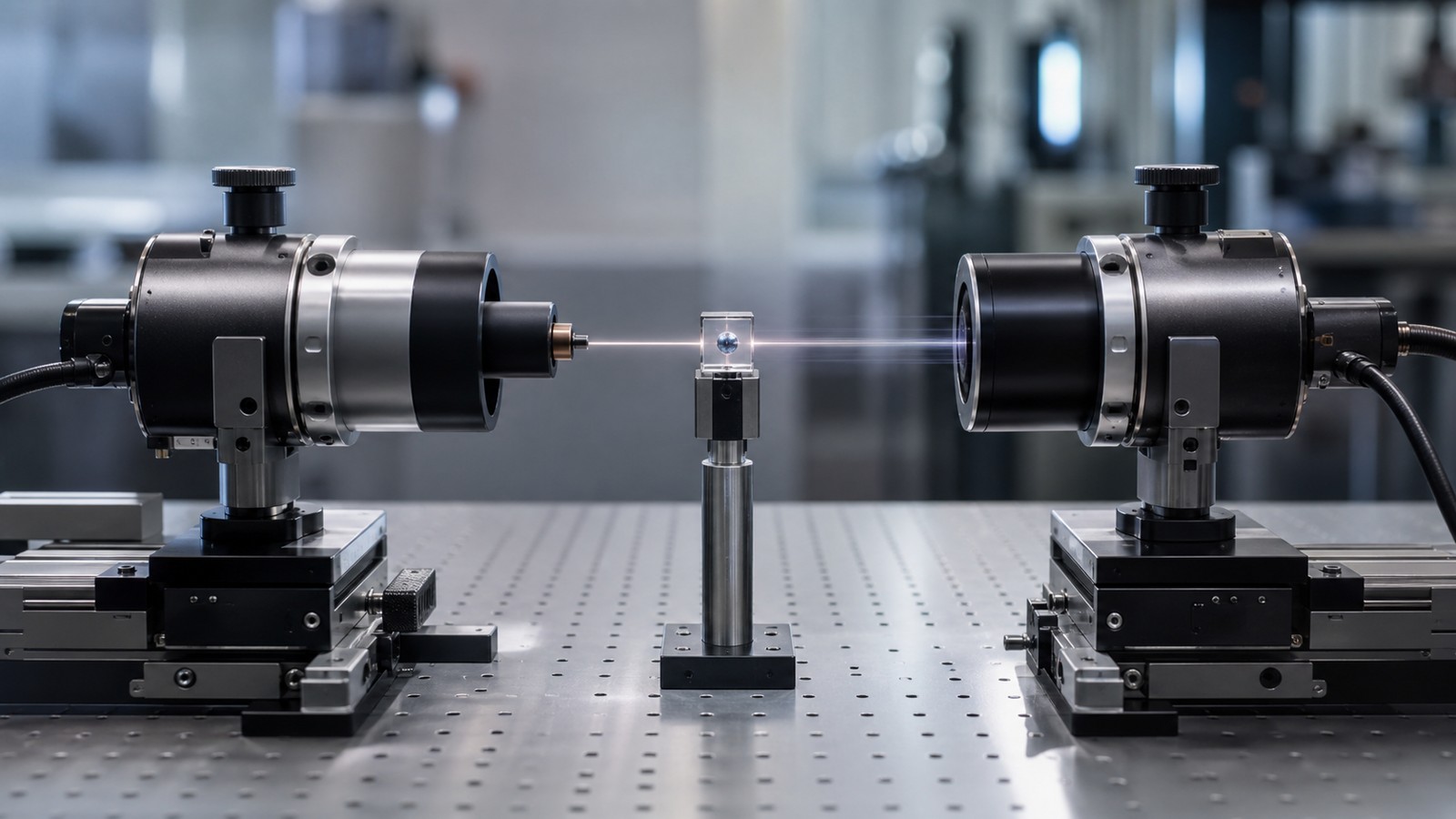
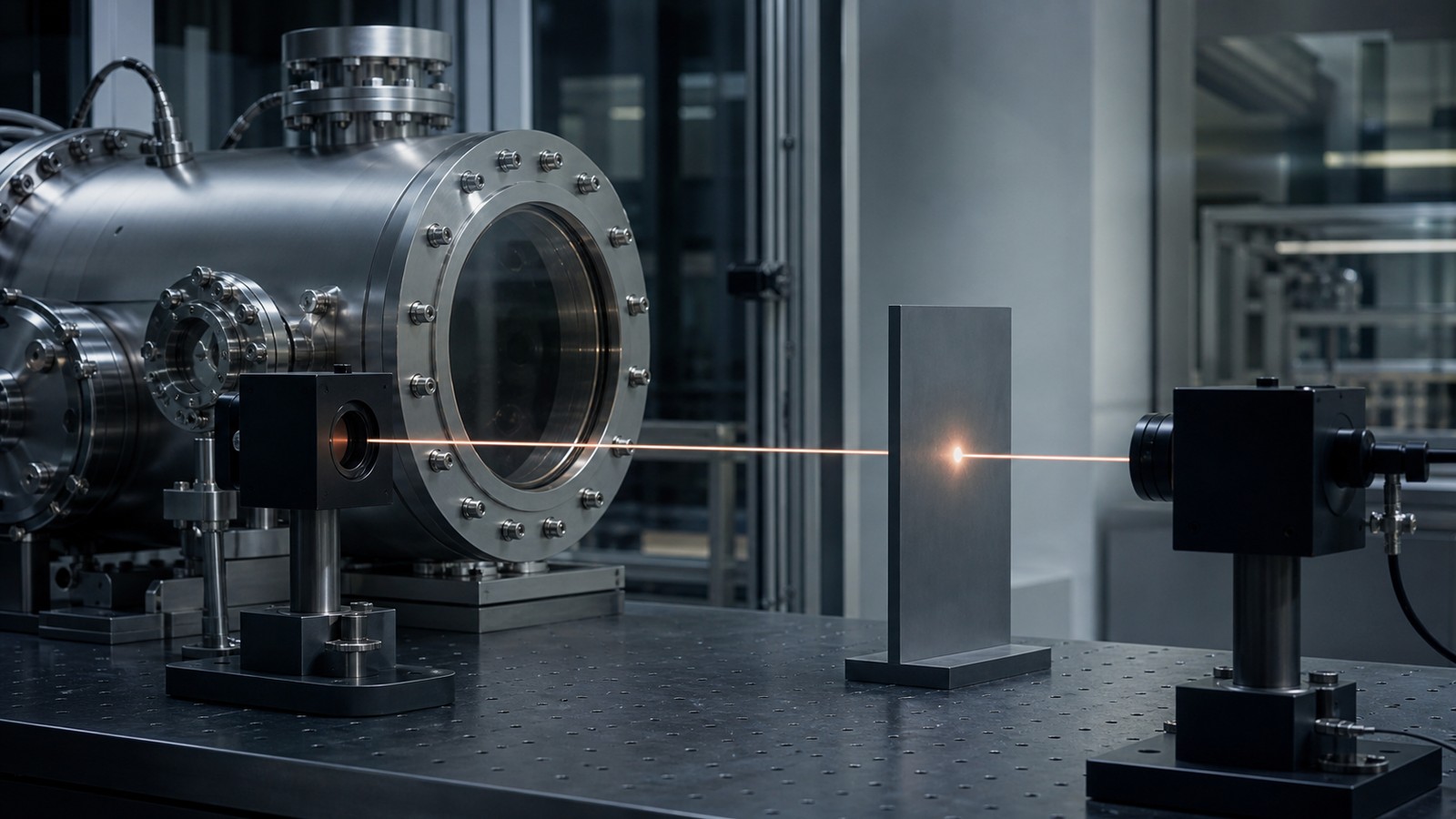
Laboratories do not ignore quantum limits. They design around them. If a measurement needs position information, the experiment accepts the corresponding momentum tradeoff. If a sensor needs phase sensitivity, the apparatus protects coherence long enough to read that phase.
This is a more mature idea than simply saying nature blocks knowledge. Nature blocks some classical combinations while allowing other carefully chosen measurements to become extremely precise.
Good experiments choose their limits deliberately. They decide which uncertainty is acceptable and which quantity deserves the sharpest possible attention.
Where The Boundary Becomes Useful
Quantum limits help explain atomic stability, tunneling, spectroscopy, quantum noise, and precision sensing. They are not just philosophical decorations placed on top of the math. They shape how matter behaves and how instruments are built.
The same limit that frustrates one kind of question can make another effect visible. A spread in position, for example, is related to the wave behavior that creates diffraction and interference.
What The Boundary Does Not Say
Quantum limits do not say all claims are equally uncertain. They do not say careful measurement is pointless. They do not say reality is only imagination. Those are exaggerations that make the principle sound deeper while making it less accurate.
The real claim is narrower and stronger. Some combinations of properties cannot be assigned unlimited simultaneous precision by one quantum state. That claim is enough to reshape physics without borrowing mystical language.
A precise boundary is more useful than a dramatic slogan.
How To Read A Limit Claim
When a popular article mentions a quantum limit, ask what kind of limit it means. Is the problem noise, back-action, state preparation, decoherence, or an uncertainty relation? These are related in experiments but not identical in meaning.
A strong explanation will identify the measured quantity, the incompatible quantity, and the preparation being discussed. Without that context, the word limit can blur too many different ideas together.
Why Boundaries Can Deepen Knowledge
A boundary can deepen knowledge by forcing better questions. Classical instinct asks for every property at once because large objects usually tolerate that demand. Quantum physics asks which description fits the experimental situation.
That shift has been scientifically productive. It helped physicists understand atoms, design interferometers, interpret spectra, and build devices that exploit quantum behavior instead of fighting it.
The limit is not a locked door at the edge of science. It is a signpost showing which door is real.
How Quantum Limits Differ From Human Limits
Human limits change with tools, training, and time. A measurement that was impossible in one century may become routine in another. Quantum limits are different because they are not merely gaps in technique waiting for a better instrument.
That difference gives the subject its edge. The limit belongs to the state description and to the physical quantities being compared. Better tools help scientists approach the limit cleanly, but they do not remove the structure that creates it.
Why Reaching The Limit Is Progress
In many experiments, the first problem is not the fundamental quantum boundary. The first problem is ordinary noise. Vibrations, thermal drift, detector inefficiency, background signals, and calibration errors can swamp the effect being studied.
When researchers reduce those ordinary problems enough to see the quantum limit, that is progress. It means the experiment has become clean enough for nature’s own boundary to show through.
Precision science often advances by moving from messy uncertainty to fundamental uncertainty. The second is not failure. It is a sign that the apparatus has reached the deep regime.
How Limits Shape Information
Quantum limits shape information by deciding which questions can be answered together. A measurement that sharpens one quantity may leave another quantity broad. A record that captures one aspect of a system may prevent a different interference pattern from being recovered.
This is why information is physical in quantum mechanics. It is not just a file stored after the fact. The possibility of a record can change which state description applies.
Why The Boundary Is Quantitative
A useful quantum limit is not a vague warning. It can be written as a relationship between spreads, noise levels, or measurement uncertainties. Even without writing equations, the important point is that the boundary has a size and a testable form.
That quantitative character separates physics from mood. A scientist can ask how close an experiment is to the limit, which noise source dominates, and what tradeoff will appear if the setup changes.
The limit is therefore something to measure against, not just something to admire from a distance.
How Limits Enter Technology
Quantum limits appear in sensors, clocks, interferometers, microscopes, and communication systems. Engineers cannot simply demand unlimited sharpness. They choose operating points, reduce avoidable noise, and sometimes use quantum states designed to shift uncertainty into a less harmful place.
This is why the boundary can be practical. It tells designers where improvement is possible and where a different strategy is needed.
Why The Word Knowledge Needs Precision
Knowledge in quantum physics often means knowing the preparation, the state, the measurement, and the probability rule. It does not always mean knowing a secret classical outcome before the measurement. That change in meaning is easy to miss.
A person can know the quantum state very well and still not know which single result will occur. That is not a contradiction. It is the difference between state knowledge and event certainty.
Once that distinction is clear, the boundary on knowledge becomes less like defeat and more like a new grammar for physical description.
How To Use The Limit Well
Use quantum limits as instructions for careful questions. Ask what is being measured, which tradeoff applies, and what kind of prediction remains possible.
How Boundary Language Prevents Overreach
Boundary language helps because it makes the claim specific. Instead of saying humans can never know reality, it asks which quantum state, which quantity, and which measurement relationship are involved. The answer may be narrow, but that narrowness is exactly what makes it reliable.
Overreach usually starts when the word limit is detached from a setup. Once the apparatus and state are named, the boundary becomes something science can use instead of a phrase that floats above the science.
Why Better Experiments Still Matter
Better experiments matter because most real uncertainty is a mixture of ordinary error and quantum structure. Scientists improve vacuum systems, timing electronics, isolation, temperature control, and detector efficiency so the preventable part gets smaller.
That work can reveal the true quantum boundary more clearly. It can also show when a previous supposed limit was only an engineering obstacle. The distinction has to be earned by measurement rather than assumed.
This is why precision physics remains optimistic. The fact that fundamental limits exist does not mean all current limits are fundamental.
The Practical Boundary Lesson
The practical lesson is to ask what can still be sharpened, what cannot be sharpened jointly, and what prediction remains strong after the tradeoff is accepted.
The Quantum-Limits Takeaway
Quantum limits are not just poor measurement or human doubt.
They mark boundaries in what a quantum state can make jointly definite, while still allowing precise, testable probability predictions.