Quantum computers promise to solve problems that would take classical machines longer than the age of the universe. At the heart of this revolutionary technology lies a concept that feels almost magical: the quantum bit, or qubit. Unlike the familiar bits that power today’s computers, qubits operate under the strange but powerful rules of quantum physics. Their defining feature, superposition, allows quantum computers to process information in fundamentally new ways. Understanding how qubits work and why superposition matters is key to grasping why quantum computing represents one of the most important technological shifts of the modern era.
A: No, it works in a completely different way.
A: Yes, through superposition.
A: Qubits are easily disturbed by their environment.
A: No, they complement them.
A: Not yet; they remain lab-based systems.
A: Complex simulations, optimization, and cryptography.
A: No, their states decay over time.
A: Yes, error correction is essential.
A: No, it’s experimentally proven physics.
A: It opens doors to problems previously impossible to solve.
From Classical Bits to Quantum Reality
Classical computers rely on bits that exist in one of two definite states: zero or one. Every calculation, image, and piece of data ultimately reduces to long strings of these binary choices. This approach has proven incredibly effective, enabling everything from smartphones to supercomputers. However, as problems grow more complex, classical bits face hard limits. Certain calculations scale so rapidly in difficulty that even the fastest machines become impractical.
Qubits break away from this restriction. Instead of being locked into a single value, a qubit is governed by the probabilistic nature of quantum mechanics. This allows it to encode more information than a classical bit ever could. The difference is not just incremental but structural, changing how computation itself can be performed.
What Exactly Is a Qubit?
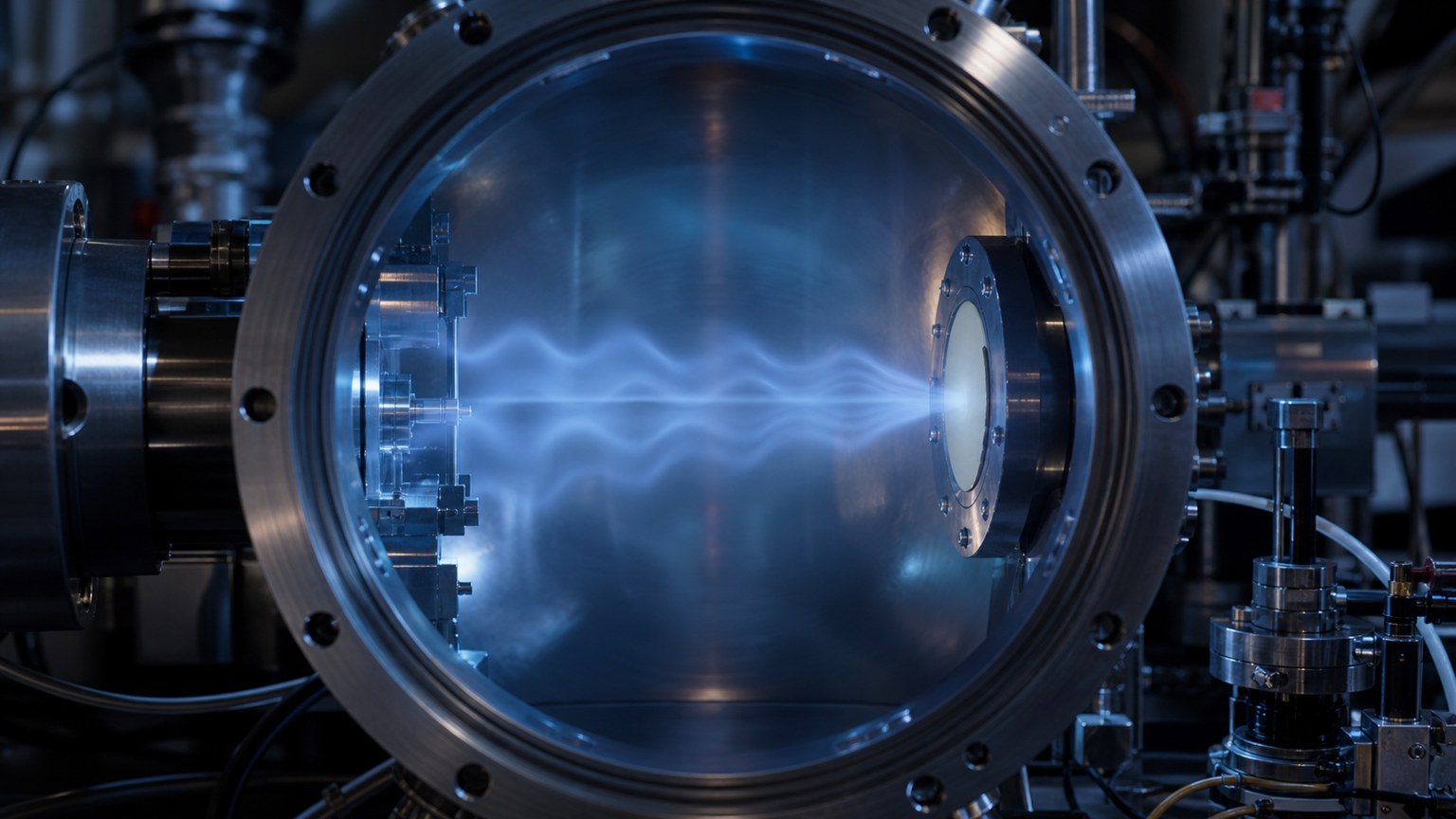
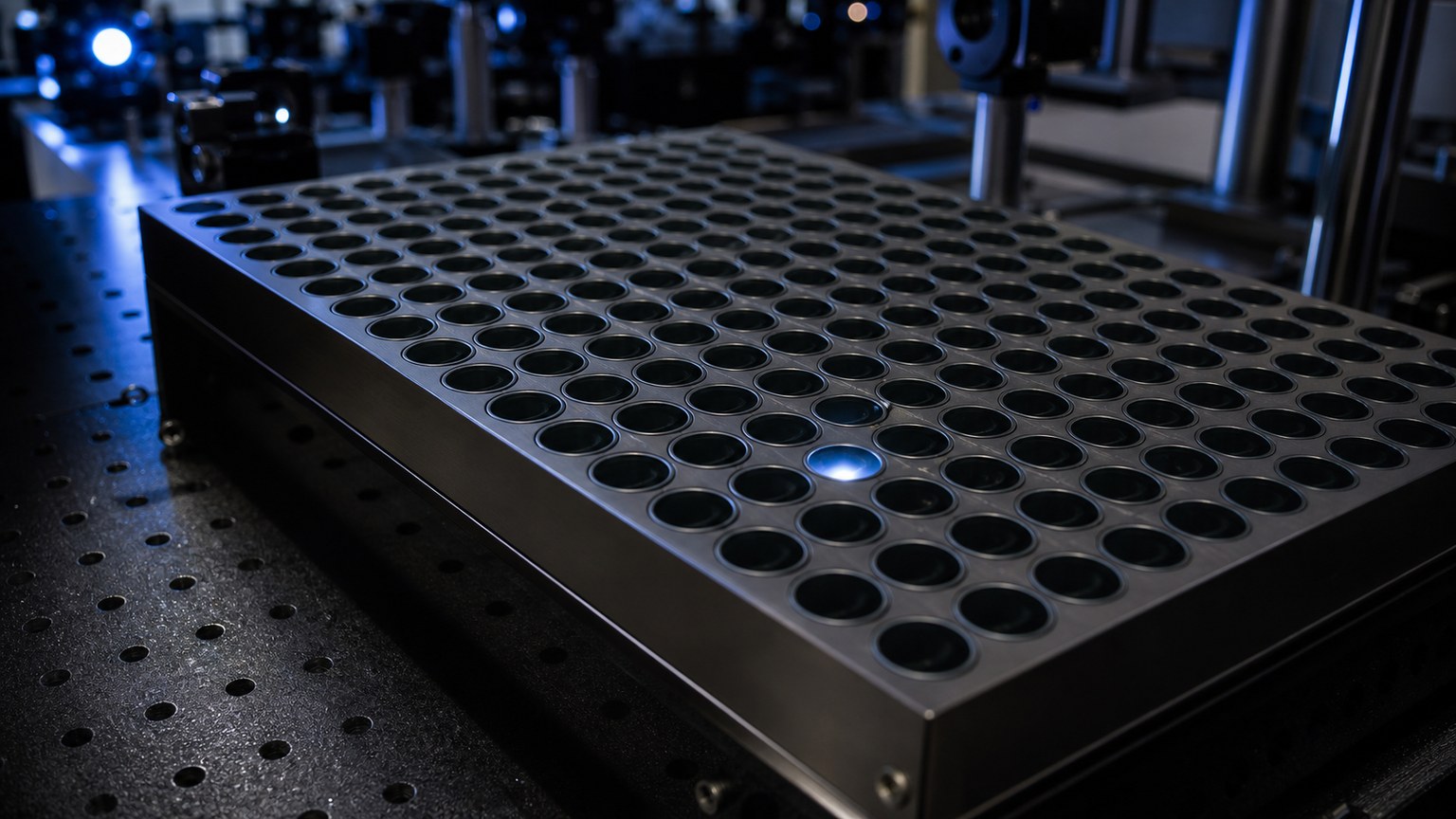
A qubit is the quantum version of a bit, but it cannot be fully understood using classical intuition. Physically, a qubit can be implemented in many ways, including trapped ions, superconducting circuits, photons, or even defects in crystals. Regardless of the hardware, what matters is the quantum state of the system.
That state is described mathematically as a combination of two basis states, often labeled zero and one. Instead of choosing between them, a qubit exists as a weighted mixture of both at the same time. These weights determine the probabilities of observing each outcome when the qubit is measured. Until that measurement occurs, the qubit does not settle on a single value.
Superposition: The Core of Quantum Power
Superposition is the principle that allows a quantum system to exist in multiple states simultaneously. For a qubit, this means it can represent zero, one, or any combination of both at the same time. This is not a metaphor or a trick of language. It is a direct consequence of the mathematics governing quantum systems.
When multiple qubits are placed into superposition together, the power scales dramatically. Two classical bits can represent only one of four possible combinations at a time. Two qubits, however, can represent all four combinations simultaneously. With three qubits, that number grows to eight. With fifty qubits, the number of simultaneous states exceeds what any classical computer can realistically track. This exponential growth is why quantum computing generates so much excitement. Superposition allows quantum computers to explore vast computational landscapes in parallel, rather than step by step.
Measurement and the Collapse of Possibility
One of the most misunderstood aspects of qubits is what happens when they are measured. While a qubit can exist in a superposition, measurement forces it to choose a single outcome. This process is often described as the collapse of the quantum state.
Before measurement, a qubit carries probabilities. After measurement, it produces a definite result. This does not mean the earlier superposition was imaginary. The effects of superposition shape the outcome probabilities and enable quantum algorithms to amplify correct answers while suppressing incorrect ones.
The art of quantum computing lies in designing algorithms that carefully manipulate superpositions so that when measurement occurs, the desired answer appears with high probability.
Interference: Steering Quantum Outcomes
Superposition alone does not make quantum computers useful. What turns raw possibility into computational advantage is interference. Quantum states can combine in ways that reinforce certain outcomes while canceling others.
This interference is similar in spirit to overlapping waves in water or light. When peaks align, they amplify. When a peak meets a trough, they cancel. Quantum algorithms exploit this behavior by arranging operations so that correct solutions build up constructively while wrong paths interfere destructively. Through interference, quantum computers can effectively sift through enormous numbers of possibilities and focus on the most promising answers.
Entanglement and Shared Superposition
While superposition allows individual qubits to hold multiple states, entanglement links qubits together in ways that have no classical counterpart. Entangled qubits share a combined quantum state, meaning the state of one cannot be fully described without the other, no matter how far apart they are.
When entangled qubits are placed into superposition, the system as a whole explores an interconnected space of possibilities. This collective behavior is crucial for quantum advantage. It enables coordinated interference patterns that classical systems cannot replicate.
Entanglement transforms qubits from isolated information units into a coherent computational fabric, vastly expanding what quantum machines can accomplish.
Quantum Gates and Controlled Superposition
Just as classical computers rely on logic gates, quantum computers rely on quantum gates. These operations do not flip bits from zero to one. Instead, they rotate and reshape superpositions.
Quantum gates control the probability amplitudes of qubit states, adjusting how likely each outcome is upon measurement. Some gates create superposition, others entangle qubits, and still others orchestrate interference across the system.
The sequence of gates in a quantum circuit determines how superposition evolves over time. Designing these sequences is one of the most challenging and fascinating aspects of quantum programming.
Why Superposition Enables Speedups
The reason quantum computers can outperform classical machines on certain tasks lies in how superposition changes the structure of computation. Instead of evaluating one possibility at a time, quantum algorithms operate on many possibilities simultaneously.
This does not mean quantum computers magically try every answer at once and instantly succeed. Rather, they use superposition and interference to guide the computation toward solutions more efficiently than any classical method can manage.
Problems involving large search spaces, complex probability distributions, or quantum simulations are particularly well suited to this approach. In these domains, classical computation struggles with exponential growth, while quantum systems naturally inhabit exponential state spaces.
Real-World Applications Powered by Qubits
Superposition-enabled quantum computing has implications across science, technology, and industry. In chemistry and materials science, quantum computers can model molecular interactions at a level of detail that classical simulations cannot reach. This could lead to breakthroughs in drug discovery, battery technology, and new materials.
In optimization, quantum algorithms can explore vast solution spaces more efficiently, offering potential advantages in logistics, finance, and engineering. In cryptography, quantum computers challenge existing encryption schemes while also enabling new forms of secure communication.
Each of these applications traces its power back to the same core idea: qubits in superposition, evolving through carefully designed quantum operations.
The Fragility of Quantum States
Despite their power, qubits are notoriously fragile. Superposition depends on maintaining quantum coherence, a delicate condition easily disrupted by environmental noise. Heat, electromagnetic interference, and even tiny vibrations can destroy superposition, causing errors.
This challenge has driven intense research into error correction and fault-tolerant quantum computing. Unlike classical errors, quantum errors cannot be detected and corrected in straightforward ways without disturbing the system. Engineers must encode logical qubits across many physical qubits, preserving superposition while protecting it from decay. The difficulty of maintaining superposition is one reason large-scale quantum computers remain a work in progress.
Scaling Up: From Demonstrations to Practical Machines
Early quantum computers demonstrate the principles of qubits and superposition, but scaling them into practical systems is a monumental task. Each additional qubit multiplies both the computational power and the engineering complexity.
As systems grow, maintaining coherence, controlling interactions, and minimizing errors become increasingly difficult. Yet steady progress continues, driven by advances in materials, fabrication, control electronics, and theoretical methods.
The journey from experimental devices to useful quantum machines mirrors the early days of classical computing, when room-sized machines performed calculations that now fit into a wristwatch.
How Qubits Redefine Information
At a deeper level, qubits challenge our understanding of information itself. Classical information is discrete and deterministic. Quantum information is probabilistic and contextual, shaped by measurement and interaction.
Superposition shows that information need not be confined to a single value at a time. Instead, it can exist as a spectrum of possibilities, with computation acting as a process of sculpting probability. This shift in perspective has profound implications, not just for computing, but for how we think about knowledge, prediction, and physical reality.
The Future of Superposition-Based Computing
As research advances, new qubit designs and error-correction techniques continue to improve stability and scalability. Hybrid systems combining classical and quantum processors are emerging, using quantum superposition for tasks where it provides the greatest advantage.
Education and workforce development are also expanding, preparing a new generation to work with quantum concepts that once seemed purely theoretical. As tools improve, programming quantum computers will become more accessible, allowing superposition to be harnessed in increasingly practical ways.
The future of quantum computing will not replace classical machines but complement them, extending computational reach into realms that were previously inaccessible.
Conclusion: Superposition as the Engine of Quantum Advantage
Quantum bits are more than smaller or faster versions of classical bits. Through superposition, they embody a radically different approach to computation, one rooted in the fundamental behavior of nature itself. Superposition allows qubits to represent many possibilities at once, interference guides computations toward meaningful results, and entanglement links qubits into powerful collective systems. Together, these principles enable quantum computers to tackle problems that defy classical solutions. As quantum technology continues to mature, superposition will remain its defining feature and greatest strength. Understanding how qubits work is not just a lesson in advanced physics, but a glimpse into the future of computation, where possibility itself becomes a resource.