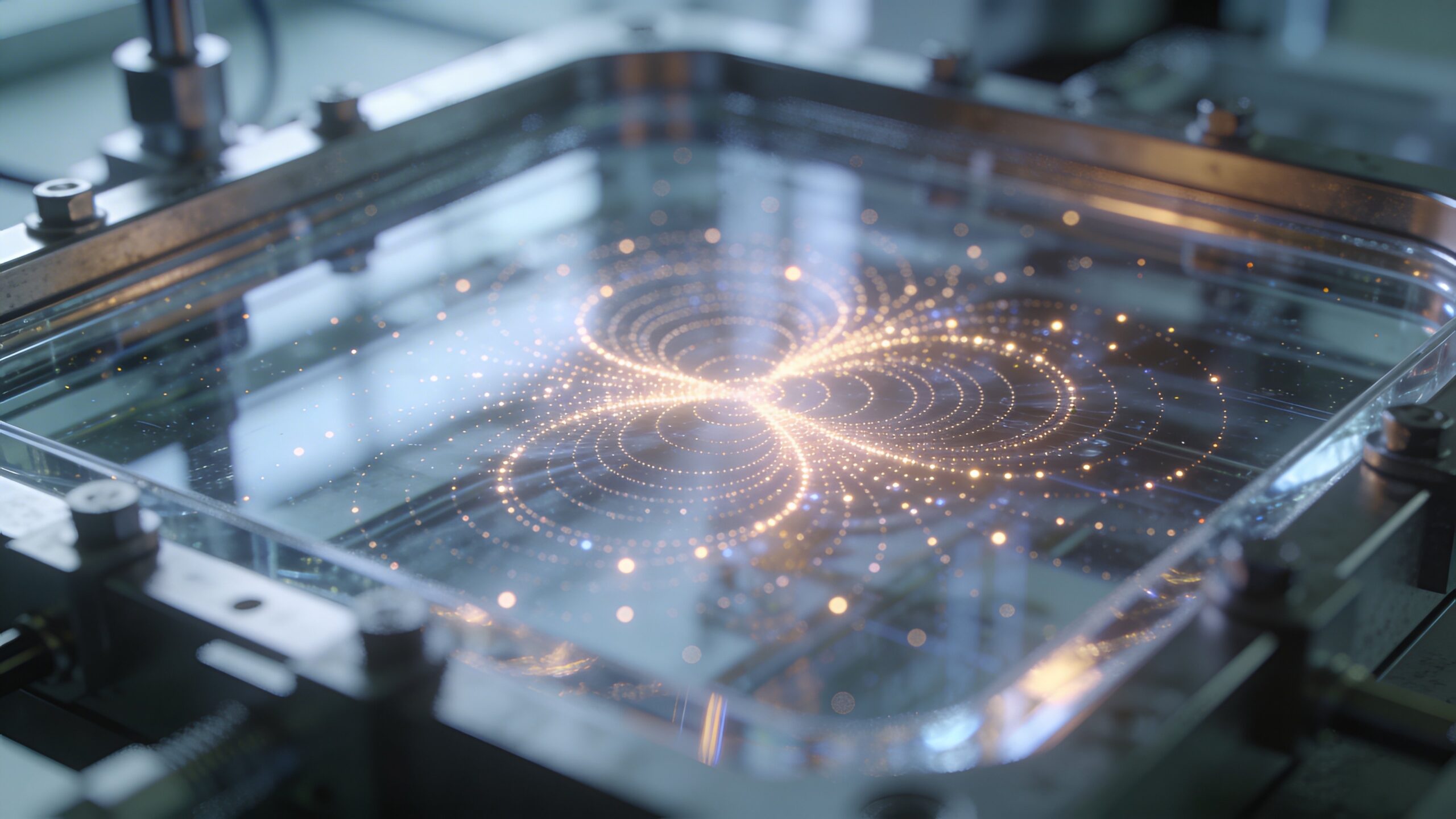
The universe feels solid, reliable, and predictable. Planets follow paths, clocks tick forward, and causes seem to produce clear effects. Yet beneath this familiar surface lies a strange truth: reality itself does not run on certainty. At its deepest levels, the universe operates on probability. Events are not guaranteed outcomes but weighted possibilities, governed by likelihood rather than inevitability. This idea does not merely reshape physics; it transforms how we understand nature, knowledge, and even reality itself. Probability is not a patch scientists use when they lack information. It is woven into the fabric of the cosmos. From the behavior of subatomic particles to the birth of galaxies, chance and uncertainty are fundamental features of existence. The universe does not always decide what will happen until it happens.
A: No, it’s built into how nature works.
A: No—only probabilities.
A: It’s probabilistic, not chaotic.
A: Probabilities average out at large scales.
A: No, laws govern the chances.
A: Yes—modern tech relies on it.
A: Yes, it shapes the arrow of time.
A: Only in mathematical models.
A: Order emerges statistically.
A: It explains how reality truly operates.
From Clockwork Cosmos to Uncertain Reality
For centuries, science was built on certainty. Classical physics, developed by thinkers like Isaac Newton, described a universe that behaved like a perfect machine. If you knew the position and speed of every object, you could predict the future indefinitely. This view suggested that uncertainty came from ignorance, not nature. The universe itself was assumed to be exact and deterministic.
This worldview dominated until the early twentieth century, when experiments began revealing cracks in the clockwork model. Scientists discovered that light behaves both like a wave and a particle, that atoms emit energy in discrete jumps, and that electrons refuse to sit still in neat, predictable orbits. The universe at small scales was not obeying classical rules.
What replaced certainty was not chaos, but probability. Physical laws no longer described exactly what would happen, only the chances that something might happen.
The Quantum Revolution
Quantum physics shattered the illusion of certainty. At the quantum level, particles do not have precise positions and velocities at the same time. Instead, they are described by probability distributions. An electron is not at one specific point until it is measured; it exists as a range of possible locations.
This insight led to the famous uncertainty principle, associated with Werner Heisenberg, which states that certain pairs of properties cannot both be known exactly at once. This is not a limitation of measurement technology. It is a rule built into reality itself.
Quantum equations do not predict outcomes; they predict probabilities. When a radioactive atom decays, physics can tell you the likelihood of decay over time, but it cannot say exactly when a specific atom will decay. The universe rolls dice, not because it is careless, but because that is how it is structured.
Wave Functions and Possibility Clouds
At the heart of quantum theory lies the wave function, a mathematical description of all the possible states a system can take. Rather than describing what is, it describes what could be, along with the probability of each outcome.
Before measurement, particles exist in superpositions, meaning multiple possibilities coexist. A particle can be here and there, moving fast and slow, spinning up and down, all at once. Only when an interaction occurs does one possibility become real.
This challenges everyday intuition. We expect objects to have definite properties whether we look at them or not. Quantum physics tells a different story: properties emerge from interactions, not from pre-existing certainty.
Measurement and the Collapse of Certainty
The act of measurement plays a central role in why probability rules the universe. When a quantum system interacts with its environment or a measuring device, its wave function appears to collapse into a single outcome. Before that moment, certainty does not exist.
This idea deeply troubled many scientists, including Albert Einstein, who famously objected that “God does not play dice with the universe.” Yet decades of experiments have consistently confirmed that nature does exactly that.
The universe does not secretly store hidden answers waiting to be revealed. Instead, reality itself is undecided until events unfold. Probability is not ignorance; it is how the universe chooses.
Randomness That Obeys Rules
Probability in physics does not mean anything can happen. Quantum randomness follows strict mathematical laws. The outcomes are unpredictable individually but highly predictable in large numbers. This balance between randomness and order is one of the most remarkable features of reality.
Radioactive decay, photon detection, and particle interactions all show this pattern. You cannot predict a single event, but you can predict averages with extraordinary precision. The universe trades certainty in individual outcomes for stability in collective behavior.
This statistical reliability is why chemistry works, why stars shine steadily, and why matter remains stable. Probability does not undermine order; it creates it.
Probability Beyond the Quantum World
While quantum effects dominate the smallest scales, probability extends far beyond subatomic particles. Even at cosmic scales, uncertainty plays a central role. The formation of galaxies depends on tiny quantum fluctuations in the early universe, amplified over billions of years.
These microscopic random variations shaped the large-scale structure of the cosmos. Without them, galaxies, stars, and planets might never have formed. The universe we see today owes its complexity to chance events frozen into spacetime shortly after the Big Bang.
Probability is not confined to laboratories; it is written across the sky.
The Arrow of Time and Uncertainty
Probability is closely tied to the direction of time. The laws of physics allow many processes to run forward or backward in principle, yet in practice time flows one way. This arrow of time arises from probability, not certainty.
Entropy, a measure of disorder, tends to increase because high-entropy states are overwhelmingly more probable than low-entropy ones. A broken cup is more likely than an unbroken one, not because of strict rules, but because there are vastly more ways for atoms to be disordered than ordered.
Time flows forward because probability favors it.
Determinism vs. Predictability
A common misunderstanding is that probability means the universe is lawless. In reality, the universe is lawful but not deterministic in the classical sense. Laws still exist, but they govern probabilities instead of outcomes.
Even if you had complete knowledge of the universe’s current state, you could not predict everything with certainty. The laws themselves contain randomness. This marks a profound shift from classical thinking, where unpredictability came from ignorance, not nature.
The universe is predictable in patterns, not in particulars.
Why Probability Is More Fundamental Than Certainty
Certainty requires fixed outcomes. Probability allows flexibility, creativity, and complexity. A universe governed entirely by certainty would be rigid and repetitive. One governed by probability can evolve, diversify, and surprise.
Quantum uncertainty allows particles to tunnel through barriers, enabling nuclear fusion in stars. It allows atoms to exist at all, stabilizing matter. Life itself may depend on probabilistic processes at molecular and genetic levels.
Probability is not a flaw. It is a feature that makes existence possible.
Human Intuition vs. Cosmic Reality
Our brains evolved to survive in a world of averages. We experience probability as uncertainty because we live at scales where randomness smooths out. A chair does not quantum-tunnel through the floor, not because it is impossible, but because the probability is unimaginably small.
This disconnect between intuition and reality makes quantum ideas feel strange. Yet strangeness does not mean incorrect. The universe is under no obligation to match human expectations.
Probability feels uncomfortable because it undermines our desire for certainty, not because it is wrong.
Knowledge in a Probabilistic Universe
In a universe governed by probability, knowledge is inherently statistical. Science becomes the art of refining likelihoods, not discovering absolute truths. Predictions are expressed with confidence intervals, margins of error, and probability distributions.
This does not weaken science. It strengthens it. By acknowledging uncertainty, science becomes more honest, flexible, and powerful. It adapts as new evidence shifts probabilities rather than clinging to rigid certainty.
Truth in physics is not a fixed point but a well-tested range.
Free Will and Chance
The probabilistic nature of the universe has sparked debates about free will. If the universe is not fully determined, does that leave room for choice? Quantum randomness alone does not grant free will, but it removes the idea that the future is completely fixed.
At minimum, probability means the universe is not a prewritten script. Outcomes emerge, rather than simply unfold. This openness may not explain consciousness or choice, but it ensures that reality itself is not locked into inevitability.
The future is shaped, not dictated.
Technology Built on Uncertainty
Modern technology relies on probabilistic physics. Semiconductors, lasers, medical imaging, and quantum computing all depend on quantum uncertainty. Engineers design systems that work not despite probability, but because of it.
Quantum encryption uses randomness to create unbreakable codes. Random decay events power secure communications. Probability becomes a resource, not a limitation.
The modern world runs on uncertainty as much as the cosmos does.
Embracing a Probabilistic Universe
Accepting probability as fundamental changes how we relate to reality. It encourages humility, curiosity, and adaptability. It reminds us that certainty is rare, even in nature itself.
Rather than seeking absolute answers, science seeks better questions and tighter probabilities. Understanding improves not by eliminating uncertainty, but by mapping it.
The universe is not broken because it lacks certainty. It is alive with possibility because it runs on probability.
The Final Thought: Possibility Over Precision
The deepest truth about reality is not that it is unpredictable, but that it is open. The universe does not follow a single inevitable path. It explores a landscape of possibilities, guided by probabilistic laws that balance order and randomness. Certainty belongs to mathematics. Reality belongs to probability. In embracing this, we align our understanding with how the universe truly works: not as a rigid machine, but as a dynamic system where chance and law dance together, shaping everything from particles to galaxies.