
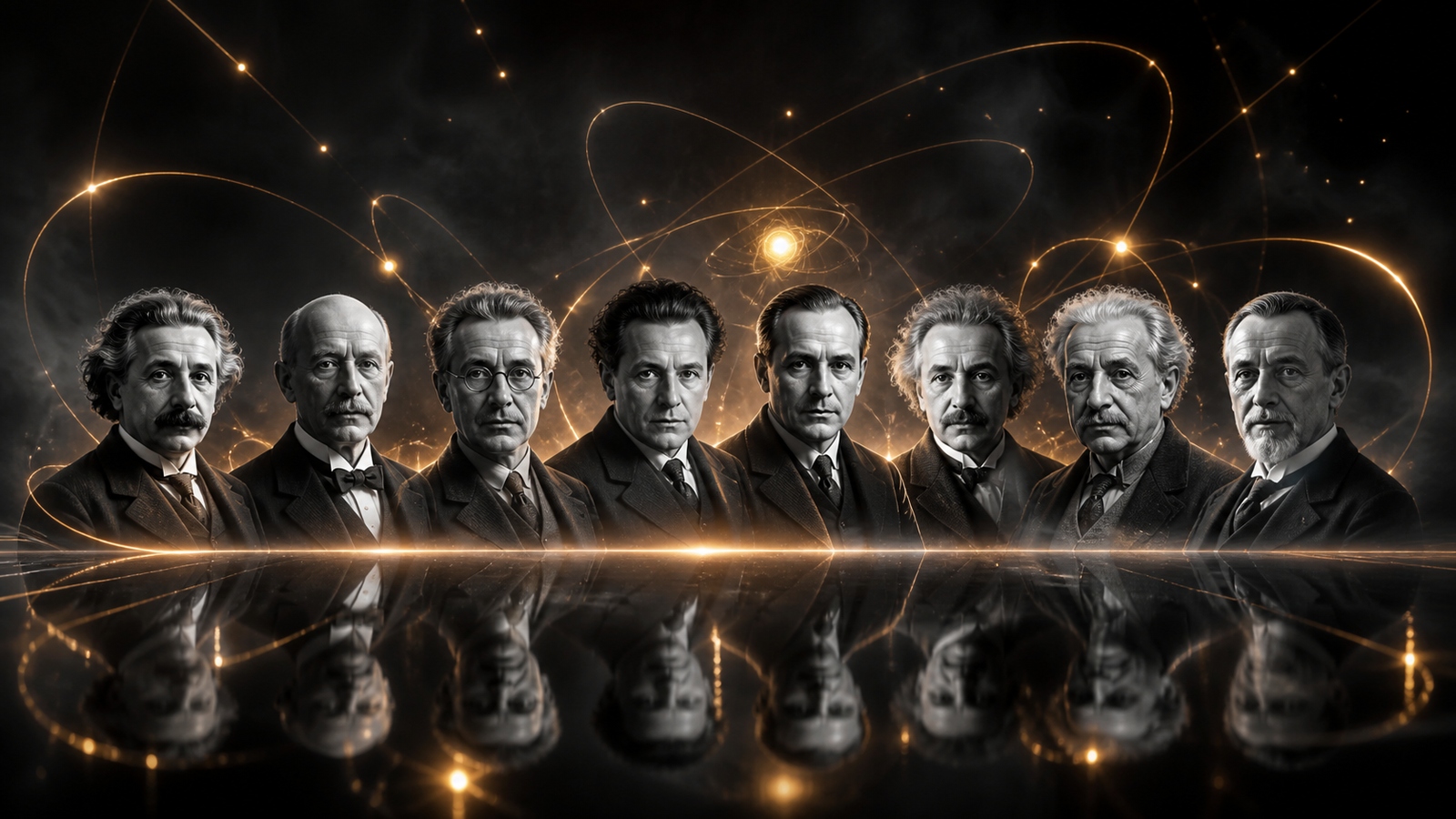
The simplest path into The Greatest Quantum Physicists of All Time: A Beginner’s Guide starts with a question. What did physicists expect, what did they actually measure, and why did the old explanation fail? The answer leads to the people whose disagreements built the field, a lesson that still shapes modern science.
A: It anchors the article in a specific piece of the science rather than a vague sense of mystery.
A: It anchors the article in a specific piece of the science rather than a vague sense of mystery.
A: It anchors the article in a specific piece of the science rather than a vague sense of mystery.
A: It anchors the article in a specific piece of the science rather than a vague sense of mystery.
A: It anchors the article in a specific piece of the science rather than a vague sense of mystery.
A: It anchors the article in a specific piece of the science rather than a vague sense of mystery.
A: It anchors the article in a specific piece of the science rather than a vague sense of mystery.
A: It anchors the article in a specific piece of the science rather than a vague sense of mystery.
A: It anchors the article in a specific piece of the science rather than a vague sense of mystery.
A: It anchors the article in a specific piece of the science rather than a vague sense of mystery.
Greatest Quantum Physicists All: The Core Question
Planck is best understood as part of the people whose disagreements built the field, not as an isolated buzzword. Classical physics usually lets us imagine hidden details continuing in the background. Quantum physics is more disciplined. It separates what can be predicted before measurement from what appears only as an outcome, and that distinction explains why the subject feels both exact and unfamiliar.
For a reader meeting Planck for the first time, the safest question is not ?what object is hiding in there?? but ?what arrangement produces which pattern?? That small shift prevents many common confusions. It keeps the explanation close to preparation, evolution, and measurement, while still allowing the topic to feel astonishing. Quantum mechanics is full of images that almost work; the skill is knowing where each image stops.
For a reader meeting Einstein for the first time, the safest question is not ?what object is hiding in there?? but ?what arrangement produces which pattern?? That small shift prevents many common confusions. It keeps the explanation close to preparation, evolution, and measurement, while still allowing the topic to feel astonishing. Quantum mechanics is full of images that almost work; the skill is knowing where each image stops.
For a reader meeting Bohr for the first time, the safest question is not ?what object is hiding in there?? but ?what arrangement produces which pattern?? That small shift prevents many common confusions. It keeps the explanation close to preparation, evolution, and measurement, while still allowing the topic to feel astonishing. Quantum mechanics is full of images that almost work; the skill is knowing where each image stops.
For a reader meeting Heisenberg for the first time, the safest question is not ?what object is hiding in there?? but ?what arrangement produces which pattern?? That small shift prevents many common confusions. It keeps the explanation close to preparation, evolution, and measurement, while still allowing the topic to feel astonishing. Quantum mechanics is full of images that almost work; the skill is knowing where each image stops.
For a reader meeting Dirac for the first time, the safest question is not ?what object is hiding in there?? but ?what arrangement produces which pattern?? That small shift prevents many common confusions. It keeps the explanation close to preparation, evolution, and measurement, while still allowing the topic to feel astonishing. Quantum mechanics is full of images that almost work; the skill is knowing where each image stops.
For a reader meeting Planck for the first time, the safest question is not ?what object is hiding in there?? but ?what arrangement produces which pattern?? That small shift prevents many common confusions. It keeps the explanation close to preparation, evolution, and measurement, while still allowing the topic to feel astonishing. Quantum mechanics is full of images that almost work; the skill is knowing where each image stops.
For a reader meeting Einstein for the first time, the safest question is not ?what object is hiding in there?? but ?what arrangement produces which pattern?? That small shift prevents many common confusions. It keeps the explanation close to preparation, evolution, and measurement, while still allowing the topic to feel astonishing. Quantum mechanics is full of images that almost work; the skill is knowing where each image stops.
The useful beginner move is to connect Einstein to what a lab can prepare and measure. Beginners sometimes hear this and think quantum theory is merely philosophical. It is not. Lasers, semiconductors, atomic clocks, medical scanners, and modern chemistry all lean on the same framework. The philosophy matters because the experimental success is so strong.
A mental image such as a roundtable where every voice solves a different part can help, provided we remember that every analogy eventually bends. Good explanations avoid pretending the topic is simpler than it is. They also avoid making it stranger than it is. The middle path is to follow the evidence, name the rule, and let the rule reshape intuition one step at a time.
What makes Heisenberg powerful is that it turns a vague puzzle into a testable expectation. The important point is not that nature becomes sloppy. The rules are strict, repeatable, and mathematically precise. The surprise is that the strictness often governs patterns across many trials rather than a single guaranteed result.
Greatest Quantum Physicists All: The Evidence Trail
In ordinary life, Einstein would seem unnecessary; at quantum scales it becomes hard to avoid. Scale is the quiet character in the story. Large warm objects are constantly disturbed by their surroundings, so their quantum features smear into ordinary behavior. Small isolated systems can keep those features long enough for researchers to see them directly.
Bohr is best understood as part of the people whose disagreements built the field, not as an isolated buzzword. Classical physics usually lets us imagine hidden details continuing in the background. Quantum physics is more disciplined. It separates what can be predicted before measurement from what appears only as an outcome, and that distinction explains why the subject feels both exact and unfamiliar.
The useful beginner move is to connect Heisenberg to what a lab can prepare and measure. Beginners sometimes hear this and think quantum theory is merely philosophical. It is not. Lasers, semiconductors, atomic clocks, medical scanners, and modern chemistry all lean on the same framework. The philosophy matters because the experimental success is so strong.
A mental image such as a roundtable where every voice solves a different part can help, provided we remember that every analogy eventually bends. Good explanations avoid pretending the topic is simpler than it is. They also avoid making it stranger than it is. The middle path is to follow the evidence, name the rule, and let the rule reshape intuition one step at a time.
Greatest Quantum Physicists All: What Beginners Should Picture
What makes Bohr powerful is that it turns a vague puzzle into a testable expectation. The important point is not that nature becomes sloppy. The rules are strict, repeatable, and mathematically precise. The surprise is that the strictness often governs patterns across many trials rather than a single guaranteed result.
In ordinary life, Heisenberg would seem unnecessary; at quantum scales it becomes hard to avoid. Scale is the quiet character in the story. Large warm objects are constantly disturbed by their surroundings, so their quantum features smear into ordinary behavior. Small isolated systems can keep those features long enough for researchers to see them directly.
Dirac is best understood as part of the people whose disagreements built the field, not as an isolated buzzword. Classical physics usually lets us imagine hidden details continuing in the background. Quantum physics is more disciplined. It separates what can be predicted before measurement from what appears only as an outcome, and that distinction explains why the subject feels both exact and unfamiliar.
The useful beginner move is to connect Planck to what a lab can prepare and measure. Beginners sometimes hear this and think quantum theory is merely philosophical. It is not. Lasers, semiconductors, atomic clocks, medical scanners, and modern chemistry all lean on the same framework. The philosophy matters because the experimental success is so strong.
Greatest Quantum Physicists All: Where The Old View Breaks
A mental image such as a roundtable where every voice solves a different part can help, provided we remember that every analogy eventually bends. Good explanations avoid pretending the topic is simpler than it is. They also avoid making it stranger than it is. The middle path is to follow the evidence, name the rule, and let the rule reshape intuition one step at a time.
What makes Dirac powerful is that it turns a vague puzzle into a testable expectation. The important point is not that nature becomes sloppy. The rules are strict, repeatable, and mathematically precise. The surprise is that the strictness often governs patterns across many trials rather than a single guaranteed result.
In ordinary life, Planck would seem unnecessary; at quantum scales it becomes hard to avoid. Scale is the quiet character in the story. Large warm objects are constantly disturbed by their surroundings, so their quantum features smear into ordinary behavior. Small isolated systems can keep those features long enough for researchers to see them directly.
Greatest Quantum Physicists All: The Experiment Connection
The useful beginner move is to connect Dirac to what a lab can prepare and measure. Beginners sometimes hear this and think quantum theory is merely philosophical. It is not. Lasers, semiconductors, atomic clocks, medical scanners, and modern chemistry all lean on the same framework. The philosophy matters because the experimental success is so strong.
A mental image such as a roundtable where every voice solves a different part can help, provided we remember that every analogy eventually bends. Good explanations avoid pretending the topic is simpler than it is. They also avoid making it stranger than it is. The middle path is to follow the evidence, name the rule, and let the rule reshape intuition one step at a time.
What makes Einstein powerful is that it turns a vague puzzle into a testable expectation. The important point is not that nature becomes sloppy. The rules are strict, repeatable, and mathematically precise. The surprise is that the strictness often governs patterns across many trials rather than a single guaranteed result.
Greatest Quantum Physicists All: Why The Idea Lasted
Planck is best understood as part of the people whose disagreements built the field, not as an isolated buzzword. Classical physics usually lets us imagine hidden details continuing in the background. Quantum physics is more disciplined. It separates what can be predicted before measurement from what appears only as an outcome, and that distinction explains why the subject feels both exact and unfamiliar.
The useful beginner move is to connect Einstein to what a lab can prepare and measure. Beginners sometimes hear this and think quantum theory is merely philosophical. It is not. Lasers, semiconductors, atomic clocks, medical scanners, and modern chemistry all lean on the same framework. The philosophy matters because the experimental success is so strong.
A mental image such as a roundtable where every voice solves a different part can help, provided we remember that every analogy eventually bends. Good explanations avoid pretending the topic is simpler than it is. They also avoid making it stranger than it is. The middle path is to follow the evidence, name the rule, and let the rule reshape intuition one step at a time.
Greatest Quantum Physicists All: The Takeaway
The Greatest Quantum Physicists of All Time: A Beginner’s Guide matters because it shows how science grows when evidence outruns habit. The result is not a rejection of reason but a wider version of it. Once the pieces are in place, the quantum world becomes less like a magic trick and more like a precise language for situations our senses were never built to inspect.


