Randomness That Engineers Can Use
Quantum randomness powers modern technology because some quantum events are not merely unpredictable from missing information. They can produce outcomes whose probabilities are set by the quantum state, while the individual result remains genuinely uncertain. That sounds abstract until it becomes a tool. Random number generators can use quantum measurement events. Secure communication can use the fact that measurements disturb or reveal tampering. Sensors and precision instruments can manage quantum noise to detect tiny effects. Quantum computers use amplitudes and measurement probabilities as part of their operation. The practical point is simple: randomness does not mean uselessness. In quantum technology, controlled randomness can be measured, certified, shaped, and turned into reliable systems.
A: It can provide controlled unpredictability from a physical source.
A: Quantum random number generation is the most direct use.
A: No. The distribution can be reliable while individual outcomes vary.
A: Secure keys need randomness attackers cannot predict.
A: Yes. Hardware imperfections can distort the intended quantum source.
A: It tests whether the output deserves the claimed randomness.
A: They manage quantum noise to improve chosen measurements.
A: No. They shape amplitudes before probabilistic readout.
A: Often no; it may reflect hidden classical details.
A: Randomness becomes useful when it is controlled, tested, and engineered.
Why Randomness Can Be Useful
Everyday randomness often feels like a nuisance. Engineers usually try to remove noise, stabilize signals, and make devices predictable. Quantum technology is subtler because some randomness can be a resource when its source and distribution are well understood.
A good quantum device does not celebrate chaos. It prepares a state, chooses a measurement, and uses the resulting distribution for a task. The randomness is useful because it is tied to a controlled physical process.
That distinction separates quantum randomness from vague unpredictability.
Quantum Random Number Generation
Random number generation is the most direct example. A quantum system can be prepared so a measurement has well-defined probabilities while the individual result is not predetermined in the ordinary classical way.
Devices can turn those outcomes into random bits for cryptography, simulation, lotteries, sampling, and security protocols. The challenge is certification: the device must prove that ordinary technical bias has not replaced the intended quantum source.
Why Security Cares About Quantum Events
Security systems need randomness that attackers cannot predict. If a supposedly random key is produced by a flawed algorithm or hidden pattern, security can collapse. Quantum randomness offers a physical source that can be tested in special ways.
Quantum communication also uses measurement disturbance. If an eavesdropper tries to learn certain quantum states, the attempt can alter the statistics seen by legitimate users. The disturbance becomes a warning sign.
The security value depends on careful implementation, not buzzwords.
How Sensors Manage Randomness
Precision sensors often face quantum noise. Photon counting, spin measurements, and phase readouts can include unavoidable statistical spread. Instead of ignoring it, engineers build models around it.
Some sensors use squeezing or entanglement to redistribute uncertainty and improve a chosen measurement. They do not erase quantum randomness. They shape it so the quantity of interest becomes easier to read.
Quantum Computing And Probabilistic Readout
Quantum computers end calculations with measurements that produce classical outcomes. A single run may not give the final answer with certainty. Algorithms are designed so useful answers become more likely after amplitude manipulation.
That means randomness is part of the readout, but it is not the whole story. The computation works by shaping amplitudes before measurement, then repeating enough times to estimate the intended result.
The power comes from controlled probability, not from rolling a strange dice and hoping.
Where Randomness Must Be Cleaned Up
Real devices contain ordinary noise as well as quantum randomness. Temperature drift, electronics, detector inefficiency, and environmental disturbance can bias the output. Engineers have to separate the useful quantum source from unwanted technical flaws.
Post-processing can remove bias in random-number systems, but it cannot rescue a device whose physical source is poorly characterized. Trustworthy randomness begins with trustworthy hardware.
Why Certification Matters
Certification asks whether the output really has the claimed randomness. Some methods test statistics. Stronger methods connect randomness to quantum correlations or device-independent protocols, though those can be experimentally demanding.
The goal is practical confidence. A system used for security or science needs more than a story about quantum mystery. It needs evidence that the output cannot be predicted by hidden technical patterns.
That evidence is what turns quantum randomness into engineering.
How Everyday Randomness Differs
A shuffled deck, a coin toss, or a weather fluctuation can look random because too many classical details are hard to track. In principle, those details may still determine the result under a classical model.
Quantum randomness can be different because the state itself may only assign probabilities. That difference is why foundational tests and secure devices care about the source, not only the statistical appearance.
What The Future May Use
Future systems may use quantum randomness in secure chips, network protocols, simulations, gaming fairness checks, scientific sampling, and precision metrology. The successful uses will likely be quiet rather than theatrical.
A good technology disappears into reliability. Users may not think about quantum measurement when a secure key is generated or a sensor reads a tiny field. The physics matters because it makes the system work.
That is a healthy future for a once-philosophical idea.
Why Randomness Can Be An Asset
Randomness sounds like a problem when the goal is control, but some technologies need unpredictability. Security systems, simulations, sampling methods, and tests of hardware can benefit from random numbers that are difficult to predict or reproduce by an attacker.
Quantum randomness is useful because it can be tied to physical processes where the standard theory gives genuine probabilities. That makes it different from an ordinary algorithm that only imitates randomness from a hidden starting value.
How Devices Turn Events Into Bits
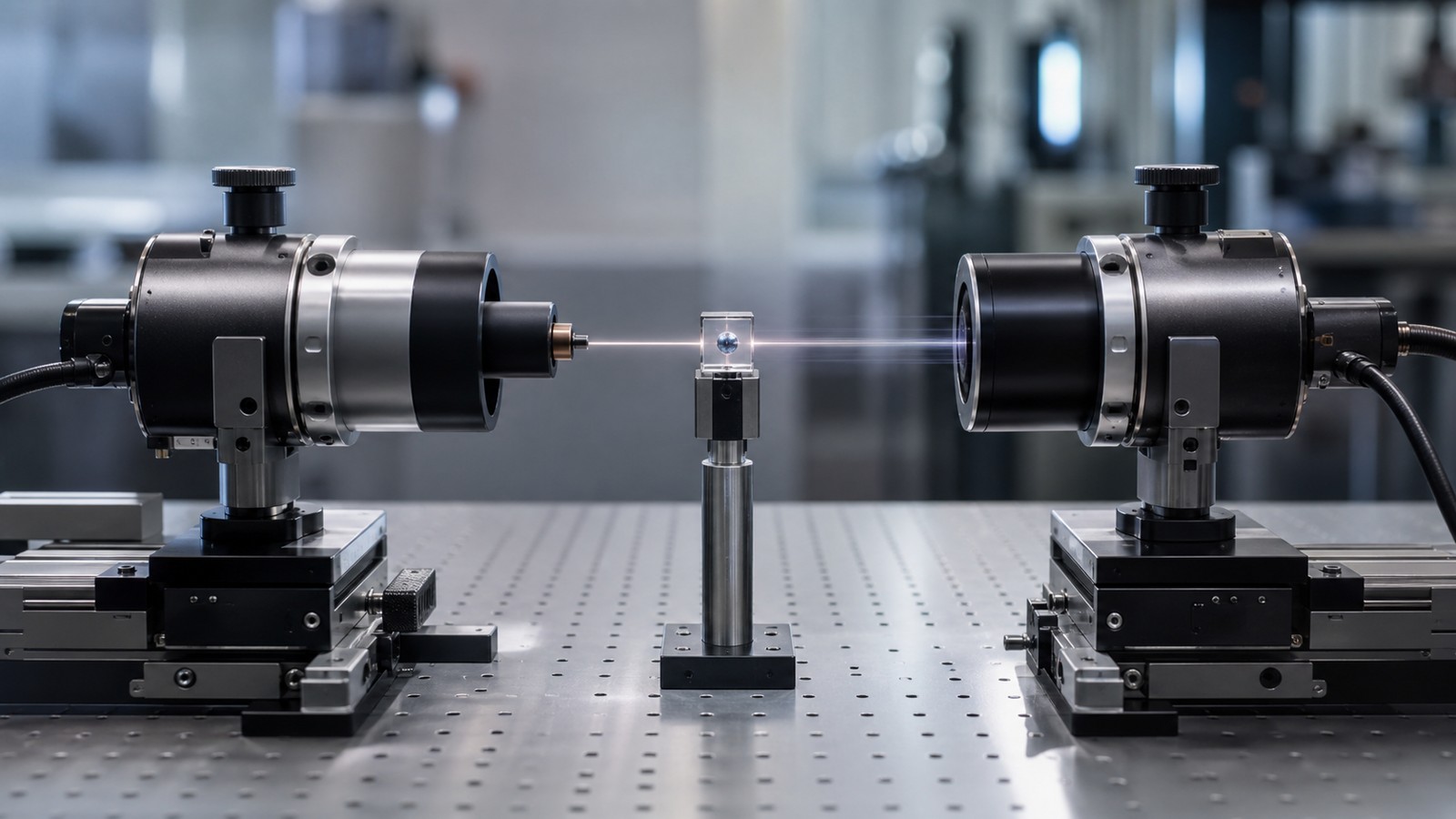
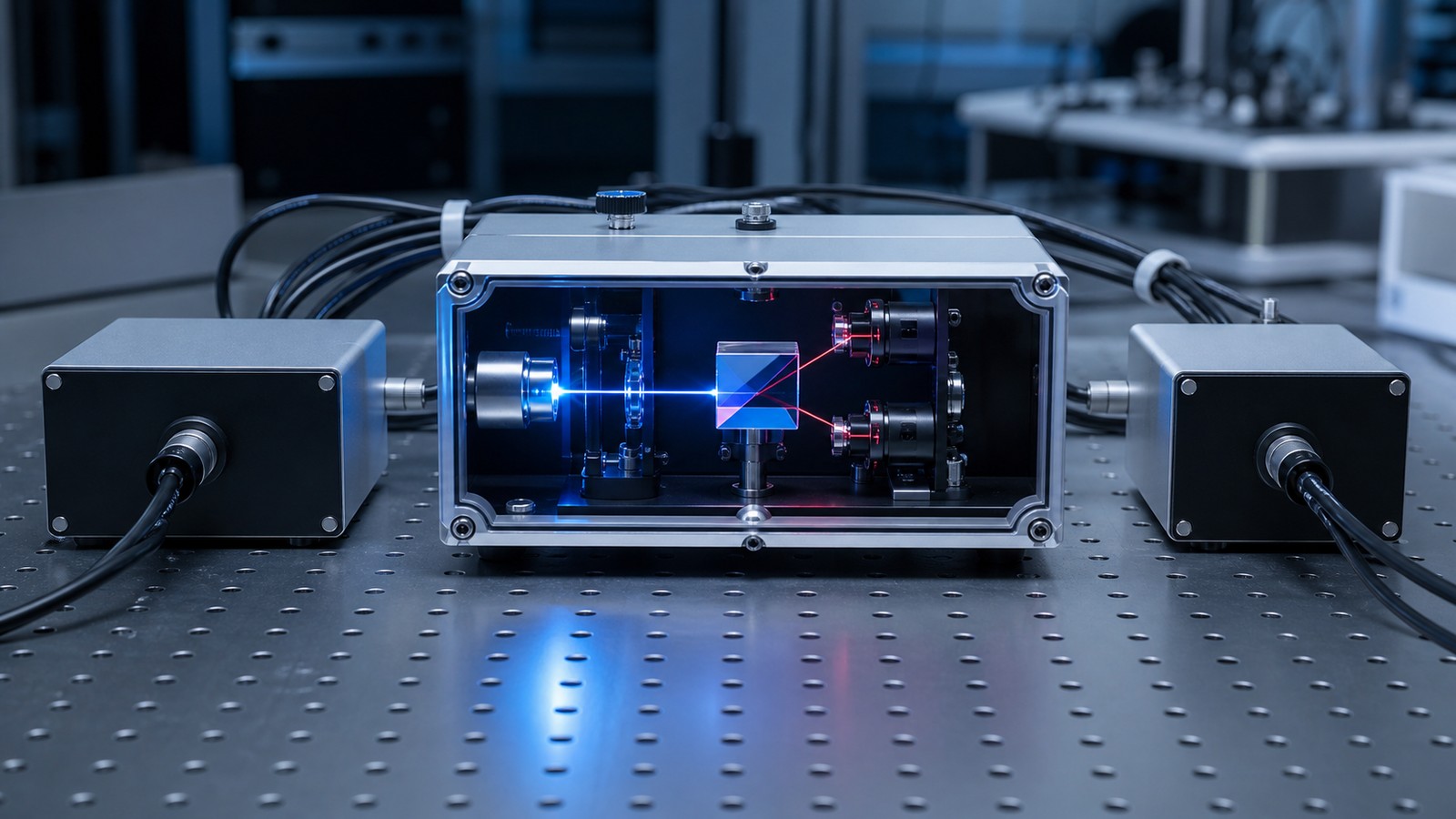
A quantum random-number device begins with physical events. A photon may be sent toward a beam splitter, a detector may record one of two paths, or an electronic process may sample quantum noise. The raw result is turned into digital bits.
The raw stream is rarely trusted without processing. Engineers test for bias, correlations, detector imbalance, and environmental influence. Then they may apply extraction methods that turn imperfect raw data into cleaner random output.
The useful technology therefore combines quantum physics with careful electronics and statistics.
Why Security Depends On Trust
A quantum source can strengthen security, but it does not automatically make a system secure. The device must be protected from tampering, side channels, calibration failure, and ordinary implementation flaws. Randomness is only one part of a security design.
This distinction is important because the word quantum can be oversold. A true quantum source can supply valuable unpredictability, yet the surrounding system still has to handle keys, protocols, storage, and verification correctly.
Where Randomness Meets Simulation
Scientific simulations often need random sampling. Some use pseudorandom algorithms because they are fast, repeatable, and good enough for the task. Others may use physical randomness when independence or unpredictability is especially valuable.
Quantum randomness can support sampling pipelines, randomized tests, and certain cryptographic workflows. It is not always required, but it gives engineers another option when ordinary sources are not trusted enough.
The point is not that every simulation becomes quantum. The point is that randomness has different quality levels for different jobs.
Why The Engineering Is Quietly Hard
The hard part is making the output both physically grounded and operationally clean. A device has to prove that its numbers come from the intended quantum source rather than from drift, interference, or a predictable electronics pattern.
How Cryptography Uses Fresh Unpredictability
Cryptography depends on secrets, and secrets are only as strong as the processes that create them. If a key can be guessed because the random source is predictable, the system becomes vulnerable. Quantum randomness can provide a stronger physical source for key generation.
The advantage is not branding. It is the use of measurement outcomes that are not supposed to be predictable from a classical hidden recipe, assuming the device is working as certified.
Why Certification Matters
A random-number source has to be tested. Engineers look for bias, repeated patterns, correlations, and signs that the output is being influenced by ordinary electronics. Some advanced protocols even try to certify randomness from observed quantum correlations.
Certification turns a physics claim into an operational claim. It asks whether this device, in this configuration, is producing output that can be trusted for the intended use.
That is the quiet discipline behind the glamorous phrase quantum random.
How Randomness Helps Testing
Randomness is also useful for testing systems. Randomized inputs can reveal hardware faults, security weaknesses, and unexpected correlations. In scientific experiments, random choices can help prevent hidden patterns from biasing the results.
A quantum source is not required for every test, but it can be valuable when the independence of the choices matters deeply. Foundational Bell tests, for example, pay close attention to how measurement settings are chosen.
Why The Technology Is Broader Than Gadgets
Quantum randomness powers technology whenever unpredictable physical events become reliable digital resources. The device may look ordinary from the outside, but its value comes from turning quantum measurement into usable information.
How Real Products Stay Accountable
A real quantum-randomness product has to be accountable to tests, not only to a physics label. Users need evidence that the source is operating correctly, that output processing is documented, and that failures are detected rather than hidden.
That accountability is what turns microscopic randomness into a dependable component. The device must make unpredictable events available in a form that software and hardware can use safely.
Why Randomness And Trust Are Linked
Randomness is valuable only when the user can trust how it was produced. A biased source, a compromised device, or a predictable seed can weaken the whole system. Quantum physics helps, but verification completes the chain.
This is why modern applications treat random generation as infrastructure. The source, extraction method, monitoring, and integration all matter.
The quantum event is the beginning of the technology, not the entire technology.
How Randomness Connects To Hardware
Hardware turns quantum events into usable streams through detectors, timing circuits, amplifiers, and processing rules. Each stage can add ordinary imperfections. That is why a quantum source still needs engineering review.
The best devices treat the quantum event as a starting resource. They then protect, test, and process that resource until it can serve the application reliably.
The Cleanest Beginner Test
Ask what physical event supplies the randomness and how the device checks its output. A serious claim should answer both.
How To Judge A Quantum Random Claim
Ask what quantum event is being sampled, how the raw output is tested, and how bias is removed. Those questions move the claim from marketing language to engineering evidence.
Then ask what the randomness is used for. A cryptographic key, a simulation, and a randomized test can have different requirements. The source should match the job.
Quantum randomness becomes powerful when the physical source, statistical checks, and application are all aligned.
One Useful Final Guardrail
Quantum randomness should be judged as a chain from physical source to verified output. The measurement event may be genuinely unpredictable, but the surrounding hardware must still prove that it has not introduced avoidable patterns.
How To Keep The Promise Realistic
The realistic promise is not that quantum randomness fixes every digital security problem. It is that a physical quantum source can supply unpredictability that software systems may need.
The source still has to be integrated carefully. Good documentation, monitoring, and failure handling are part of the technology.
When those pieces work together, microscopic randomness becomes a practical resource rather than a laboratory curiosity.
The Technology Takeaway
Quantum randomness becomes useful when it is produced, tested, and shaped by controlled physical systems.
Modern technology can use randomness as a resource, provided the device proves its source and manages ordinary noise.