Control Means Guiding Possibility Without Breaking It
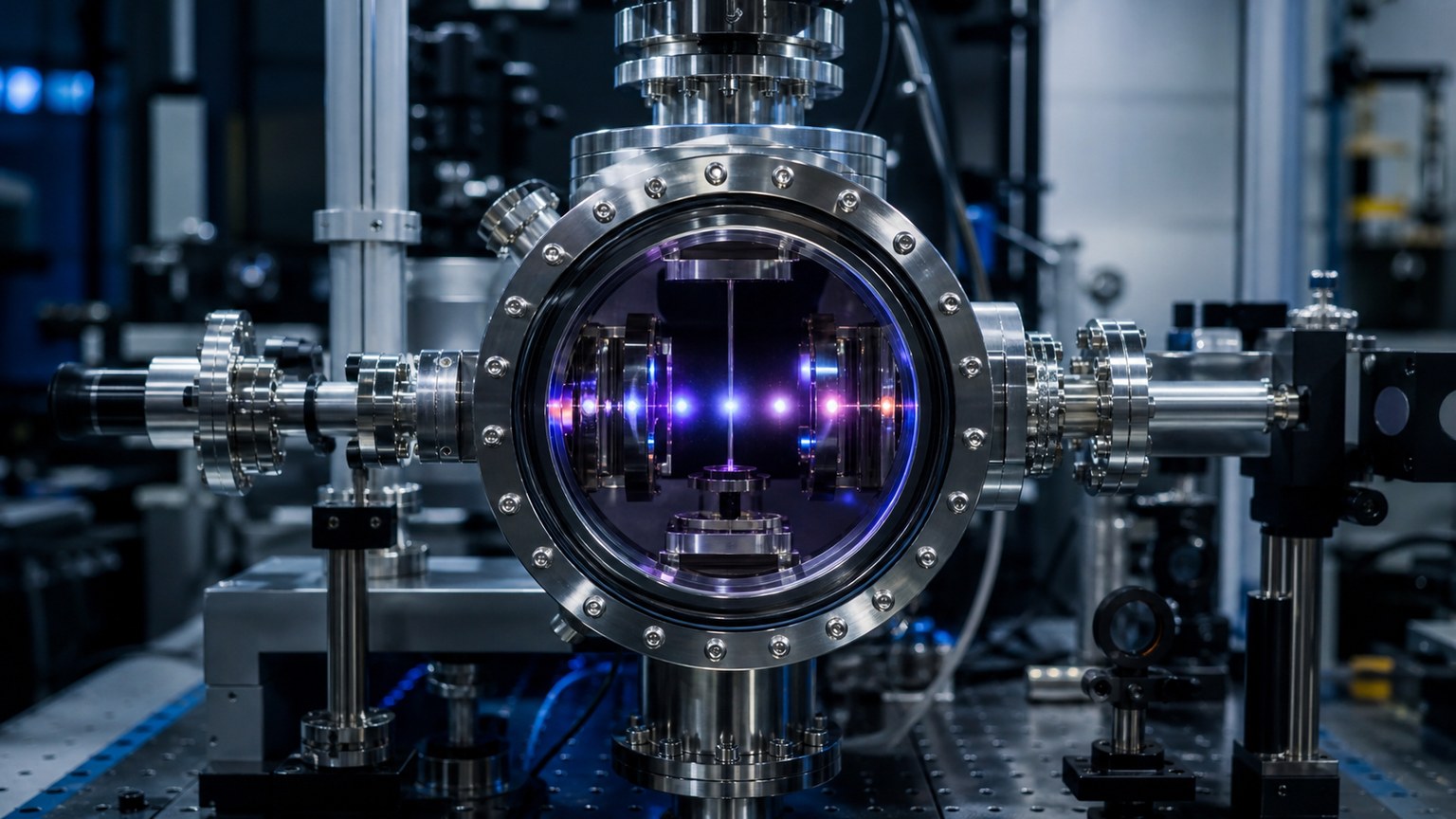
Scientists can control quantum states, but control in quantum mechanics means something more delicate than pushing a classical object into place. A quantum state carries amplitudes, phase, and possible measurement outcomes. To control it, researchers must prepare the state, guide its evolution, protect coherence, and measure it without accidentally destroying the feature they want to use. They do this with laser pulses, microwave pulses, magnetic fields, electric fields, cooling, traps, cavities, feedback, and carefully designed materials. In a trapped ion, a laser pulse can rotate an internal state. In a superconducting qubit, a microwave pulse can change the balance between zero and one. In atoms, fields can tune energy levels and transitions. In photonic systems, beam splitters and phase shifters can reshape paths and polarization. The achievement is real: laboratories can now prepare, manipulate, entangle, and read quantum states with precision that would have seemed astonishing a century ago. The limitation is just as real. Quantum states are fragile. Noise, heat, stray fields, and environmental coupling can scramble phase or leak information. Scientists are learning that control is not a single switch. It is an entire discipline of preparation, isolation, calibration, correction, and verification.
A: Yes, with carefully designed fields, pulses, traps, and measurements.
A: The same coherence being controlled is easily damaged.
A: They rotate amplitudes, shift phase, or drive transitions.
A: It reduces unwanted motion and excitations.
A: Yes, feedback and heralding use measurement results.
A: It protects information from physical noise.
A: Repeated verification, fidelity estimates, and benchmarking.
A: No. Useful control requires selected connections.
A: How to make control more reliable and scalable.
A: Preparation, protection, action, verification, and repeated calibration.
What Control Means in Quantum Mechanics
Control means changing a quantum state in a planned way while preserving the features that matter. A researcher may want to rotate a qubit, prepare an atom in a chosen energy level, split a photon path, or entangle two systems.
This is different from classical control because the state may include amplitudes and phase. Pushing too hard, measuring too soon, or letting the environment interact can damage the coherence that made the state useful.
Good control therefore has two sides. Scientists must act on the system strongly enough to guide it and gently enough to avoid unwanted information leakage. That balance is one reason quantum engineering is difficult.
Control also includes knowing what happened. Calibration, benchmarking, and repeated measurement are needed to confirm that the intended state change actually occurred.
The field is built around that loop: prepare, manipulate, measure, compare, improve.
How Pulses Rotate States
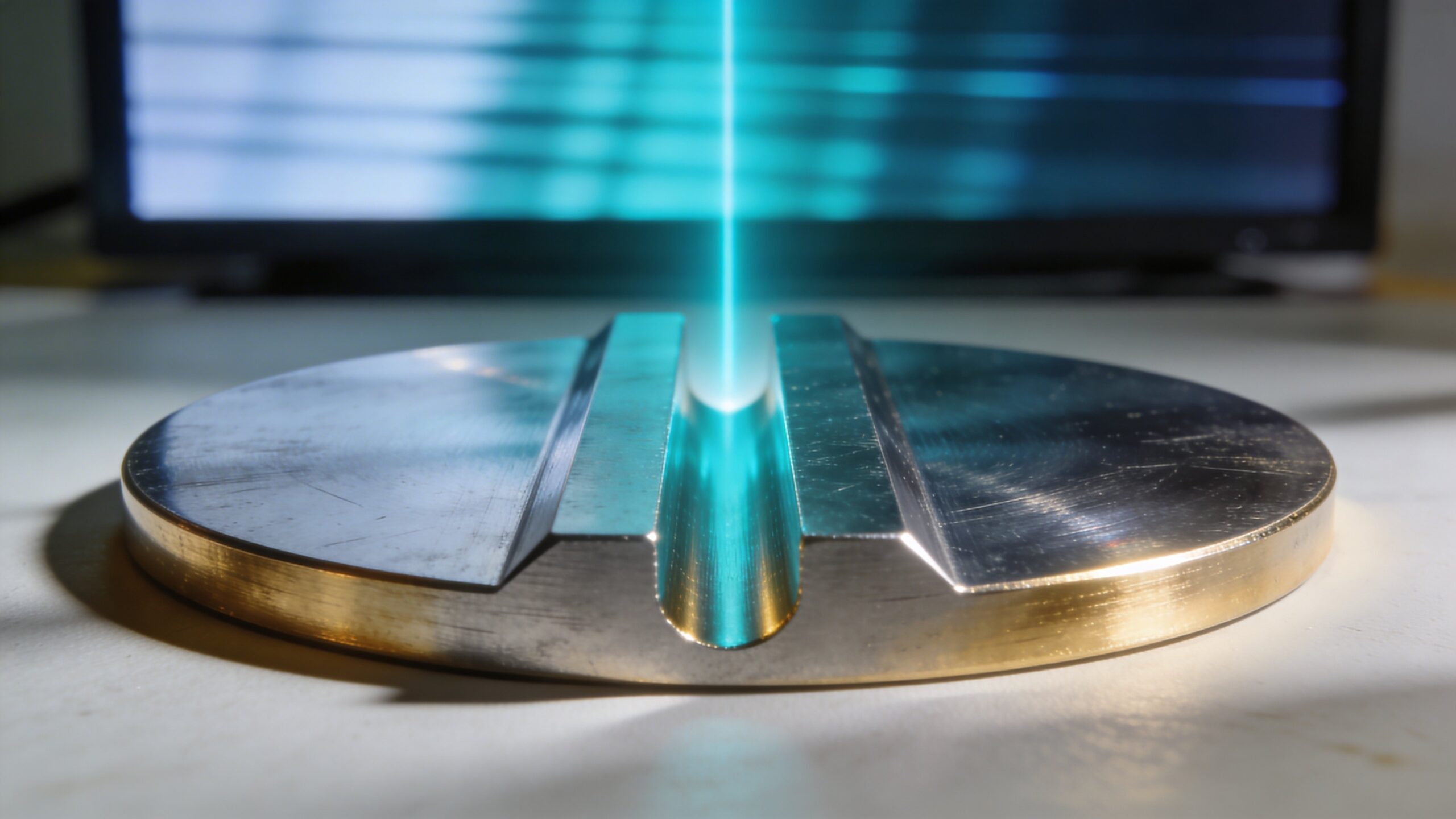
Many quantum systems are controlled with pulses. A pulse of light or microwaves can drive a transition between energy levels or rotate a two-level state. The pulse duration, strength, and phase determine the resulting state.
For a qubit, a pulse can change the amplitudes associated with zero and one. Another pulse can shift phase. Sequences of pulses can perform gates, echo away certain errors, or prepare a target state.
This control is precise but demanding. A pulse that is slightly too long, too short, too strong, or off in phase can leave the state in the wrong place. Small errors accumulate across longer sequences.
That is why laboratories spend so much effort on calibration. The invisible state is controlled through visible knobs, but the knobs must be tuned with extraordinary care.
How Fields and Traps Shape States
Fields and traps provide another layer of control. Magnetic fields can split or shift energy levels. Electric fields can tune transitions. Optical traps can hold atoms or particles in place. Cavities can shape how light and matter interact.
These tools do not merely contain quantum systems like boxes. They define the energy landscape in which the state evolves. Change the landscape, and the state evolution changes.
Trapped ions, neutral atoms, quantum dots, and superconducting circuits all use engineered environments. The system is not left to behave freely. It is placed inside a carefully designed setting that makes certain state changes possible and suppresses others.
This is one of the major lessons of modern quantum physics. Quantum behavior is not only discovered; it is engineered by shaping conditions.
The apparatus is part of the state story.
Why Cooling and Isolation Matter
Cooling and isolation help protect quantum states from environmental noise. Heat produces random motion and excitations. Surrounding particles, photons, and fields can carry away information. Those interactions make coherent control harder.
By cooling a system, researchers reduce unwanted excitations. By isolating it, they reduce accidental coupling. Vacuum chambers, cryogenic refrigerators, magnetic shielding, and vibration control all support state control.
Isolation cannot be perfect, because the system still needs to be prepared, manipulated, and measured. The art is choosing which connections to allow and which to block.
This is why quantum devices look so elaborate. Much of the hardware exists to protect a tiny state from the ordinary world.
How Feedback Improves Control
Feedback uses measurement results to guide later actions. If a detector confirms that a system reached a desired state, the experiment can continue. If the result signals an error, a correction can be applied or the trial can be discarded.
Feedback is common in classical engineering, but quantum feedback is subtle because measurement can disturb the system. The feedback must be designed around what the measurement does as well as what it reveals.
In some protocols, a measurement heralds success. In others, active correction keeps a system near a target state. In quantum computing, syndrome measurements can reveal errors without directly measuring the logical information.
Feedback shows that measurement is not only the end of an experiment. It can be part of control.
That makes quantum control a dynamic process rather than a one-time setup.
Why Error Correction Is a Control Strategy
Error correction is often discussed in quantum computing, but it is also a general control idea. If quantum information is fragile, scientists need ways to detect and correct errors before they ruin the state.
Quantum error correction cannot simply copy the state, because unknown quantum states cannot be cloned. Instead, information is encoded across larger systems, and special measurements reveal error patterns without directly reading the encoded state.
This is a remarkable form of control. It accepts that physical qubits will be imperfect and builds a structure that can preserve logical information anyway.
The lesson is broader than computers. Quantum control often succeeds by designing around the rules, not by wishing the rules were classical.
What Scientists Have Learned So Far
Scientists have learned that quantum states are controllable enough to build real devices, but not so easily controlled that the problem is solved. Atomic clocks, lasers, MRI, quantum sensors, and prototype quantum computers all show different kinds of state control.
They have also learned that scale changes the challenge. Controlling one or two systems can be impressive; controlling many while preserving coherence is much harder. Crosstalk, calibration drift, and accumulated noise become serious obstacles.
The frontier is therefore not whether control is possible. It clearly is. The frontier is how reliable, scalable, and programmable that control can become.
Why Verification Is Part of Control
Because quantum states are not directly visible, verification is part of control. Scientists must test whether the state they intended to prepare is the state their apparatus actually produced. That often requires repeated measurements, tomography, benchmarking, or comparison with theory.
Verification also catches drift. A device that worked yesterday may behave slightly differently today because of temperature changes, material shifts, or calibration errors. Quantum control requires constant attention to those details.
This is why claims about control are usually statistical. Researchers report fidelities, error rates, coherence times, and confidence intervals. Those numbers describe how well the invisible state is being guided.
Good verification makes the field more trustworthy. It turns delicate control into evidence rather than performance.
It also separates control from coincidence. A result that appears once may be a lucky fluctuation, but a result that survives repeated checks across settings shows that the apparatus is steering the state rather than merely producing noise.
The strongest laboratories are not only good at making states. They are good at proving what they made.
That proof is part of the technology.
Why Calibration Is a Daily Problem
Quantum control depends on settings that can drift. A laser frequency, microwave pulse, magnetic bias, trap alignment, or readout threshold may be excellent one day and slightly wrong the next. Tiny changes can push a delicate state away from the intended path.
This is why calibration is not just setup before the real experiment. It is part of the experiment. Researchers repeatedly measure known references, adjust pulses, and check whether the apparatus still performs the transformations it is supposed to perform.
Calibration also teaches scientists where their hardware is fragile. If one control parameter needs constant correction, it may reveal a deeper noise source. If a pulse works on one qubit but disturbs a neighbor, the device has a crosstalk problem.
As systems scale, calibration becomes harder because the parts are not independent. A useful quantum processor, sensor, or simulator must control many states without letting one adjustment ruin another part of the device.
The lesson is practical and humbling. Quantum states can be guided, but control must be renewed and verified again and again.
Why Control Is Never Perfect
Scientists are learning to think in terms of fidelities rather than perfect commands. A pulse may prepare the desired state with very high probability, but not with absolute certainty. A gate may be excellent and still leave a small error.
Those small errors matter because quantum operations are often chained together. A tiny misrotation, a little dephasing, or a slightly wrong readout can accumulate across many steps. Control is judged by whether errors remain below the level a protocol can tolerate.
This makes control a statistical discipline. Researchers report coherence times, gate fidelities, state-preparation errors, and readout errors because those numbers describe how much trust the controlled state deserves.
Imperfection does not make control a failure. It gives the field its engineering target. Better materials, lower temperatures, quieter electronics, smarter pulse design, and error correction all aim to move those numbers in the right direction.
The deepest lesson may be that quantum control is not domination of nature. It is negotiation with strict rules, measured by repeatable evidence.
That attitude is why the field keeps improving without pretending the work is finished.
What Scaling Teaches Researchers
Scaling teaches that quantum control is not simply more of the same. A technique that works beautifully for one ion, atom, photon, or circuit may need redesign when hundreds or thousands of controlled elements are involved.
More parts create more couplings, more calibration settings, and more possible error pathways. Researchers must decide which interactions to strengthen, which to suppress, and which to monitor without overwhelming the system with measurement.
This is where control becomes architecture. Devices need layouts, pulse schedules, error-correction schemes, and readout strategies that work together. The state is controlled by a whole system, not by one clever knob.
The lesson from scaling is encouraging but demanding. Quantum states can be steered, but the steering has to become repeatable, modular, and reliable before the largest promises can be met.
Scaling also changes what counts as success. A beautiful single-state demonstration may prove a principle, while a useful platform must perform the same kind of control across many elements with predictable variation. That shift turns quantum control from a laboratory stunt into engineering practice for future quantum machines and sensors at scale across platforms over time.
The Control Takeaway
Scientists can control quantum states with pulses, fields, traps, cooling, feedback, and error correction.
The hard part is preserving coherence while acting on the system strongly enough to prepare, transform, and verify it.