From Classical Bits to Quantum Bits: A Shift in Thinking
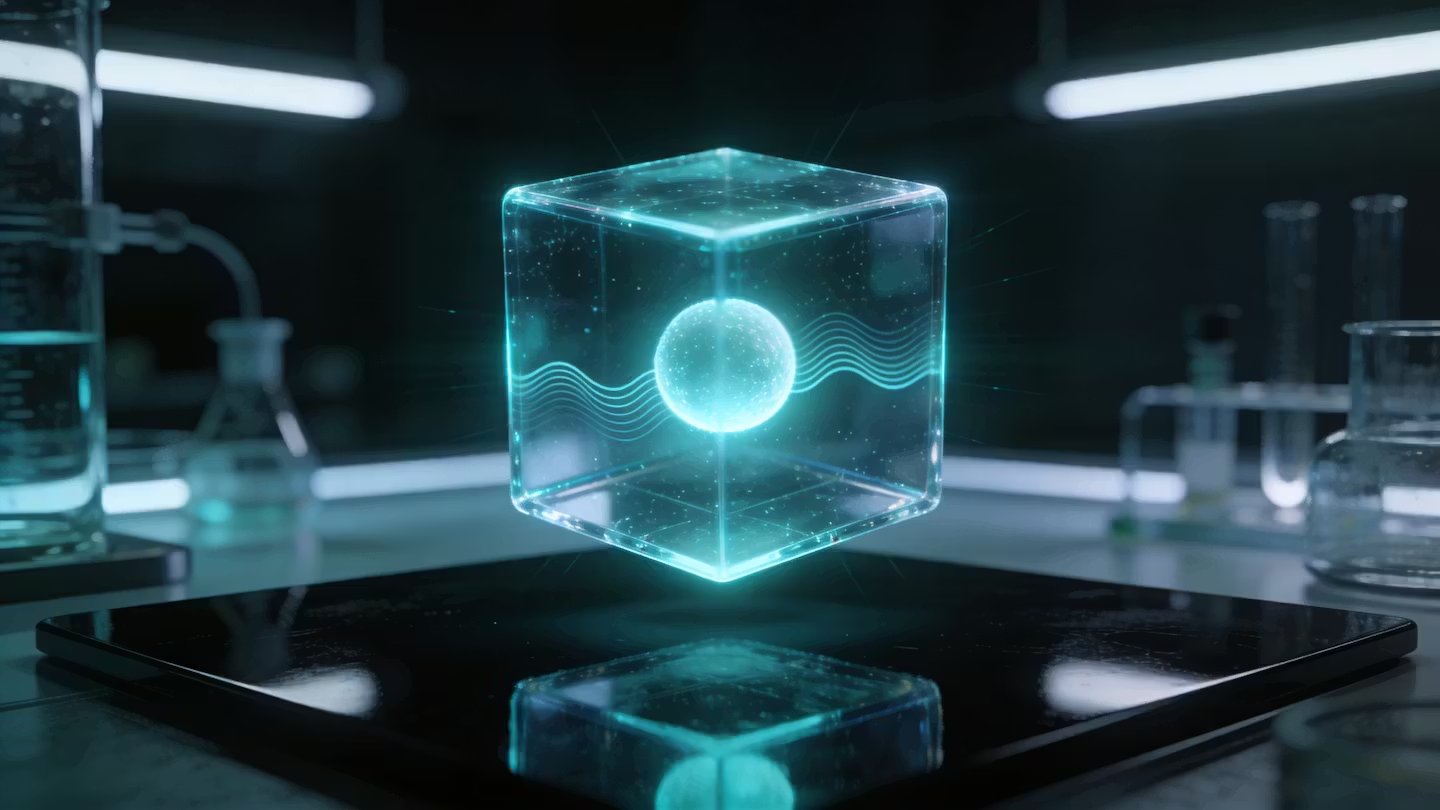
In traditional computing, information is represented using bits, the familiar zeros and ones that form the backbone of digital electronics. A bit can exist in one of two states: 0 or 1. This binary framework has allowed engineers to build everything from pocket calculators to smartphones to supercomputers. But as problems grow more complex and datasets expand exponentially, classical systems start to strain under the weight of sheer computational demand. Enter the qubit—the quantum version of the classical bit. While similar in purpose, qubits differ radically in behavior. Instead of being limited to a single state, a qubit can exist as 0, 1, or both at the same time. This ability is not just a quirky detail of physics; it fundamentally changes what computers can do. A qubit doesn’t simply store information—it expresses a range of possibilities that classical bits cannot. To many who first encounter the idea, this feels almost magical. Yet it emerges from well-established principles of quantum mechanics, the physical theory that governs the behavior of particles at extremely small scales. The key difference is conceptual: classical computing is built on either-or logic, while quantum computing embraces both-and logic. That shift may seem subtle, but it opens the door to entirely new computational strategies that could reshape technology, industry, and science.
A: It can hold multiple states at once and interact through entanglement.
A: Warmth introduces noise, which quickly destroys fragile quantum information.
A: They explore many possibilities simultaneously rather than sequentially.
A: No—they solve different kinds of problems and will work alongside classical systems.
A: The process where qubits lose quantum properties due to outside interference.
A: With microwave pulses, lasers, magnetic fields, or photonic circuits.
A: Yes, early models exist, but large-scale machines are still in development.
A: Some types, yes in theory—but new quantum-safe encryption is being developed.
A: Their quantum states can be disturbed by even tiny environmental changes.
A: Likely millions for fully error-corrected, large-scale applications.
Superposition: The Qubit’s Hidden Superpower
To understand how a qubit can exist in multiple states simultaneously, we turn to the principle of superposition. In quantum mechanics, particles like electrons or photons can occupy a combination of states until they are measured. This means a qubit does not commit to being 0 or 1 until a measurement is taken; instead, it hovers in a cloud of probabilities that represent both 0 and 1.
A helpful analogy is to imagine a spinning coin. While it spins in the air, the coin is neither heads nor tails—it is in a dynamic, unresolved state. Only when it lands and stops spinning do we see the definitive result. In a similar way, a qubit in superposition holds countless possible states at once, collapsing to a single outcome only when we choose to observe it.
Superposition is the foundation that allows quantum computers to explore many potential solutions to a problem at the same time. Rather than checking each possibility one by one—as classical computers must do—a quantum computer can examine a vast landscape of outcomes simultaneously. For certain types of problems, such as searching through enormous datasets or modeling complex molecules, this ability could offer exponential speedups, providing answers in seconds that would take classical machines years.
Entanglement: The Mysterious Link Between Qubits
If superposition gives qubits flexibility, entanglement gives them power. Often described as one of the most mysterious and counterintuitive features of quantum mechanics, entanglement occurs when two qubits become linked in such a way that the state of one instantly influences the state of the other, even if they are separated by large distances.
Albert Einstein famously referred to this phenomenon as “spooky action at a distance,” but today it is a well-established scientific principle. When qubits are entangled, they no longer behave as isolated units; instead, they operate as part of a larger, interconnected system. This allows quantum computers to perform complex operations that rely on coordinated behavior among many qubits.
In practical terms, entanglement enables qubits to work together in ways classical bits cannot. Imagine trying to solve a puzzle where every move simultaneously changes pieces across the entire board. That is the power entanglement brings. It fuels quantum parallelism, accelerates computation, and enables algorithms that outperform classical approaches.
For quantum computing to reach its full potential, harnessing entanglement is crucial. It allows quantum systems to scale not by adding more isolated units, but by increasing the interconnectedness of the system as a whole.
How Qubits Are Built: Multiple Technologies, One Goal
While the concept of a qubit is abstract, building a physical qubit requires extraordinary engineering. Several competing technologies are used today, each with strengths and challenges. Despite their differences, all aim to create a controllable system that behaves according to quantum rules and maintains coherence long enough to perform meaningful calculations.
One of the leading approaches uses superconducting qubits—tiny electrical circuits cooled to near absolute zero so that electrons move without resistance. Companies like IBM and Google have heavily invested in this approach because superconducting qubits can be fabricated using processes similar to those used in the semiconductor industry. These qubits are fast, relatively easy to control, and can be integrated into larger circuits.
Another promising approach uses trapped ions—individual atoms held in place by electromagnetic fields. These qubits are exceptionally stable and offer long-lived coherence, making them ideal for precise operations. Their main challenge is scalability, as handling large arrays of ions requires extremely sophisticated control systems. Photon-based qubits, which use particles of light, offer yet another path. Because photons naturally avoid interacting with their environment, they are less susceptible to certain types of noise. They are also well-suited for quantum communication, where maintaining coherence over long distances is essential.
Spin-based qubits, often built from electrons confined inside quantum dots or defects in crystals like diamond, offer potential for high-density quantum architectures. Their small size and compatibility with existing semiconductor technologies make them attractive long-term candidates.
Each of these qubit technologies embodies a different vision of the future of quantum computing. No single approach has yet emerged as the winner, and it is possible that multiple types of qubits may coexist, each suited to particular kinds of tasks.
Quantum Gates: How Qubits Are Manipulated
In classical computers, logic gates perform operations on bits—AND, OR, NOT, and so on. In quantum computing, the equivalent operations are quantum gates, which manipulate qubits in ways that preserve their quantum properties. These gates rotate qubits, shift their phases, entangle them with one another, and ultimately guide them through carefully orchestrated transformations that lead to meaningful results.
Quantum gates are reversible, meaning that every operation can be undone—a stark contrast to many classical logic operations. This reversibility is essential because it preserves quantum information throughout the computation, ensuring that the delicate superposition states remain intact until the final measurement.
A quantum algorithm consists of a sequence of such gates applied to an array of qubits. If classical computing resembles following a checklist of instructions, quantum computing resembles choreographing a dance, where every step must be perfectly synchronized to maintain balance and structure. The intricacy of these operations is part of what makes quantum computing so powerful—and so difficult to engineer.
Coherence and Decoherence: The Fragility of Quantum Information
Qubits are remarkable, but they are also fragile. Their ability to exist in superposition and share entanglement can be disrupted by even the slightest interference from the environment. This disruption is known as decoherence, and it remains one of the biggest challenges in quantum computing.
A qubit must remain coherent—isolated from unwanted interactions—for the duration of a calculation. But qubits are highly sensitive to temperature fluctuations, electromagnetic noise, vibrations, and even cosmic rays. Maintaining coherence often requires extreme environmental conditions, such as ultra-low temperatures or high-vacuum chambers.
Decoherence shortens the time window in which quantum computations can be executed. If a system decoheres before the algorithm finishes, the result becomes unreliable. This limitation has driven researchers to develop error-correcting techniques that encode information across multiple qubits, ensuring that the system can identify and compensate for mistakes without destroying the quantum state.
Quantum error correction is a profound achievement, demonstrating that even though individual qubits are fragile, large-scale quantum systems can be made resilient through clever mathematical frameworks. These methods are essential for building reliable quantum machines and represent a major step toward practical, scalable quantum computing.
Why Qubits Matter: The Promise of Quantum Computing
Qubits matter not because they replace classical bits, but because they enable entirely new approaches to solving problems. Quantum computers are not designed to make everyday tasks like word processing or web browsing faster. Instead, they are built to tackle problems that classical computers simply cannot handle, regardless of processing power.
One of the most promising applications is in the field of chemistry and materials science. Molecules behave according to quantum rules, making them extremely difficult to model on classical computers. Quantum computers, built from qubits, can simulate chemical interactions with unprecedented accuracy. This could accelerate the discovery of new medicines, advanced materials, clean energy technologies, and high-performance batteries.
Quantum computers also show promise in optimization, solving complex logistical problems such as traffic routing, financial modeling, and supply chain planning. They may also revolutionize machine learning by enabling algorithms that learn faster and handle more complex data relationships.
Another transformative area is cryptography. Many current encryption systems rely on mathematical problems that are extremely difficult for classical computers to solve. Quantum computers could break some of these systems, prompting the development of new quantum-safe encryption methods that will define the future of cybersecurity.
While these applications are still emerging, the potential impact is enormous. Qubits unlock computational strategies that classical bits cannot replicate, allowing us to explore solutions to problems long considered unsolvable.
Scaling Up: From Dozens of Qubits to Millions
The quantum computers available today use tens or hundreds of qubits—numbers impressive from an engineering standpoint but still far from the millions likely required for large-scale commercial use. Building a system capable of managing and controlling such a large number of qubits is an extraordinary task.
Scaling up requires improving coherence times, reducing noise, refining error-correction methods, and designing architectures that allow qubits to interact efficiently across large distances. It may take years before quantum computers reach the scale needed for transformative applications, but progress is accelerating rapidly.
Many research groups and technology companies have roadmaps that project quantum machines with thousands of qubits within a decade. These systems could perform meaningful work in quantum simulation and optimization, even before achieving the full scale of fault-tolerant quantum computing.
What the Future of Qubits Looks Like
As quantum technologies mature, the concept of a qubit may evolve. Future systems might blend different types of qubits, using each where it performs best. Hybrid quantum-classical systems may become standard, with classical processors orchestrating tasks while quantum processors handle specialized calculations.
We may also see advances in qubit connectivity, compact architectures, and new materials that reduce noise and allow quantum devices to operate more reliably. The search for the “perfect qubit” continues—a qubit that balances coherence, scalability, speed, and manufacturability.
As these breakthroughs emerge, quantum computing will move from specialized laboratories into more widespread use, powering innovations across science, engineering, medicine, finance, cybersecurity, and beyond.
The Human Side: Learning to Think Quantum
Understanding qubits requires shifting the way we think about information. Classical computing is intuitive; quantum computing is not. But as with any technological revolution, new ways of thinking eventually become natural. The more people learn about qubits and quantum mechanics, the more familiar these concepts will become.
Universities, companies, and online education platforms are already offering accessible quantum computing resources. As more people engage with this technology, we will build a workforce capable of developing quantum algorithms, designing quantum systems, and applying quantum tools to real-world problems.
In many ways, understanding qubits is not just about learning physics—it is about embracing a new frontier of human creativity and problem-solving.
Conclusion: Qubits as the Foundation of a New Technological Era
Qubits are more than just the building blocks of quantum computing—they represent a new way of processing information, exploring possibilities, and solving problems that once seemed unreachable. Their ability to exist in superposition, interact through entanglement, and operate according to the laws of quantum mechanics gives them unprecedented power. While the field is still developing, the progress made so far is remarkable, and the future potential is vast. As technology advances, qubits will play a central role in shaping the next era of innovation. They promise to redefine fields from medicine to finance, reshape global cybersecurity, and unlock scientific discoveries that were previously out of reach. Understanding qubits is the first step toward understanding the quantum revolution itself—a revolution that is already underway and poised to transform the world.