Thirty-Five Years That Remade Physics
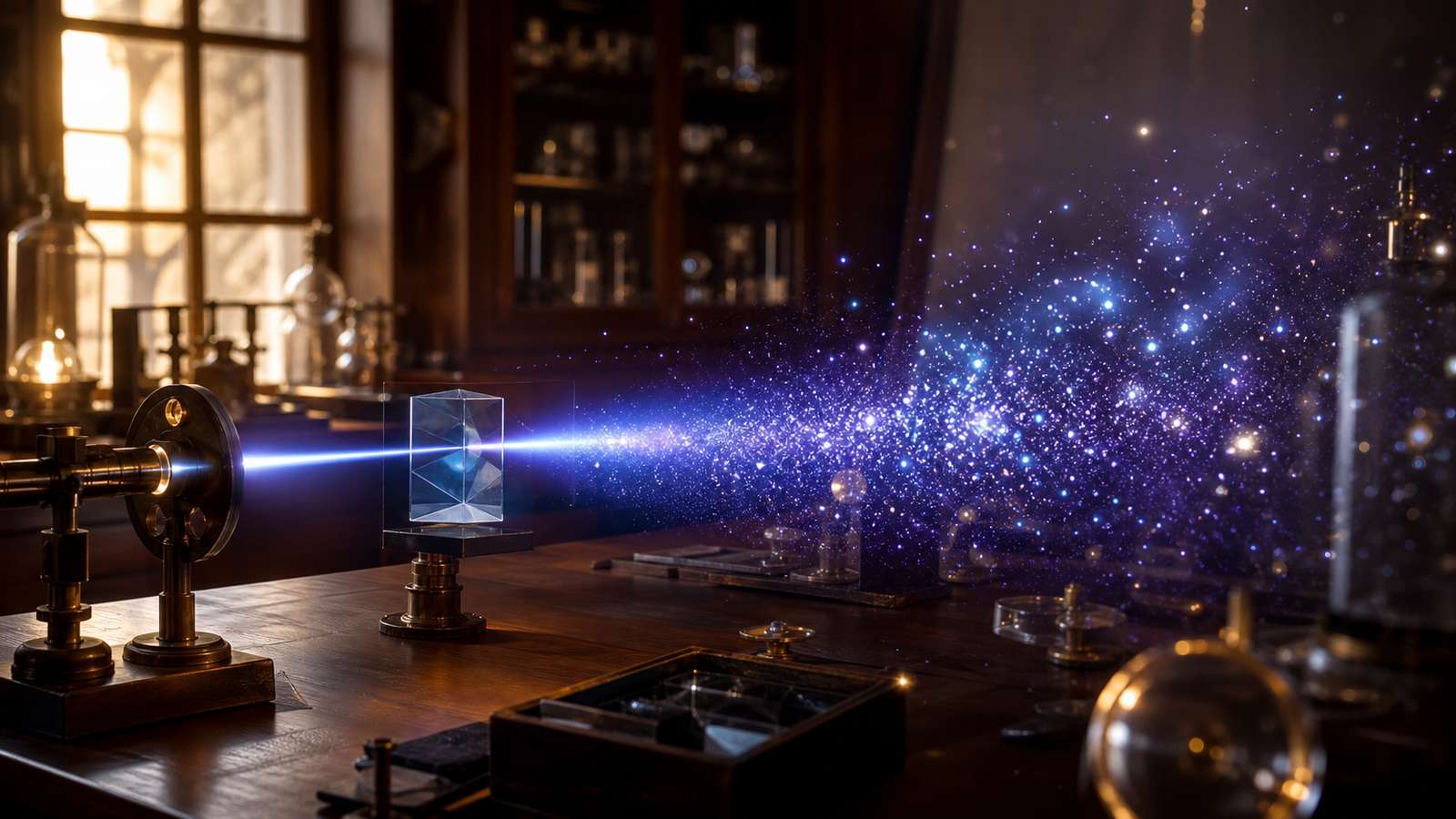
The golden age of quantum theory from 1900 to 1935 compressed one of the greatest transformations in science into just thirty-five years. In 1900, Planck introduced energy quanta to solve blackbody radiation. In 1905, Einstein treated light as packets to explain the photoelectric effect.
In 1913, Bohr used quantum rules to explain the hydrogen atom.
In the 1920s, de Broglie proposed matter waves, Heisenberg created matrix mechanics, Schrodinger created wave mechanics, Born gave the wavefunction its probability meaning, and Pauli explained exclusion. Dirac brought quantum mechanics together with relativity and predicted antimatter.
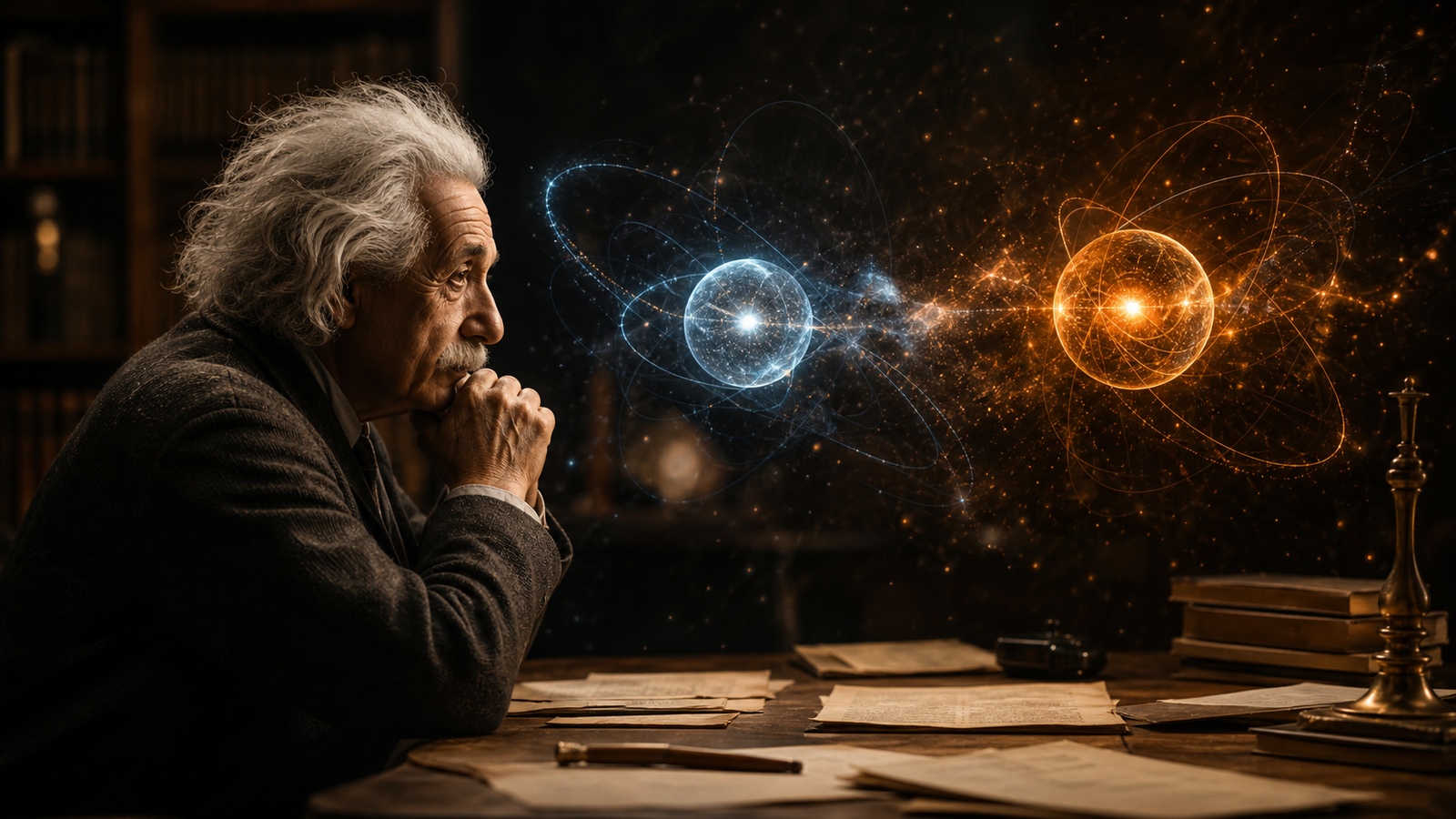
By 1935, Einstein, Podolsky, and Rosen had turned entanglement into a profound challenge about completeness and reality, while Schrodinger introduced his famous cat paradox.
This period deserves to be called golden not because everything was settled, but because so many lasting ideas appeared in rapid succession. The old classical picture did not collapse in one blow. It was reshaped by a cascade of discoveries, each one forcing physics to become more abstract, probabilistic, and powerful.
A: Planck's radiation work introduced energy quanta.
A: EPR and Schrodinger's cat crystallized foundational tensions.
A: No. Experiments and theory drove each other.
A: Modern quantum mechanics formed rapidly.
A: It linked the wavefunction to measurement probabilities.
A: Exclusion helped explain atomic structure.
A: He connected quantum mechanics with relativity and predicted antimatter.
A: No. The theory worked, but its meaning remained debated.
A: So many lasting ideas appeared in a short span.
A: 1900-1935 gave physics its quantum language.
1900: Planck’s Quantum Door
Planck’s blackbody radiation work opened the period. He introduced discrete energy elements to fit the observed spectrum of hot objects. The move was cautious, but it placed a new idea at the center of physics: energy exchange might not always be continuous.
1905: Einstein’s Light Quantum
Einstein’s explanation of the photoelectric effect made quanta harder to treat as mere calculation tricks. Light seemed to deliver energy in packets. This challenged the wave-only picture of light and gave the developing quantum theory a sharper physical edge.
Einstein’s role is especially interesting because he later criticized quantum mechanics as incomplete. He was both a builder and a critic. That tension helped make the golden age intellectually rich rather than simple.
1913: Bohr’s Atom
Bohr’s atomic model connected quantum rules to spectral lines. Electrons occupied allowed states, and transitions between states produced specific light frequencies. The model was later replaced by deeper mechanics, but it gave the quantum idea a home inside the atom.
The 1920s Explosion
The 1920s brought the central formal breakthroughs. De Broglie’s matter waves suggested that particles have wave-like behavior. Heisenberg’s matrix mechanics built a theory from observable transitions. Schrodinger’s wave mechanics offered a powerful equation for quantum states. Born’s probability rule explained how the wavefunction connects to measurement outcomes.
The speed of progress was remarkable. Ideas that first looked separate turned out to reinforce one another. Wave mechanics and matrix mechanics became equivalent. Probability became part of the formalism. Uncertainty clarified why classical exactness could not return. The field moved from old quantum rules to modern quantum mechanics.
Pauli, Dirac, and Deeper Structure
Pauli’s exclusion principle explained why electrons fill atomic states in ways that shape the periodic table. Dirac’s equation brought quantum mechanics into contact with special relativity and predicted antimatter. These advances showed that quantum theory was not only about spectra. It was about the structure of matter and particles.
The golden age therefore widened the scope of physics. It connected atoms, light, chemistry, relativity, and matter. A theory born from puzzles about radiation became a framework for the physical world.
It also widened the mathematical imagination of physicists. Matrices, operators, spinors, state spaces, and probability amplitudes became ordinary tools. The language of physics changed permanently.
1935: Paradox and Completeness
By 1935, the theory worked, but its meaning was still contested. EPR challenged quantum completeness by focusing on entangled systems. Schrodinger’s cat dramatized the strangeness of applying superposition to macroscopic outcomes. The golden age ended not with quiet agreement, but with sharper paradoxes.
Why It Was Golden
The period was golden because discovery, formalism, and interpretation advanced together. Experiments forced new ideas. Mathematics made them precise. Philosophical arguments exposed what remained unclear. Few periods in science have combined practical success and conceptual upheaval so intensely.
It was also golden because the results lasted. The wavefunction, uncertainty, exclusion, photons, atomic states, and entanglement are not historical curiosities. They remain central to physics, chemistry, materials science, and quantum technology.
The Takeaway
The golden age of quantum theory from 1900 to 1935 transformed physics by replacing classical assumptions with a new framework. Energy became quantized. Light and matter gained dual behavior. Atoms acquired allowed states. The wavefunction became central. Probability and uncertainty entered the foundations. Entanglement challenged separability.
The period also shows that scientific revolutions are not only about answers. They are about better questions. By 1935, quantum mechanics could predict an extraordinary range of phenomena, yet physicists were still arguing about what the theory meant. That combination of power and mystery is the signature of the golden age.